If you have ever caught your dog sniffing the sesame topping on your bagel, you have probably asked yourself: can dog eat sesame seeds? The short answer is yes, plain sesame seeds are safe for dogs in tiny amounts. They are not toxic, and a small pinch as an occasional treat will not harm a healthy adult dog.
The trouble starts only when dogs get too many, or when the sesame comes in a riskier form like oil or a seasoned snack. Let us walk through the safe amounts, the forms to avoid, and exactly what to do if your pup gets into more than a sprinkle.
The Short Answer: Yes, a Pinch Is Fine
Plain, unsalted sesame seeds are not toxic to dogs. The ASPCA does not list them as a dangerous food, and most healthy adult dogs can enjoy a small pinch now and then without any issue. Think of sesame seeds as an occasional garnish, not a daily snack. They do not add anything your dog’s regular food is missing, so there is no reason to serve them every day. A light sprinkle on dinner once or twice a week is plenty.
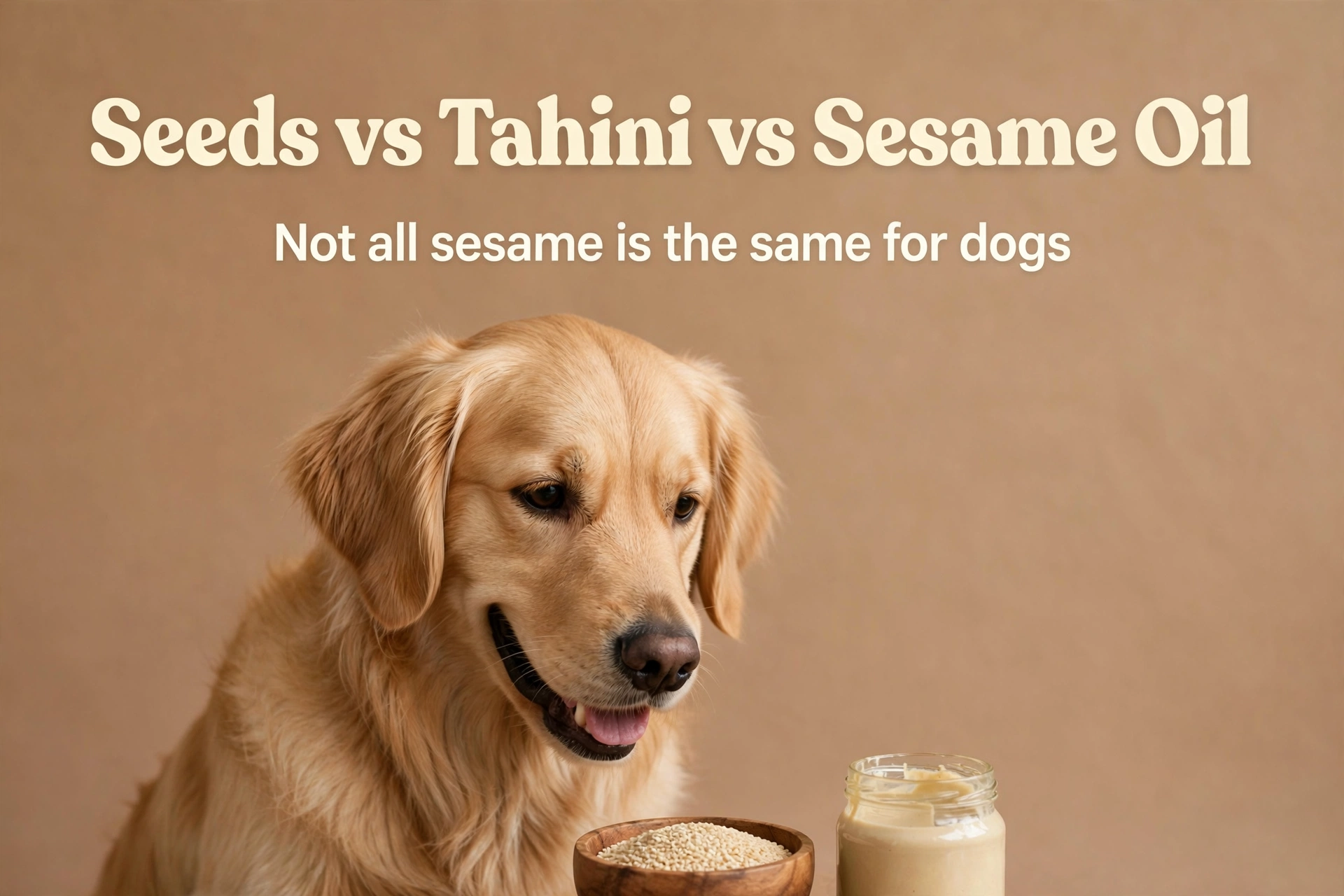
Seeds vs Tahini vs Sesame Oil: Three Very Different Things
Not all sesame is created equal, and this is where most confusion comes from. Here is how the three common forms compare:
Plain sesame seeds: Safe in small pinches. Whole seeds may pass through undigested, which is harmless.
Plain tahini (sesame paste): A tiny lick is usually fine, but it is very calorie dense and rich. Store-bought tahini and hummus often hide garlic, onion, extra salt, or lemon, which are the real dangers, so read labels and skip hummus for dogs.
Sesame oil: Skip it entirely. Oil concentrates all the fat of the seeds into a tiny amount of liquid, and high-fat foods can trigger pancreatitis in dogs, which is a painful and serious illness.
The simple rule: seeds in a pinch are fine, paste only in a taste, and oil stays in the bottle.
What Is Actually Inside a Sesame Seed
A sesame seed is tiny, but it is packed. About half of each seed is fat, and the rest is mostly protein and fiber, with minerals like calcium and iron. The outer hull also carries oxalates, natural compounds that in very large amounts can add to kidney stone risk, another reason to keep portions small. You can read more about where sesame comes from on Wikipedia. The catch is that dogs on a complete, balanced commercial diet already get all the calcium and minerals they need. If calcium is the attraction, check our guide on whether dogs can eat egg shells, which covers another popular calcium source and its own safety rules.
The Pinch Rule: How Much by Dog Size
Sesame seeds are calorie dense. A single tablespoon carries around 50 calories, which is a real chunk of a small dog’s daily budget. Stick to these amounts, once or twice a week at most:
Small dogs (under 20 lbs): about 1/4 teaspoon
Medium dogs (20 to 50 lbs): about 1/2 teaspoon
Large dogs (50+ lbs): up to 1 teaspoon
These are maximums, not targets. A little less is always fine. And skip daily feeding. Even healthy fats add up when they arrive every single day.
The Safe Way to Serve Them
If you want to share a few sesame seeds with your dog, do it like this. Use plain seeds with no salt, seasoning, or oil. A light dry toast in a pan makes them easier to digest and brings out their flavor, and baking them into a homemade treat works too. For small dogs, grind the seeds first, because whole seeds can be a choking hazard for tiny throats. Sprinkle the pinch over your dog’s regular food rather than feeding seeds by themselves. Never share flavored or seasoned seeds from snack mixes, sesame sticks, or restaurant dishes, since those often carry garlic powder, onion powder, or heavy salt.
Hidden Sesame: Places Dogs Snatch It Without You Noticing
Dogs rarely eat sesame seeds from a jar. They grab them by accident, and the sesame usually brings friends. Watch out for these sneaky sources:
Bagel and bun crumbs: Harmless seeds, but check for onion bits in everything bagels.
Sushi rolls and poke bowls: The fish and rice are usually fine, but spicy mayo and sauces are not.
Hummus and tahini dressings: The sesame paste is the least of your worries. Garlic, onion, lemon, and excess salt in store-bought versions are the real threat.
Sesame chicken and stir fry: Cooked in oil with soy sauce, garlic, and sugar. Keep the whole dish away from your dog.
If your dog snatched a crumb from one of these, check the other ingredients before you panic. The sesame is almost never the problem.
Dogs That Should Skip Sesame Entirely
For some dogs, even a pinch is not worth it. Skip sesame seeds completely if your dog has a history of pancreatitis, is overweight, has a sensitive stomach, or is still a puppy under 12 months old. Puppies have immature digestive systems that do not need extra fat or fiber. Dogs prone to kidney stones should also pass, since the hulls add oxalates on top of a calcium-rich diet. When in doubt, your vet knows your dog’s health history best.
Ate a Handful? Here Is What to Do
First, stay calm. Then check two things: how much, and what form.
A handful of plain seeds: Most dogs will be fine. Offer fresh water and watch your dog for 24 hours. A bit of gas or soft stool is the worst you will likely see. Feed the next meal plain and small.
Sesame oil or a big spoonful of tahini: Call your vet, especially for small dogs. Watch for vomiting, belly pain, loss of appetite, or unusual tiredness, which can signal pancreatitis.
Seasoned seeds or sesame snacks: Check the label for garlic, onion, or xylitol. If any are listed, call your vet right away.
Never try to make your dog throw up unless your vet tells you to. Most plain-seed accidents end with nothing more than an extra trip outside.
Conclusion
So, can dog eat sesame seeds? Yes, a small pinch of plain seeds is a safe occasional treat for a healthy adult dog. Keep portions tiny, serve them plain and unsalted, and keep sesame oil and seasoned products out of reach. The dogs that should skip sesame are the ones with pancreatitis, weight issues, or very young stomachs. Follow the pinch rule by size, watch for the hidden sources in human food, and you will never have to worry about these little seeds again.
Frequently Asked Questions About Sesame Seeds and Dogs
Are sesame seeds toxic to dogs?
No, plain sesame seeds are not toxic to dogs. They are not on the ASPCA list of dangerous foods. The risks come from overfeeding, sesame oil, or seasoned products with garlic, onion, or excess salt.
How many sesame seeds can a dog have?
Keep it tiny: about 1/4 teaspoon for small dogs, 1/2 teaspoon for medium dogs, and up to 1 teaspoon for large dogs, once or twice a week. These are maximums, and a little less is always fine.
Can dogs eat tahini?
A tiny lick of plain tahini is usually fine, but it is very high in fat and calories. Store-bought tahini and hummus often contain garlic, onion, or too much salt, so skip those for your dog.
Is sesame oil safe for dogs?
No. Sesame oil concentrates the fat of the seeds and can cause digestive upset or pancreatitis in dogs. Do not add it to your dog’s food, and wipe oily residue off any human food before sharing.
Can puppies eat sesame seeds?
It is best to wait. Puppies under 12 months have immature digestive systems, and sesame seeds add fat and fiber they do not need. Stick to a complete puppy food until they are fully grown.
Should I grind sesame seeds before giving them to my dog?
For small dogs, yes. Whole seeds can be a choking hazard for tiny breeds, and grinding makes them easier to digest. For larger dogs, whole toasted seeds sprinkled on food are fine.
Can dogs be allergic to sesame seeds?
Sesame allergies in dogs are rare, but they can happen. Watch for itching, skin redness, vomiting, or diarrhea after the first taste. If you see any of these, stop feeding sesame and call your vet.
What should I do if my dog ate a lot of sesame seeds?
Check the amount and the form. A handful of plain seeds usually needs only water and 24 hours of watching. If it was sesame oil, a large amount of tahini, or seasoned seeds with garlic or onion, call your vet right away.
Bella Barker is a pet food safety writer with 10+ years of experience. She researches what dogs and cats can (and can't) eat and turns it into simple, practical guides for everyday pet parents. 🐶🐱
If you have ever sliced open a watermelon and found bright yellow flesh instead of red, you are not looking at an unripe melon. Yellow watermelon is a real variety of the same fruit, and many dog owners wonder whether the yellow kind follows the same feeding rules. The short answer is yes: dogs can…
Your dog skipped breakfast. Then dinner. The bowl sits untouched, and by the next morning you are asking the question every owner asks: can a dog go a day without eating? Here is the short answer. Yes, a healthy adult dog can skip one day of food without harm. Dogs are built to handle the…
If your dog just snatched a cherry off the floor, take a breath. In most cases, one cherry is not an emergency. The soft red flesh is not poisonous to dogs. The danger sits in the parts most owners throw away: the pit, the stem, and the leaves. So, are cherries toxic for dogs? It…
If your dog grabbed a piece of raw salmon skin off the counter, you need a clear answer fast. Can dogs eat raw salmon skin? No. Raw salmon skin is not safe for dogs. It can carry a parasite that causes salmon poisoning disease, a serious illness that can kill a dog without treatment. It…
Searching “can dog eat banana” while your dog watches you peel one? Here is the fast answer.Yes, dogs can eat bananas. A few peeled slices are a safe treat for most healthy dogs. Bananas have fiber and potassium, but they also have sugar, so keep portions small. Never feed the peel. Ask your vet first…
You are eating a rice cake, your dog is watching every bite, and you wonder if one small piece is safe to share. The short answer is yes, but only if the rice cake is plain, unsalted, and unflavoured. Most rice cakes in shops are not plain. They carry salt, sweet coatings, chocolate, cheese powder,…