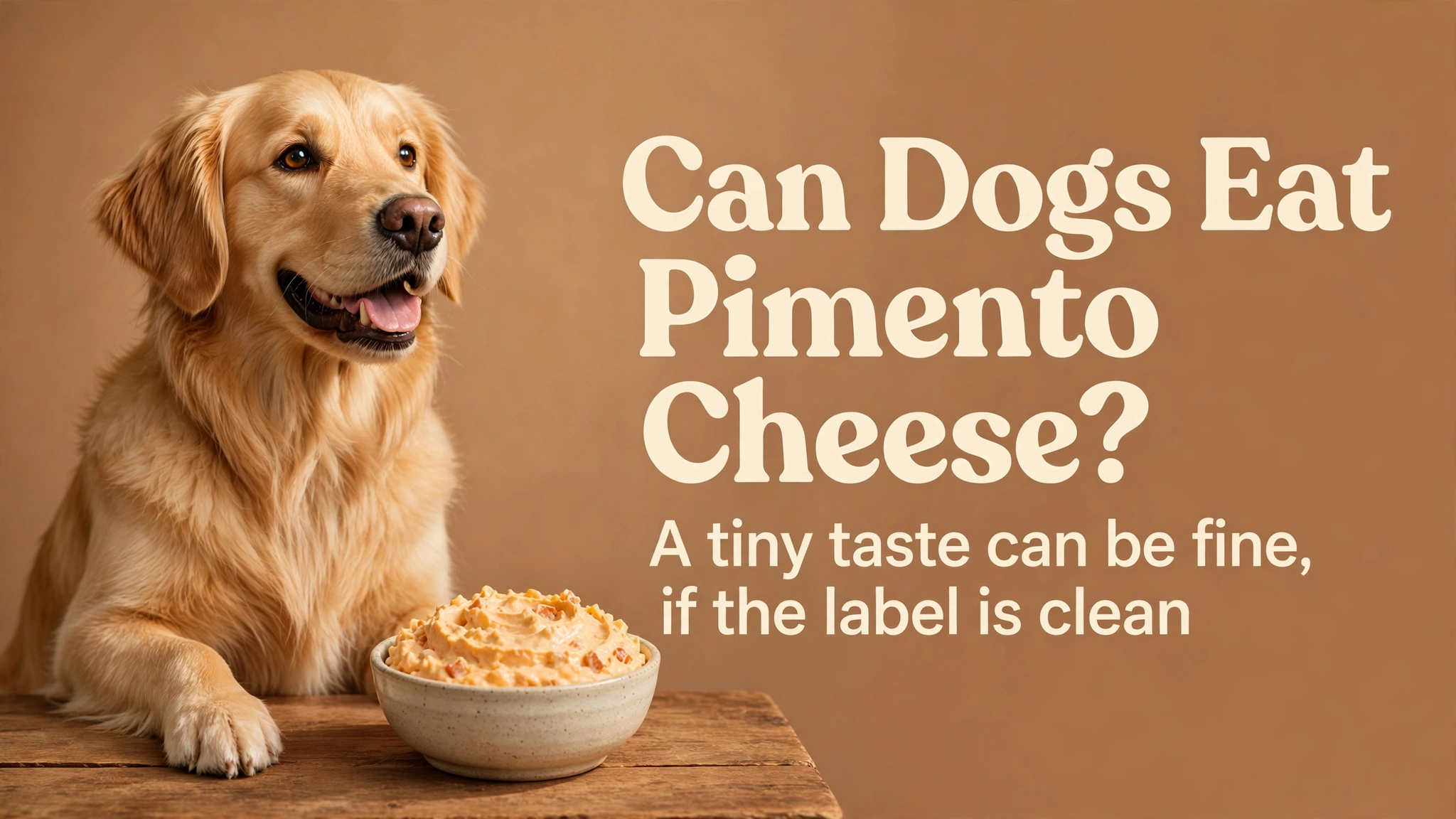
Can dogs eat pimento cheese? A tiny taste of plain pimento cheese is usually fine for a healthy adult dog, but only when the recipe has no garlic, onion, or other risky add ins. The spread itself is not the real problem. The label is. Pimento cheese is cheddar, mayonnaise, and chopped pimentos, and every brand and homemade recipe adds its own extras. Some are harmless. Some are not. This guide walks you through the label check, the safe amount for your dog size, and the exact steps to take if your dog already ate some.
Can Dogs Eat Pimento Cheese? The Short Answer
Yes, most healthy adult dogs can have a tiny taste of plain pimento cheese now and then. The pimentos are mild sweet peppers, not hot peppers, and they are not toxic to dogs. The risk comes from what sits next to them in the tub: fat from cheese and mayonnaise, salt, lactose, and allium add ins such as garlic and onion that show up in many recipes and brands.
Think of it as a taste, not a treat. A fingertip smear is plenty. A spoonful is already too much for a small dog, and a regular habit will add weight and stomach trouble over time. If the label lists garlic, onion, chives, or leeks in any form, the answer changes to no. Do not share that tub.
Pimento cheese is a Southern staple, and it shows up at picnics, parties, and sandwich counters across the South. That is exactly why dogs get into it so often. Someone sets a tub on a coffee table, a dog nose finds it, and a well meaning guest offers a cracker loaded with the spread. The dog is not in danger from one lick of a clean recipe. The danger is the tub with onion powder that nobody read, or the whole tub a dog eats while nobody is looking. Both are covered below.
The rest of this guide shows you how to read any label in ten seconds, how much fits your dog size, and what to do if your dog got into the tub before you could stop them.
What Is Pimento Cheese Made Of?
Pimento cheese starts with three simple parts: shredded cheddar, mayonnaise, and chopped pimentos. The classic Southern spread has been a picnic and sandwich staple for more than a century, and most recipes still follow that same base.
From there, recipes branch out. Cream cheese often joins the mix for a softer texture. Some cooks add a pinch of cayenne, a dash of hot sauce, or a spoonful of diced jalapeno. Others stir in bacon bits, extra salt, or a spoonful of onion or garlic for flavor. Store bought tubs vary just as much. Two tubs can sit side by side on the same shelf and carry very different ingredient lists, which is why the name on the front tells you almost nothing about safety. The label on the back tells you everything.
Light and low fat versions deserve a special warning. Some use sugar substitutes to cut calories, and xylitol is one of them. Xylitol is highly toxic to dogs, even in small amounts. It can cause a sudden drop in blood sugar, seizures, and liver failure. If a light pimento cheese lists xylitol, birch sugar, or any sugar alcohol you do not recognize, do not share it and keep the tub out of reach.
For your dog, the base parts are a mixed bag. Cheddar brings protein and calcium but also fat, salt, and lactose. Mayonnaise is almost pure fat with very little nutrition. Pimentos bring vitamin C and fiber in small amounts. None of the three base parts is toxic on its own. The trouble starts with the extras and the portion.
Are Pimentos Safe for Dogs?
Yes. Pimentos, also spelled pimientos, are mild red sweet peppers. They are not hot peppers, and they are not related to chili peppers in flavor or heat. Plain pimentos are not considered toxic to dogs.
A dog that eats a plain pimento will usually be fine. The pepper adds a little vitamin C and fiber, but it adds no real value to a dog diet, so there is no reason to feed pimentos on purpose. The pepper is simply not the ingredient to worry about. It is also worth knowing that pimentos are not the same as the peppers in pepper jack cheese or in a spicy salsa. Those carry heat and often carry garlic and onion too.
What does matter is what rides along with the pimento. Jalapeno, cayenne, red pepper flakes, and hot sauce are common in spicy pimento cheese recipes, and those can irritate a dog mouth and stomach. They cause drooling, lip licking, vomiting, or loose stool. They are a reason to skip a spicy recipe, but they are a different kind of risk from garlic and onion, which can damage red blood cells. Keep the two risks separate in your mind: heat causes discomfort, alliums cause real harm.
Some owners wonder about feeding plain pimentos on their own as a snack. A small piece now and then is fine for most dogs, but pimentos are high in fiber for their size, and a handful can cause stomach upset on its own. There is no benefit worth chasing here. A carrot stick gives your dog crunch and fiber with far less fuss.
Read the Label First: Palmetto Cheese vs Price’s Original
Here is where most guides stop at general advice. The label check is where the real answer lives, and two of the biggest brands show why.
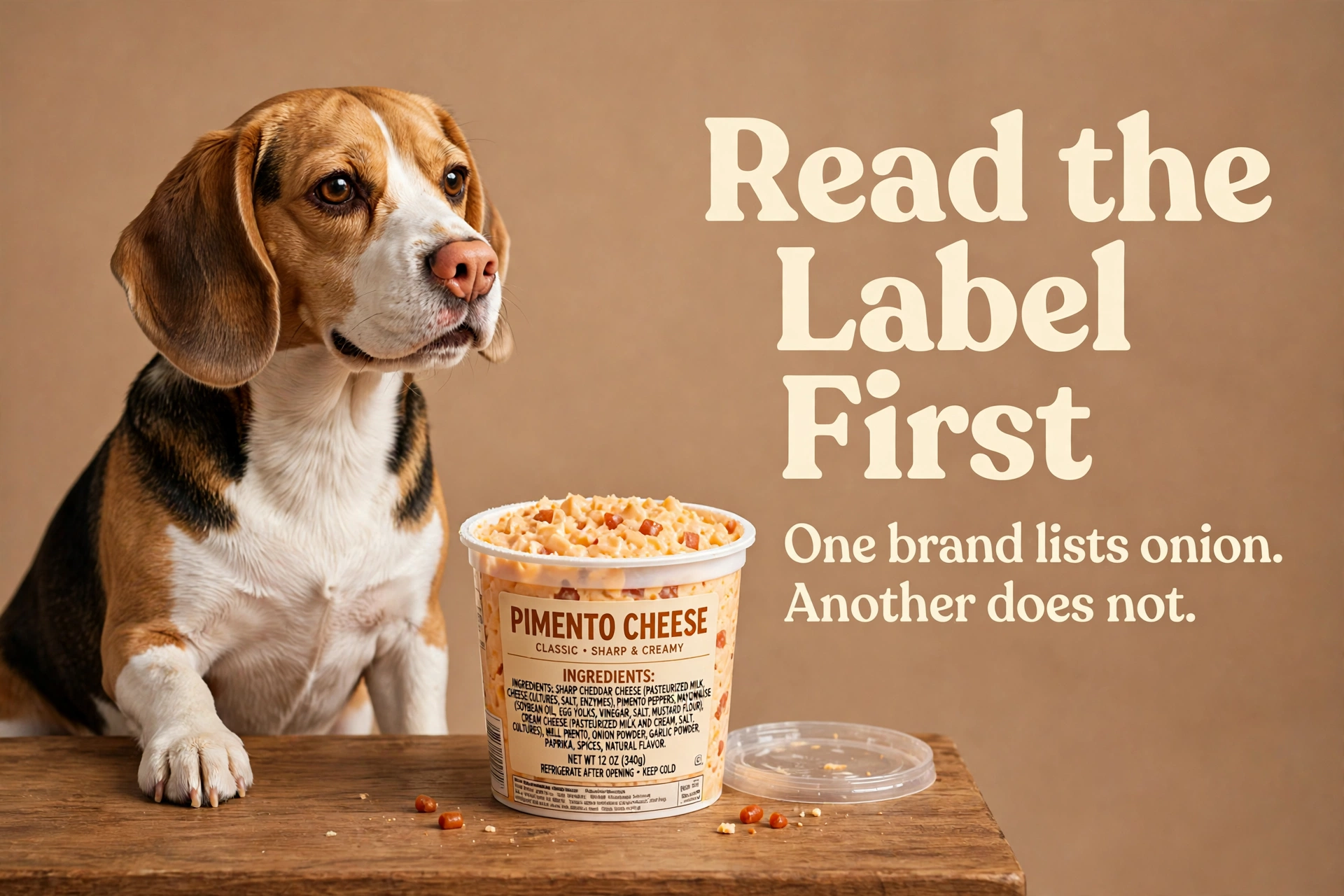
Palmetto Cheese, the brand many people know as the pimento cheese with the friendly label, lists onion in its ingredients. That single word means the tub is not for sharing with your dog, no matter how small the taste. Onion in any form, including onion powder, counts.
Price’s Original pimento cheese, by contrast, does not list garlic or onion on its label. That makes it a better candidate for a tiny taste, as long as the rest of the label is clean and your dog is healthy. It is still rich, salty, and high in fat, so a taste is all it should ever be.
Use this same check on every tub and every homemade recipe:
Read the full ingredient list, not just the front of the tub.
Look for garlic, onion, chives, leeks, and scallions in any form, including powders.
Look for jalapeno, cayenne, hot sauce, and red pepper flakes.
Look for xylitol or other sweeteners, which sometimes appear in light or low sugar spreads.
Check the sodium per serving. High sodium is a reason to keep the taste tiny.
If any item on the first four checks appears, do not share that tub. If the label is clean, a fingertip taste is the most your dog should get. When you cook pimento cheese at home, the same rule applies. Write down what went into the bowl before you offer any to your dog, because a pinch of garlic powder added for flavor is easy to forget five minutes later.
The Allium Problem: Garlic and Onion in Pimento Cheese
Garlic, onion, chives, and leeks belong to the allium family. Dogs that eat enough of these plants can develop damage to their red blood cells. The damage can show up days after the meal, which makes alliums easy to miss and dangerous to dismiss.
Raw, cooked, dehydrated, and powdered forms all count. Powdered garlic and onion powder are easy to overlook because they hide inside seasoning blends, and a small amount of powder is more concentrated than the same weight of fresh onion. A recipe that lists onion powder is not safer than one that lists chopped onion. It is the same risk in a smaller print.
If the label lists any allium, do not intentionally share that pimento cheese with your dog. The same rule holds for homemade recipes. A little onion powder tucked into a seasoning blend still counts.
Watch for these signs in the days after an allium meal: weakness, pale gums, rapid breathing, dark urine, loss of appetite, or collapse. These signs need urgent vet care. Do not wait for them to pass on their own. Allium poisoning is one of the few food risks where a dog can look fine on the day of the meal and get sicker over the following week, so the watch period matters as much as the first phone call.
Fat, Salt, and Lactose: The Everyday Risks
Even a clean label leaves three everyday risks: fat, salt, and lactose. None of them is toxic in a tiny taste, but all three add up fast in a rich spread like this one.
Fat is the biggest concern. Cheddar and mayonnaise pack a lot of calories into a small spoonful, and a large fatty meal can trigger pancreatitis in dogs that are prone to it. Miniature Schnauzers, Yorkshire Terriers, Cocker Spaniels, Dachshunds, and Poodles carry higher risk than most breeds. Warning signs include repeated vomiting, belly pain, a hunched posture, tiredness, and no appetite. Call your vet the same day if you see them. A single fingertip taste will not cause pancreatitis in a healthy dog, but a whole tub can, and a dog that has had pancreatitis before should not have any at all.
Salt is the second concern. Pimento cheese is a salty food, and a dog on a vet directed sodium restriction should not have it at all. A single lick is not salt poisoning, but a big serving with limited fresh water can cause real trouble. Keep fresh water available whenever your dog eats anything salty. Signs of too much salt include heavy thirst, vomiting, diarrhea, tremors, and confusion, and those signs need a vet visit right away.
Lactose is the third concern. Many adult dogs make less lactase, the enzyme that digests milk sugar, than they did as puppies. Cheddar has less lactose than milk, because much of it is lost during making, but a lactose sensitive dog can still get gas, loose stool, or vomiting from a rich dairy spread. If your dog has reacted to dairy before, skip pimento cheese entirely. A dairy allergy is different from lactose intolerance and more serious: itchy skin, ear trouble, or stomach upset after dairy means avoid cheese completely, not just in small amounts.
How Much Pimento Cheese Can a Dog Have? The Sodium Math by Dog Size
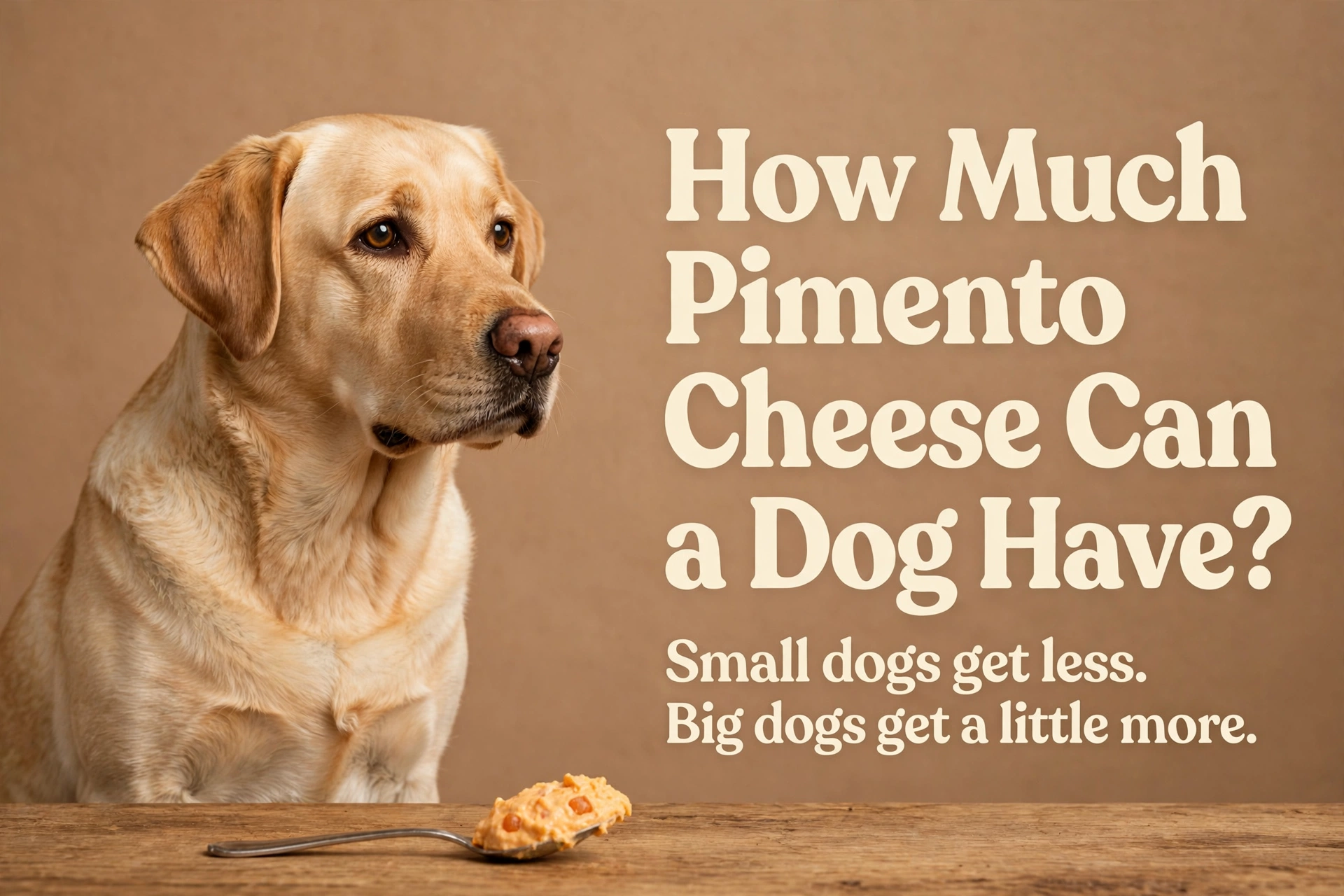
A single tablespoon of pimento cheese holds about 50 calories and about 90 milligrams of sodium. Those are estimates, because brands vary, but they show why the portion must stay tiny. Treats of all kinds together should stay under 10 percent of your dog daily calories, and one tablespoon can use up that whole budget for a small dog.
Use this table as a ceiling, not a target. It shows the most that fits in a day if pimento cheese is the only treat, and only when the label is clean and your dog is healthy.
Dog size
Daily calories about
Treat budget about
Most pimento cheese
10 lb dog
300
30 calories
Half a tablespoon
25 lb dog
550
55 calories
About 1 tablespoon
50 lb dog
900
90 calories
About 1 to 2 tablespoons
80 lb dog
1300
130 calories
About 2 tablespoons
In practice, most dogs do better with far less than the ceiling. A fingertip smear gives your dog the taste and the fun of joining snack time without the fat and salt load. If your dog already had other treats today, skip the pimento cheese and save the treat budget for something lighter. A training session with five cheese flavored treats and a spoonful of pimento cheese on top is already over budget for most dogs, even if each piece felt small on its own.
The sodium number matters most for dogs on a restricted diet. A dog with heart disease may have a daily sodium limit from the vet, and a single tablespoon of pimento cheese can use a large share of it. If your vet has set a sodium limit, ask them directly before offering any cheese spread, because the limit is specific to your dog and no table can replace it.
Mayo Base vs Cream Cheese Base: Which Is Worse for Dogs?
Most pimento cheese uses one of two bases, and the base changes the risk a little.
A mayonnaise base is the classic recipe. Mayonnaise is almost pure fat, about 100 calories per tablespoon, with almost no protein or calcium to balance it. It adds richness fast, and it is the reason a single spoonful can blow a small dog treat budget. For a healthy dog, a mayo base spread is a fat problem first and a salt problem second.
A cream cheese base is softer and a little lower in calories per spoonful, about 50 calories per tablespoon, but it brings more lactose and is often paired with extra cheddar, which pushes the fat and salt back up. For a lactose sensitive dog, a cream cheese base is the worse choice of the two.
Neither base is good for dogs. If you had to pick the lesser risk for a healthy dog with no dairy trouble, a cream cheese base spread in a fingertip amount edges out a mayo base spread, simply because it carries fewer calories per spoonful. For a dog with any dairy sensitivity, skip both. The base does not change the label rule: any garlic or onion in either version means no sharing at all.
Homemade recipes sometimes use a mix of both bases, and some add sour cream as well. Sour cream adds more lactose and more fat, so a three base recipe is the richest of all. If you make pimento cheese at home and want a dog safe spoonful, set aside a small plain portion of cheddar and pimento before you add the mayo, seasonings, and extras to the main bowl. That plain portion is the only part your dog should ever taste.
The Fingertip Taste Protocol: How to Offer a First Taste Safely
If the label is clean and your dog is healthy, use this simple protocol for a first taste. It takes two minutes and it keeps a fun moment from turning into a vet visit.
Check the label one more time for garlic, onion, chives, leeks, jalapeno, and hot sauce.
Put a fingertip size smear on your finger or on a small spoon. Do not fill a spoon and do not spread it on a cracker for your dog.
Offer it once and watch your dog eat it. Do not offer a second taste in the same sitting.
Keep fresh water nearby and keep the rest of the tub out of reach.
Watch your dog for the next 24 hours. A little gas or one soft stool can happen after rich food. Repeated vomiting, ongoing diarrhea, a painful belly, or unusual tiredness deserves a vet call.
If the first taste went fine, keep it rare. A tiny taste now and then is the most pimento cheese should ever be for a dog. It should never become a daily habit or a way to hide pills.
Do not use pimento cheese to hide medicine. The calcium in dairy can reduce how well some medicines are absorbed, including certain antibiotics, and the fat and salt add risk on top of that. Ask your vet or pharmacist first, and use a plain pill pocket or a small piece of plain cooked chicken instead.
Dogs That Must Skip Pimento Cheese Completely
Some dogs should not have pimento cheese at all, even a clean label fingertip taste. If your dog fits any group below, choose a different treat.
Dogs with a history of pancreatitis or fat triggered digestive trouble. A rich spread can set off another episode.
Dogs that do not tolerate dairy well. Lactose intolerance turns a small taste into gas, loose stool, and belly pain.
Dogs on a weight loss plan. Pimento cheese is calorie dense, and a small dog gains weight from it quickly.
Dogs with heart or kidney disease on a sodium restricted diet. Salt and phosphorus in cheese work against the diet your vet prescribed.
Dogs on a prescription diet. Added treats can undo the diet, so ask your vet before offering anything new.
Puppies. A puppy stomach is small and sensitive, and rich table food teaches a puppy to beg for human food instead of eating balanced puppy food.
Dogs with a dairy allergy. This is different from lactose intolerance. Itchy skin, ear trouble, or stomach upset after dairy means avoid cheese completely.
If you are unsure which group your dog fits, ask your vet. A quick question costs nothing and it beats a sick dog.
My Dog Ate a Whole Tub of Pimento Cheese: What to Do Now
First, stay calm and gather facts. Pick up the tub and any leftovers so your dog cannot eat more. Note the brand, the full ingredient list, how much is missing, and the time your dog ate it. Save the package. Your vet will want the exact list.
If the label lists garlic, onion, chives, or leeks, call your vet or an animal poison control line right away, without waiting for symptoms. In the United States, the ASPCA Animal Poison Control Center is 888 426 4435 and the Pet Poison Helpline is 855 764 7661. A consultation fee may apply. Give them your dog weight, the exact ingredient list, the amount eaten, and the time.
If the label is clean but your dog ate a large amount, call your vet the same day, especially if your dog is small or has a history of pancreatitis. Expect possible vomiting or loose stool over the next day or two. Offer fresh water, skip fatty foods, and watch for repeated vomiting, belly pain, refusal to eat, bloody stool, or unusual tiredness. These signs need a vet visit.
Keep watching for three full days, even if your dog seems fine at first. Day one is usually stomach upset from the fat and salt. Day two and three are when allium signs can appear if the recipe had garlic or onion, including weakness, pale gums, and dark urine. A dog that ate a large amount should not get fatty food again until the vet says so, and the next meals should be plain and light.
Go to an emergency vet at once if you see tremors, stumbling, a high temperature, seizures, or collapse. Allium related signs can be delayed by days, so keep watching even if your dog seems fine at first.
Do not try to make your dog vomit unless a vet or poison control professional tells you to do so.
Puppies, Seniors, and Small Dogs: Special Cases
Puppies, seniors, and small dogs all need a stricter rule than a healthy adult dog, and each group has its own reason.
Puppies make plenty of lactase while nursing and lose much of it after weaning, but their stomachs are still sensitive and their daily calorie budget is tiny. A puppy does not need pimento cheese, and a rich spread can cause loose stool that dehydrates a small puppy fast. If your puppy already licked a clean recipe, watch the next stool and offer water, but do not make it a habit. A simple training treat is the better choice while your puppy is learning.
Senior dogs digest fat more slowly, and many older dogs already carry extra weight or take medicine that affects the gut. Pancreatitis appears more often in middle aged and older dogs, especially overweight ones. A healthy senior can usually handle a fingertip taste of a clean recipe now and then, but if your older dog has stomach, heart, kidney, or pancreas problems, ask your vet first. A tiny taste is not worth a flare up.
Small dogs face the simplest math problem. A 10 pound dog has a whole day treat budget of about 30 calories, and a single tablespoon of pimento cheese holds about 50. One spoonful is already over budget before the rest of the day starts. For a toy breed, even a fingertip smear is a real share of the day. Keep the taste tiny, count it, and skip it on days when your small dog already had other treats.
Better Treats Than Pimento Cheese
If your dog loves joining snack time, simpler foods give the same joy with far less risk. A bite of plain cooked chicken or turkey, a carrot stick, a cucumber slice, or a small piece of plain provolone cheese all work well. A familiar dog treat made for dogs is the easiest choice of all.
Simple foods make it easier to control fat, salt, and seasoning. They also spare you the label detective work every time the snack plate appears. If your dog loves the taste of cheese, a cheese flavored dog treat gives the flavor with controlled fat and salt.
Save pimento cheese for the humans at the table. Your dog will be just as happy with a plain bite, and you will not spend the evening watching for stomach trouble.
Conclusion: The Bottom Line on Pimento Cheese for Dogs
Can dogs eat pimento cheese? A healthy adult dog can have a tiny fingertip taste of a plain, allium free spread now and then, and that is the whole story. The pimentos are mild sweet peppers and they are not the problem. The label is. Garlic and onion turn a harmless taste into a real risk, and fat, salt, and lactose make even a clean tub a poor regular treat.
Read the label every time, keep the portion to a fingertip, and skip it entirely for dogs with pancreatitis, dairy trouble, or a sodium restricted diet. When in doubt, pick a plain treat instead. Your dog gets the fun of snack time either way, and you get peace of mind.
Frequently Asked Questions About Pimento Cheese for Dogs
Can dogs eat pimento cheese every day?
No. Daily servings add fat, salt, and calories that raise the risk of weight gain and pancreatitis. Keep it to a rare fingertip taste at most, inside the 10 percent treat budget.
Are pimentos safe for dogs?
Yes. Plain pimentos are mild sweet peppers and are not considered toxic to dogs. The bigger questions are whether the recipe contains alliums, hot add ins, and a large amount of fat or sodium.
Can dogs eat store bought pimento cheese?
Sometimes. A healthy adult dog can have a tiny taste of a clean label tub, but recipes vary. Palmetto Cheese lists onion, while Price’s Original does not list garlic or onion, so read the exact label first.
What if my dog ate pimento cheese with garlic or onion?
Save the package and contact your vet or an animal poison control line promptly. Tell them how much your dog weighs, what the label lists, how much is missing, and when it happened. Do not induce vomiting unless a professional tells you to.
Can puppies eat pimento cheese?
A tiny accidental lick of an allium free product is unlikely to be a crisis, but pimento cheese is not a useful puppy treat. It is rich, salty, and easy to overdo, so a simple training treat is the better habit.
Can dogs eat pimento cheese with jalapeno?
No. Jalapeno and other hot peppers can irritate a dog mouth and stomach, causing drooling, vomiting, or loose stool. Choose a mild recipe or skip the spread entirely.
How much pimento cheese can a small dog have?
A 10 pound dog has a treat budget of about 30 calories a day, so half a tablespoon is the most that fits, and a fingertip smear is a better choice. Small dogs gain weight from rich spreads quickly.
Is pimento cheese good for dogs?
No, not as a food. It has protein and calcium from the cheddar, but a complete dog food already supplies both. Treat it as a rare taste, not a source of nutrition.
Bella Barker is a pet food safety writer with 10+ years of experience. She researches what dogs and cats can (and can't) eat and turns it into simple, practical guides for everyday pet parents. 🐶🐱
Yes, most healthy adult dogs can have lactose free milk in small amounts. The sugar that causes most milk trouble is already broken down before the milk reaches the bowl, so a careful owner can share a small splash without the usual stomach upset. That does not make it a health food, and it does…
Parsley sits on almost every plate as a garnish, and sooner or later some of it lands near your dog. A sprig falls on the floor, or your dog gives the herb pot on the windowsill a hopeful sniff, and you wonder if it is safe. The short answer is yes, a dog can eat…
Yes, dogs can eat strawberry fruit without worry, as long as it is fresh, washed, and given in small amounts. Strawberries are not toxic to dogs. They are low in calories and carry vitamin C, fiber, and antioxidants. Keep scrolling for portions by dog size, safe prep steps, and the strawberry products to avoid. Can…
Your dog is watching you snap green beans at the counter, and those long green pods look like the kind of thing a dog would love to crunch. When people ask about green beans for dogs, they usually mean plain fresh beans, not the casserole on the holiday table and not a can from the…
If your dog has ever stared at your breakfast bowl, you have probably asked yourself: can dogs eat pineapple yogurt? The short answer is that plain yogurt mixed with fresh pineapple can be a safe treat for many healthy dogs, but most pineapple yogurt sold in stores is not a good choice for them. The…
Figs look like a healthy snack. They are soft, sweet, and full of fiber, so it is natural to wonder if your dog can share one. The short answer is yes, fresh ripe figs are safe for dogs in small amounts. But the form of the fig matters a lot. Dried figs, fig cookies, fig…