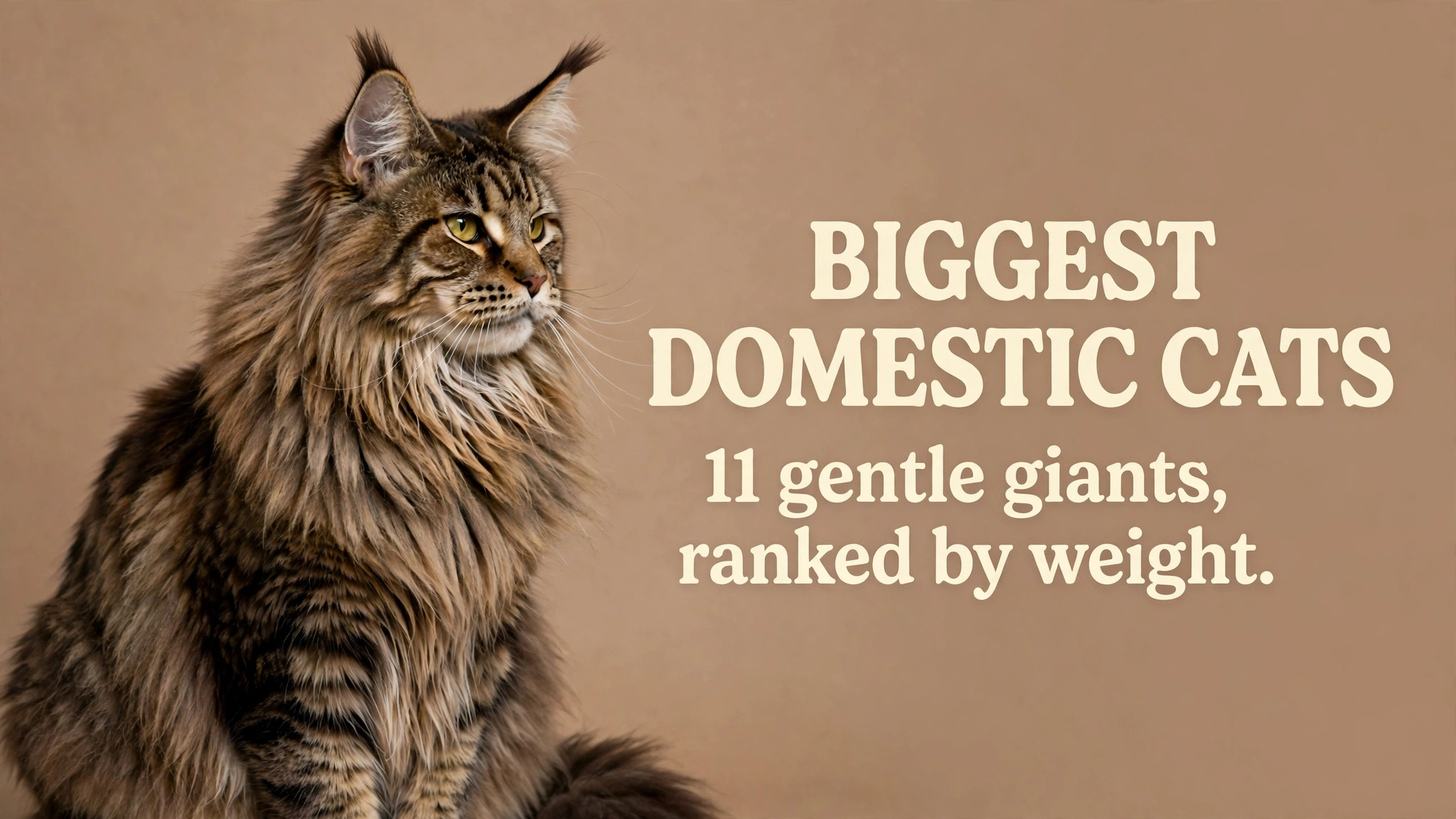
Most house cats weigh between 8 and 12 pounds, and they fit neatly on your lap. Then there are the giants. Some domestic cats grow so large that they weigh as much as a small dog, stretch close to four feet long, and need a litter box built for a much bigger animal.
If you have ever wondered which breeds grow the largest, you are in the right place. This guide ranks the biggest domestic cats by weight, with separate numbers for males and females, so you can see exactly how each breed measures up.
You will also learn which giants are natural breeds and which ones carry wild blood, meet the record holders, and find out what life with a 20 pound cat really looks like, from food bills to furniture that can take the weight. And if you enjoy learning about cat breeds, our guide to the Scottish cat covers another popular breed with a very different kind of charm.
How Big Is a Big Cat? What Counts as a Giant
A cat counts as large once it passes 12 pounds. Most mixed breed cats stay between 8 and 12 pounds, with males a little heavier than females. A large breed male can reach 20 to 25 pounds, which is double the weight of an average cat.
Size is not just about weight. Height at the shoulder, body length, and bone structure all matter. A tall, lean Savannah can look bigger than a stocky British Shorthair of the same weight, because the Savannah stands on long legs while the British Shorthair carries its weight low and wide.
Coat thickness can fool you too. A Norwegian Forest Cat looks enormous in winter, but much of that size is fur. The real measure is the cat underneath the coat, which is why this guide lists weight first and treats looks as a bonus.
The 11 Biggest Domestic Cats, Ranked by Weight
Here are the 11 largest breeds, ranked from heaviest to lightest, using the top weight a healthy adult male can reach. The table gives a quick view. The profiles below it add temperament, coat, and what each breed is like to live with.
Breed
Male weight
Female weight
Coat
Origin
Maine Coon
up to 25 lb
up to 18 lb
Long
United States
Chausie
up to 26 lb
up to 20 lb
Short
Jungle cat cross
Savannah
12 to 25 lb
10 to 20 lb
Short
Serval cross
Ragdoll
up to 20 lb
up to 15 lb
Semi-long
United States
Norwegian Forest Cat
up to 20 lb
up to 16 lb
Long
Norway
Siberian
up to 20 lb
up to 15 lb
Long
Russia
Turkish Van
up to 20 lb
up to 15 lb
Semi-long
Turkey
Ragamuffin
up to 20 lb
up to 15 lb
Long
United States
British Shorthair
10 to 18 lb
8 to 14 lb
Short
United Kingdom
Pixiebob
up to 17 lb
up to 14 lb
Short to medium
United States
American Bobtail
up to 16 lb
up to 13 lb
Medium to long
United States
1. Maine Coon
The Maine Coon is the classic gentle giant and the largest of the natural breeds. Males reach 15 to 25 pounds, and some exceptional cats have passed 30 pounds. Females are smaller, usually 10 to 18 pounds. This breed comes from the cold forests of Maine, where it worked as a farm and ship cat, and it still carries that rugged build: a long, shaggy coat, tufted ears, big paws, and a tail like a feather duster.
Maine Coons are famously social. They follow their people from room to room, chirp and trill instead of meowing, and many enjoy playing in water. They stay playful well into adulthood, which makes them a great fit for families with children and other pets.
2. Chausie
The Chausie is a hybrid between a domestic cat and the wild jungle cat, and it can be the heaviest cat on this list, with males reaching up to 26 pounds. Chausies are tall and athletic, with long legs, a deep chest, and tufted ears that hint at their wild roots.
These cats are clever, active, and very social. They play fetch, walk on a leash, and can jump six feet straight into the air. A Chausie needs a lot of play and climbing space every day, so it suits an owner who can keep up with a cat that never seems to run out of energy.
3. Savannah
The Savannah is a cross between a domestic cat and the African serval, and it is the tallest breed you can keep as a pet. Males weigh 12 to 25 pounds, and early generation cats can stand 16 inches or more at the shoulder. Their spotted coats and huge ears give them a wild look that turns heads.
Savannahs are bright, bold, and always on the move. They can leap eight feet into the air, learn to open doors, and love leash walks and puzzle toys. They need an experienced owner and plenty of space. Check your local rules before you buy one, because Savannah cats are restricted in some cities and states.
4. Ragdoll
The Ragdoll earns its name by going limp and floppy when you pick it up, like a soft toy. Males reach up to 20 pounds, with blue eyes, a silky semi-long coat, and a calm, loving nature that makes this breed one of the most popular in the world.
Ragdolls love people and hate being left alone. They follow their owners around the house, greet them at the door, and settle happily into a lap for the evening. They are slow to mature and do not reach full size until about four years old, so enjoy the long kitten stage while it lasts.
5. Norwegian Forest Cat
The Norwegian Forest Cat, often called the Wegie, is a rugged Nordic breed with a thick, water-resistant coat, a lion-like ruff, and a strong, muscular body. Males reach up to 20 pounds, and the dense fur makes them look even bigger than they are.
These cats come from the cold forests of Norway, where Viking stories mention cats just like them. They are friendly and loyal, but a little independent, and they love to climb. A tall, sturdy cat tree is a must in a home with a Norwegian Forest Cat, because this breed likes to survey its kingdom from the highest shelf.
6. Siberian
The Siberian is a natural breed from Russia with a thick triple coat built for harsh winters. Males reach up to 20 pounds, and the heavy bone structure gives them a solid, powerful feel. They take up to five years to reach full size, so a young Siberian still has a lot of growing to do.
Siberians are playful, clever, and deeply attached to their people. They love to climb and join in family life, and they often produce lower levels of the Fel d 1 protein that triggers most cat allergies. That does not make them hypoallergenic, but many allergy prone families find them easier to live with than other long haired breeds.
7. Turkish Van
The Turkish Van is a large, muscular cat from the mountains of Turkey, famous for its white coat with colored markings on the head and tail, and for loving water. Males reach up to 20 pounds, with a broad chest and an athletic build that makes jumping look easy.
Turkish Vans are playful, smart, and full of energy. They enjoy games, climbing, and even a paddle in shallow water, which earned them the nickname of the swimming cat. Give them plenty of play and a tall cat tree, and they will reward you with years of lively company.
8. Ragamuffin
The Ragamuffin is a close cousin of the Ragdoll, with the same plush coat and loving nature, but in more colors and patterns. Males reach up to 20 pounds, and their thick, silky fur makes them look even larger than the scale says.
These cats are calm, patient, and wonderful with children. They love to cuddle, they learn simple tricks like fetching a toy, and they are happy to lounge beside you for hours. Their coat needs regular brushing to stay soft and free of tangles, but their easygoing nature makes grooming a pleasant job.
9. British Shorthair
The British Shorthair is a stocky, teddy bear like cat with a round face, a dense plush coat, and a calm, quiet nature. Males weigh 10 to 18 pounds, and their broad chest and thick legs pack a lot of weight into a compact frame.
British Shorthairs are loyal and affectionate without being needy. They enjoy your company, but they are happy to spend part of the day on their own, which makes them a good fit for people who work outside the home. Watch their food carefully, because this breed gains weight easily and a heavy British Shorthair can tip into overweight without you noticing.
10. Pixiebob
The Pixiebob was bred to look like a North American bobcat, with a short tail, spotted coat, and a wild, rugged face. Males reach up to 17 pounds, and many have extra toes, a trait called polydactyly that gives their big paws an even bigger look.
Pixiebobs are loyal and dog like in their devotion. They follow their owners, play fetch, and learn to walk on a leash. They are sturdy, playful, and full of character, and they make a great choice for a family that wants a big cat with a wild look and a friendly heart.
11. American Bobtail
The American Bobtail is a medium to large cat with a short, bobbed tail that comes from a natural genetic change. Males reach up to 16 pounds, with a stocky build, a thick double coat, and front legs that are a little shorter than the back legs.
American Bobtails are smart, playful, and famously friendly. Many greet their owners at the door, wag their tails when they are happy, and learn to open doors and cupboards. They adapt well to apartments and to homes with children and other pets, which makes them one of the easiest giants to live with.
Hybrid or Natural? Why Some Big Cats Have Wild Roots
Not every giant cat got big the same way. The Maine Coon, Norwegian Forest Cat, Siberian, Ragdoll, and British Shorthair are natural or long established breeds. They grew large over centuries of cold winters and farm work, where a big, sturdy body was an advantage.
The Savannah, Chausie, and Bengal carry recent wild blood. The Savannah comes from the African serval, the Chausie from the jungle cat, and the Bengal from the Asian leopard cat. These hybrids are tall, lean, and far more active than the natural giants. They need more play, more climbing space, and more of your time.
That wild heritage also brings rules. Savannah cats are restricted or banned in some cities and states, and early generation hybrids are the biggest and the most demanding. Before you fall for a hybrid, check your local laws and be honest about how much energy you can give a cat that can jump eight feet straight up.
Record Holders: The Longest and Tallest Cats Ever Measured
The record books belong to the giants. Barivel, a Maine Coon from Italy, holds the Guinness World Record for the longest living domestic cat at 47 inches, which is just under four feet from nose to tail tip. The longest domestic cat ever measured was another Maine Coon, Mymains Stewart Gilligan, at 48.5 inches.
The tallest title belongs to the Savannah side of the family. Fenrir, a Savannah cat, was measured at 18.83 inches tall at the shoulder and named the tallest living domestic cat in 2021. His brother Arcturus, also a Savannah, stood 19.05 inches tall and weighed 30 pounds, making him the tallest domestic cat ever recorded.
These are extremes, not averages. A normal Maine Coon is still a very large cat, but your pet will not stretch four feet long. The records matter because they show what the breeds are capable of when genetics, food, and care all line up.
Slow Growers: Why Giant Cats Take Up to 5 Years to Fill Out
A normal cat reaches full size at about one year old. A giant breed is still a teenager at that age. Maine Coons, Norwegian Forest Cats, Siberians, and Ragdolls keep growing for three to five years before they reach their full weight and frame.
That slow growth is normal, and it is also a reason to be patient. A two year old Maine Coon that weighs 14 pounds is not small. It is halfway through growing, and it still has years of filling out ahead of it.
Slow growth also means slow feeding changes. Kittens of giant breeds need food that supports steady bone growth, and adults need portions matched to their real weight, not to the weight you hope they reach. Your vet can tell you whether your young giant is on track, and that check is worth doing once a year while the cat is still growing.
Is Your Big Cat Healthy or Just Overweight?
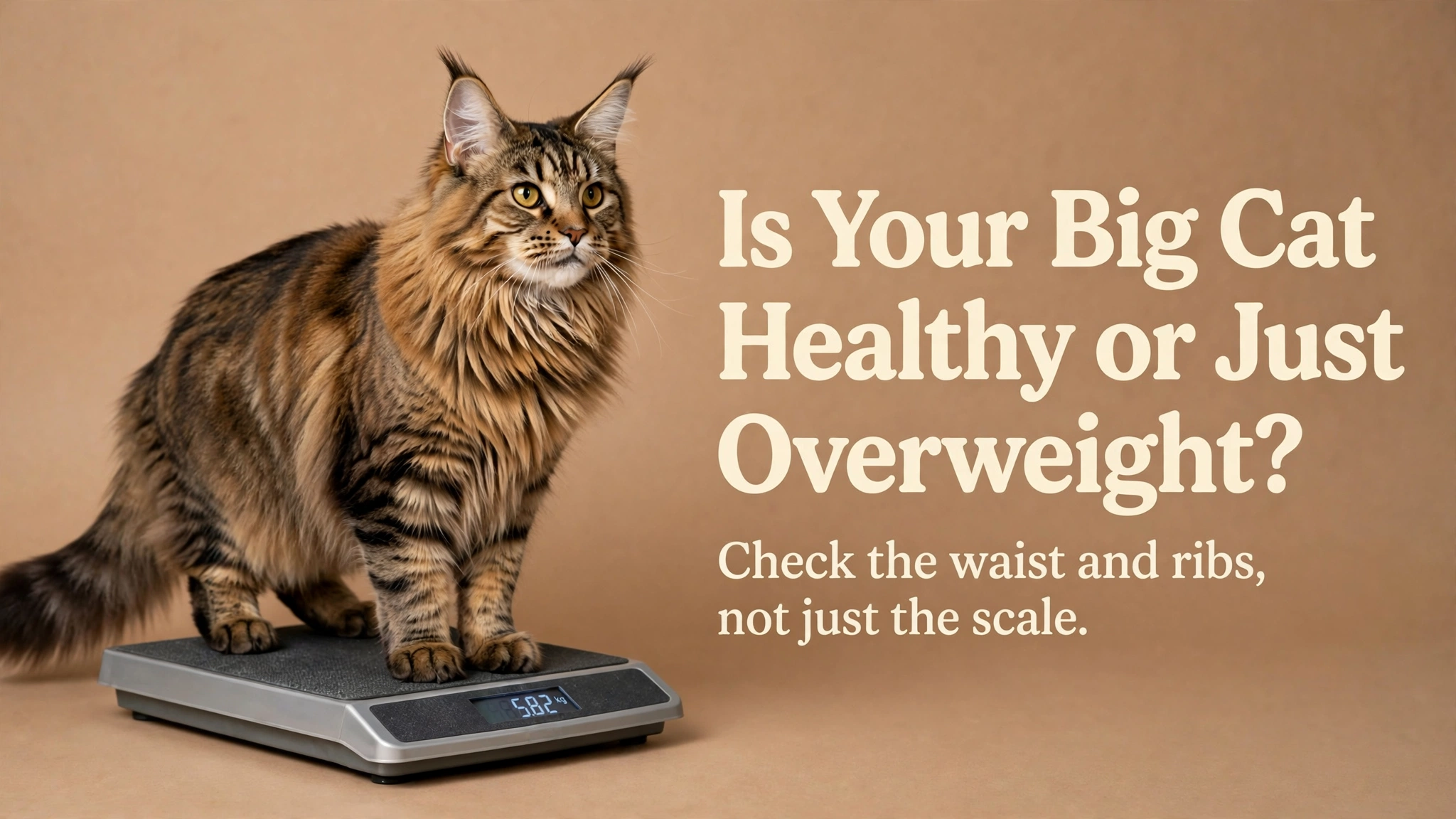
A 20 pound cat can be perfectly healthy, or it can be carrying five extra pounds. The difference is shape, not just the number on the scale. A healthy giant has a waist you can see from above, ribs you can feel with a light touch, and a belly that tucks up when you look from the side.
An overweight cat loses that waist. The belly hangs low, the ribs hide under a thick layer of fat, and the cat moves less and grooms less. Long haired giants make this harder to spot, because the coat hides the body shape. Run your hands along the ribs once a month. If you have to press hard to feel them, it is time to talk to your vet about food and portions.
Breed matters here. A British Shorthair gains weight easily and needs measured meals, while a Savannah burns calories all day and rarely gets fat. Know your breed, weigh your cat every few months, and let the vet set the target weight instead of guessing.
Is Your Home Ready for a Giant Cat?
A big cat needs big gear. Start with the litter box. A standard box is too small for a 20 pound cat to turn around in, so choose an extra large box, or a large storage tub with a doorway cut in the side. Place one box per cat, plus one extra, just as you would for any cat.
Food is the next cost. A giant cat eats more than an average cat, often one and a half times as much, and the monthly food bill shows it. Budget for that before you bring the cat home, along with larger doses of flea and worm treatments, which are priced by weight.
Furniture has to hold up too. A flimsy cat tree will wobble under a 20 pound cat, and a cheap scratching post will topple. Buy a tree with a wide, heavy base and thick posts, and check the weight rating before you buy. A sturdy carrier matters as well, because the day you need to carry a 25 pound cat to the vet is not the day to find out your carrier is too small.
Conclusion: The Bottom Line on the Biggest Domestic Cats
The biggest domestic cats are gentle giants with big personalities to match their size. The Maine Coon leads the list as the largest natural breed, while hybrids like the Savannah and Chausie add height, energy, and wild looks. Whichever breed catches your eye, remember that size brings needs: more food, bigger gear, more play, and more patience while a slow growing giant fills out over several years.
Pick the breed that fits your home and your energy, not just the one with the biggest number on the scale. A calm Ragdoll suits a quiet home, while a Savannah needs an owner who loves an active, clever cat. Get that match right, and a giant cat will fill your home in the best possible way.
Frequently Asked Questions About the Biggest Domestic Cats
What is the biggest domestic cat breed?
The Maine Coon is the largest natural domestic cat breed. Adult males usually weigh 15 to 25 pounds, and the longest cats ever measured have all been Maine Coons.
How much do the biggest domestic cats weigh?
The largest breeds weigh 15 to 26 pounds as adults. Most giant breeds fall between 15 and 20 pounds, while an average house cat weighs 8 to 12 pounds.
Are Savannah cats bigger than Maine Coons?
Savannah cats are taller, with long legs and a lean build, and early generation males can reach 25 pounds. Maine Coons are heavier built and longer, so the Maine Coon usually wins on overall size and weight.
Do big cat breeds need more food?
Yes. A giant cat can eat about one and a half times as much as an average cat. Feed measured meals for your cat’s weight and age, and ask your vet to set the daily amount.
Are the biggest domestic cats good with children?
Most are. Maine Coons, Ragdolls, Ragamuffins, and Siberians are known for being gentle and patient with children. Always supervise young children with any cat, and teach them to handle the cat gently.
How long do giant cat breeds live?
Most large breeds live 12 to 18 years. Norwegian Forest Cats and Siberians often reach 15 to 18 years, while Ragdolls and Maine Coons usually live 12 to 15 years. Good food, vet care, and a healthy weight help any cat live longer.
Are big cats harder to care for than normal cats?
They need bigger gear and more food, and long haired giants need regular brushing. Hybrids like the Savannah also need far more play and climbing space. The daily care is the same, just scaled up.
What is the largest domestic cat ever recorded?
The longest domestic cat ever was a Maine Coon named Mymains Stewart Gilligan, measured at 48.5 inches long. The tallest ever was a Savannah named Arcturus, at 19.05 inches tall and 30 pounds.
Bella Barker is a pet food safety writer with 10+ years of experience. She researches what dogs and cats can (and can't) eat and turns it into simple, practical guides for everyday pet parents. 🐶🐱
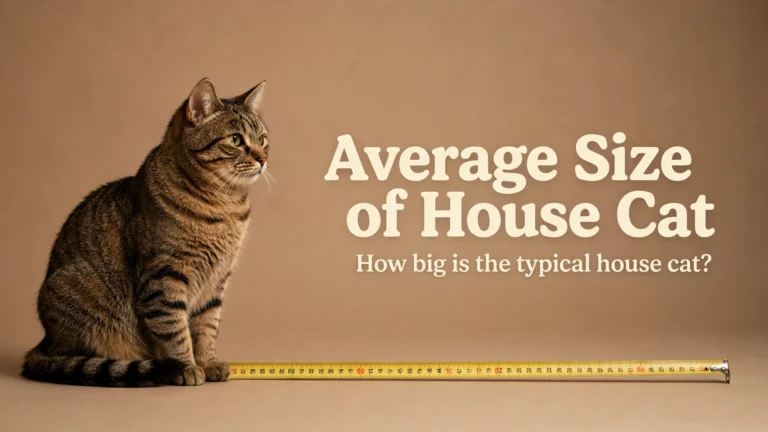
Your cat curls into a ball small enough to fit in a shoebox, then stretches out across the whole sofa an hour later. It is no wonder owners ask how big a house cat should be. The short answer is simple: a healthy adult house cat usually weighs 8 to 10 pounds, measures 18 to…
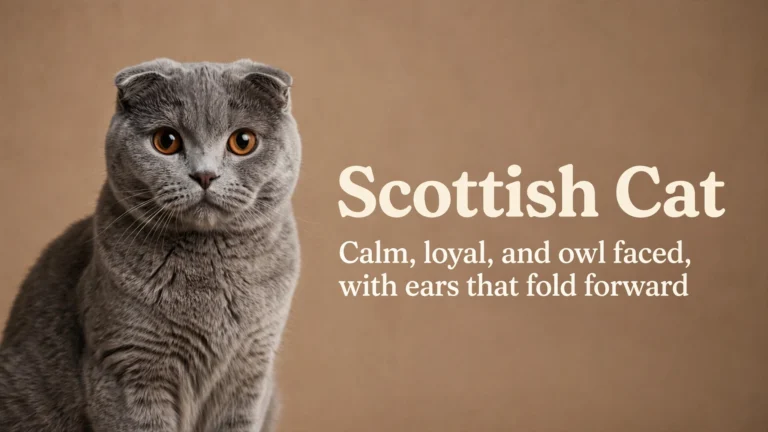
A Scottish cat walks into a room and quietly takes it over. The round face, the big eyes, and the small ears folded forward give this cat an owl look that stops people in their tracks. It is one of the most photographed cats on the internet, and one of the most misunderstood. This guide…





One Comment