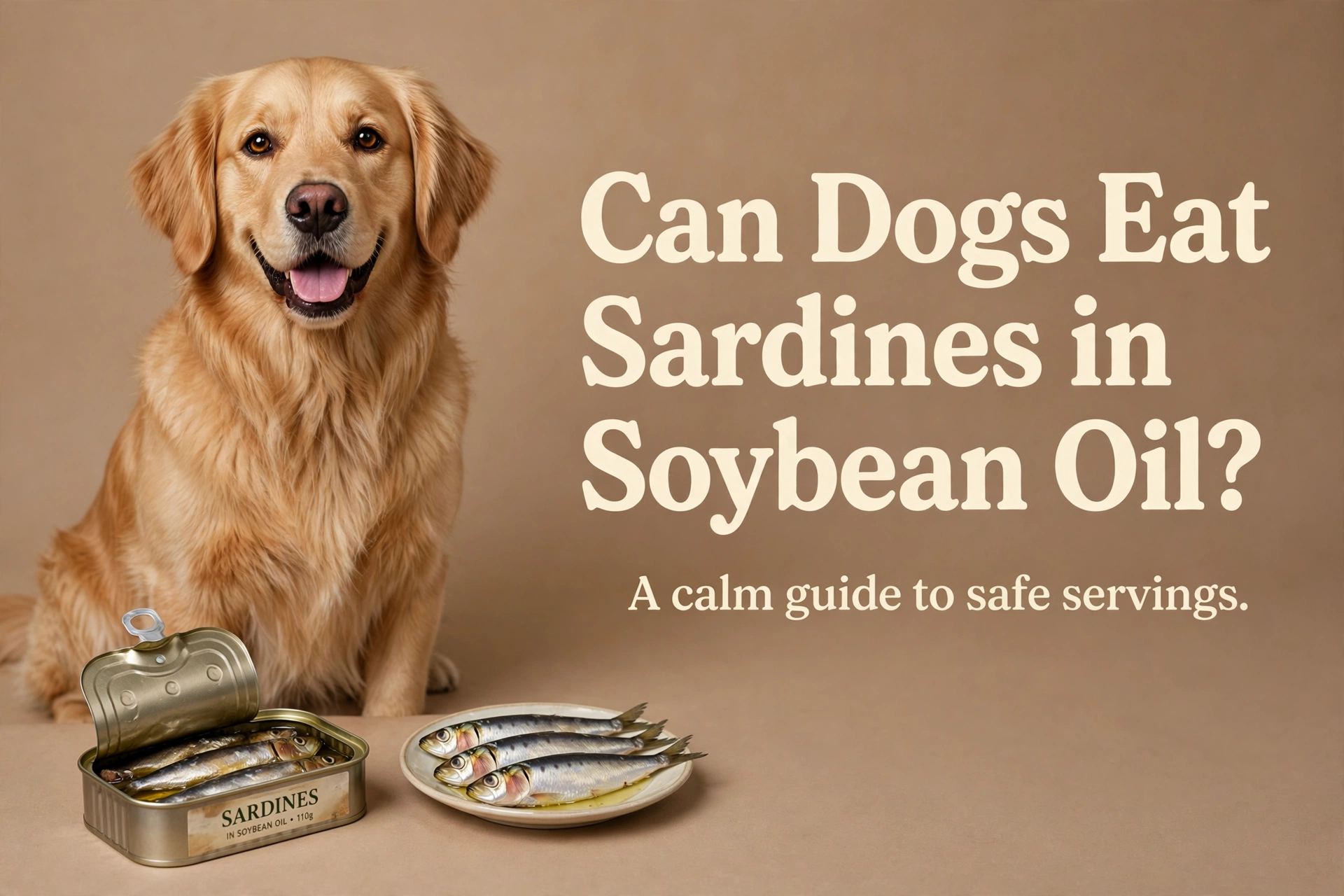
You open the pantry, find a tin of sardines in soybean oil, and your dog is already watching you with hopeful eyes. So, can dogs eat sardines in soybean oil? The calm answer is yes, for most healthy dogs, as an occasional treat, and only after you drain the oil. The fish itself is the good part. The soybean oil is the part that needs handling with care, because it adds fat and calories your dog does not need.
This guide explains what is in the tin, how much to serve by dog size, how to check the salt, and which dogs should skip this treat. It also covers what to do if your dog eats too many, or eats the wrong kind. Nothing here replaces advice from your own vet, especially if your dog has a health condition.
What Soybean Oil Actually Adds to the Tin
Soybean oil is not toxic to dogs in the small amount left on a drained sardine. That is an important distinction, because many owners worry the oil itself is poison. It is not. The problem is simpler: oil is fat, fat is calories, and a tin packed in oil can carry far more calories than the same fish packed in water.
Soybean oil is also rich in omega 6 fats. Dogs need some omega 6, but most modern dog diets already contain plenty of it. Sardines are prized for the opposite reason, their omega 3 fats, EPA and DHA. When you serve the fish swimming in soybean oil, you dilute that benefit with extra omega 6 and extra fat.
Draining matters more than most people expect. Tip the tin into a small strainer, let the oil run off fully, and do not pour that oil over your dog’s kibble. A quick, gentle rinse can help if the tin is salty, but do not scrub the fish or soak it for long. You want the fish, not the packing liquid. After draining, portion size still matters.
Why Sardines Still Earn a Place in a Dog Bowl
Sardines are small, oily fish that sit low on the ocean food chain. Because they eat plankton and live short lives, they pick up far less mercury than large predatory fish such as tuna or swordfish. That low mercury load is one reason vets and nutrition writers often speak well of sardines as an occasional food, rather than a daily staple.
The nutrition is genuinely strong. Sardines give your dog high quality protein for muscle maintenance, EPA and DHA omega 3 fats that support skin, coat, joints, brain, and heart health, vitamin D for bone health, vitamin B12 for nerves and red blood cells, selenium, and calcium from the soft bones. You can read more about the fish itself on the Sardine page, which describes sardines as small, oily fish in the herring family.
Think of sardines as a useful topper, a small addition to a balanced main diet, not a replacement for it.
Water Packed vs Soybean Oil vs Olive Oil: A Side by Side Look
If you are shopping with your dog in mind, water packed sardines with no salt added are the best choice. They give you the fish with the least extra fat and the least sodium. They are the tin to buy on purpose for your dog.
Sardines in soybean oil sit in the middle, and only after draining. They are fine as an occasional treat for a healthy dog, but not the best everyday option, because the extra fat makes portion control harder.
Sardines in olive oil sit close to soybean oil in fat, with one small advantage: olive oil is less heavy in omega 6 fats. If you already have an olive oil tin at home, draining it and serving a small portion is reasonable. For a fuller look at that oil on its own, see our guide to olive oil for dogs.
Whatever oil you choose, skip the flavoured tins. Tomato sauce, mustard sauce, hot sauce, and brine all bring problems: added salt, sugar, spices, garlic, or onion, none of which belong in a dog bowl. Smoked sardines are also best avoided, because smoking often adds a lot of salt. Plain fish, in water or in a drained oil, is the only safe version of this treat.
How to Read the Tin Before You Open It
A good tin tells you almost everything in three places: the front label, the ingredients list, and the nutrition panel. Start with the ingredients. The list should be short: sardines, soybean oil, and ideally no salt. If you see garlic, onion, spices, flavourings, or a sauce, put that tin back for human meals only, or do not serve it to your dog at all.
Next, check the nutrition panel for sodium. “No salt added” is the gold standard. If salt is listed, look at the sodium per serving, not just per tin, because a tin may count as more than one serving. A tin with several hundred milligrams of sodium per serving is a poor choice for a small dog, and a reason to choose a different tin rather than trying to fix a salty one.
Finally, check the tin itself. Do not use a tin that is dented along a seam, swollen, leaking, or past its date. If the fish smells sharp or sour when you open it, throw it away.
How Much to Serve, by Dog Size
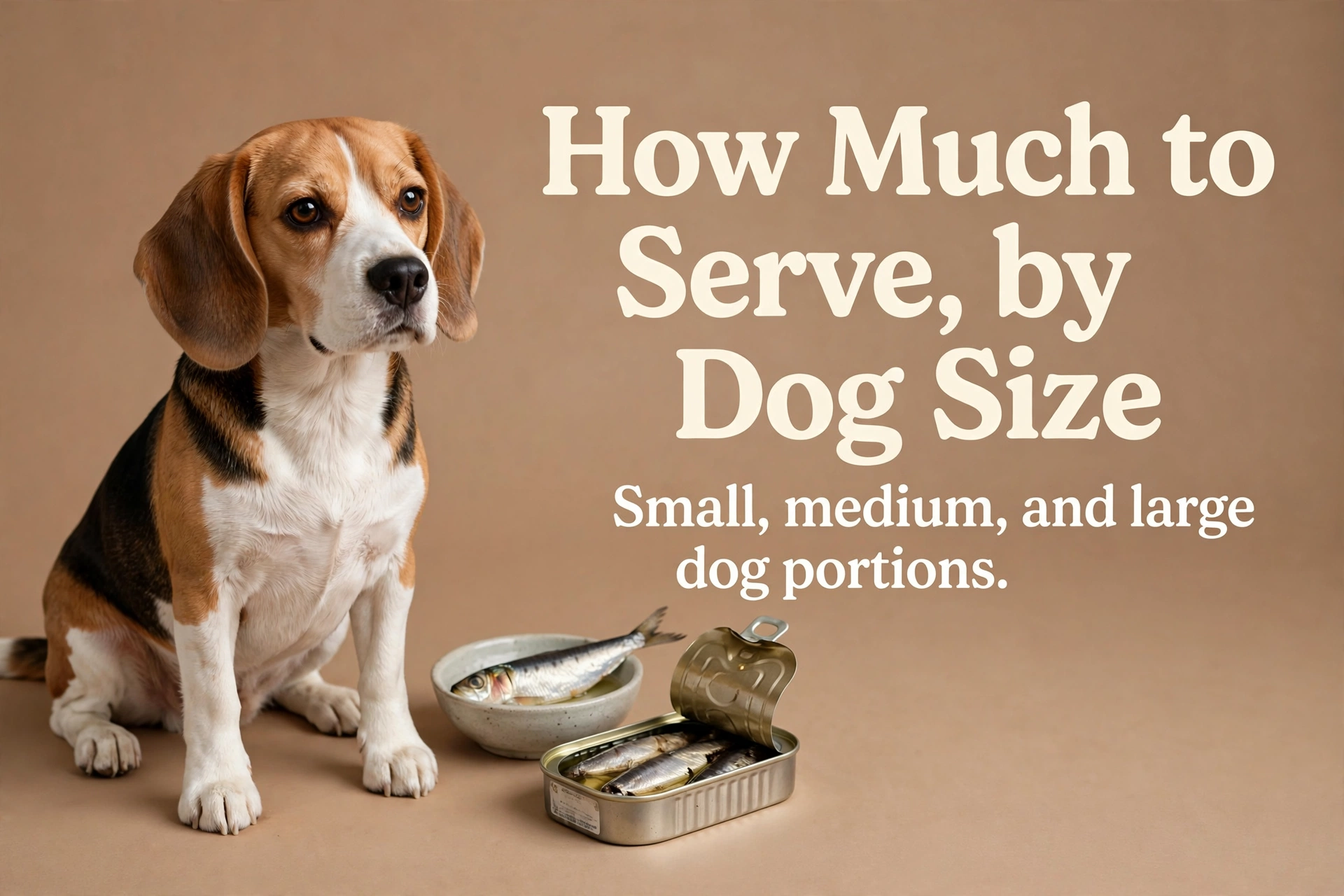
Portion size is where most sardine mistakes happen, because a tin looks small to a person and large to a dog. Use the table below as a starting point, and remember these are drained sardines, served two to three times a week at most, not every day. A single drained sardine has roughly 25 calories, so count it as part of your dog’s daily food, not as a free extra.
Small dogs, under 10 kilograms: half a sardine per serving, one to two times a week. Medium dogs, 10 to 25 kilograms: one sardine per serving, one to two times a week. Large dogs, over 25 kilograms: one to two sardines per serving, two to three times a week.
First time? Halve the portion above and watch your dog for 24 to 48 hours. Loose stools or gas are signs the portion was too rich or too new. Puppies should get only a tiny taste, and only after a vet says fish suits their age and diet. Senior dogs often do well with sardines, since omega 3 fats support stiff joints, but keep the portion small.
Treats in general, sardines included, should stay within about 10 percent of your dog’s daily calories. If your dog is already overweight, or on a vet set calorie plan, ask your vet where sardines fit before you add them. A smaller portion, served less often, is still a real treat to a dog.
The Salt Check Most Owners Skip
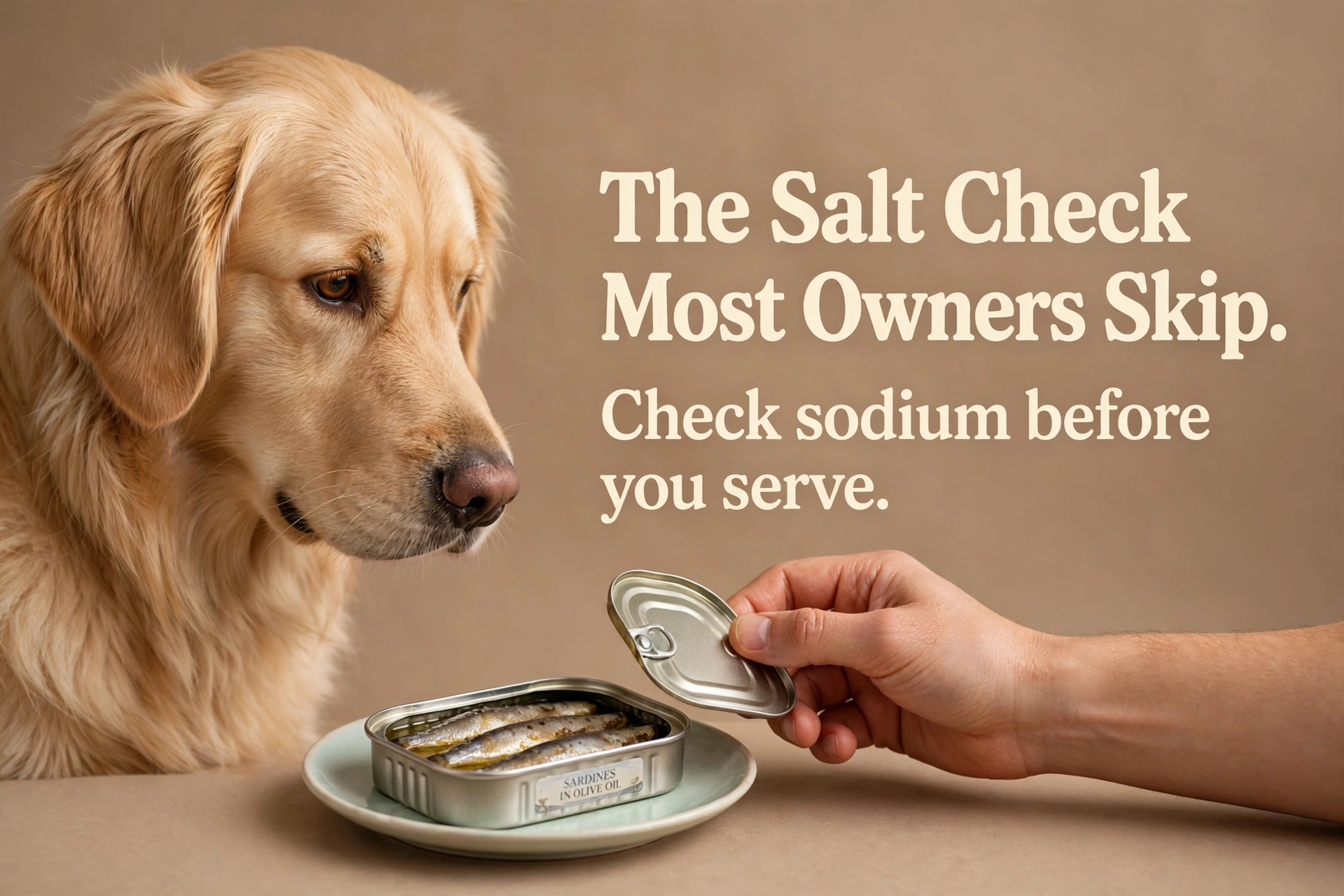
Salt is the quiet risk in canned fish, and it is easy to miss because the tin does not taste salty to a person. Dogs are smaller than us, and they get most of their sodium from their main diet already. A salty tin can push a small dog’s intake up fast, leading to heavy thirst, frequent urination, and, in a large single dose, vomiting or restlessness.
The rule is simple: buy “no salt added” whenever you can. If the only tin available lists salt, aim for a low number on the nutrition panel, ideally well under 100 milligrams of sodium per serving, and serve a smaller portion. Draining and a gentle rinse can lower surface salt, but they cannot turn a heavily salted tin into a low salt one. If the sodium figure is high, choose a different tin.
This matters most for small dogs, dogs with heart or kidney problems, and dogs that already eat salty treats. If your dog drinks a lot of water after sardines, note the tin’s sodium figure and tell your vet at the next visit.
Bones, Skin, and Heads: What to Keep and What to Remove
Canned sardine bones are a common worry, and usually an unnecessary one. The canning process softens the tiny bones until they are crumbly, and they provide digestible calcium. Most healthy dogs can eat canned sardines bones and all, without any trouble. Still, it takes only a moment to check: break the fish apart, feel for any large, hard, or sharp piece, and remove it.
The skin is fine to leave on. Heads are usually already removed from canned sardines, and removing them from fresh fish is perfectly fine.
Fresh or frozen sardines need different handling from canned ones. Cook them plainly, by baking or steaming, with no oil, salt, or seasoning, and let them cool before serving. Raw fish can carry parasites and bacteria, so do not serve raw sardines to your dog. Once cooked, the same bone check applies: remove anything large or sharp, and keep the portion small.
Dogs Who Should Skip This Tin
Most healthy adult dogs can enjoy a drained sardine, but some dogs should skip it, or only have it with vet approval. Dogs with pancreatitis, or a history of it, should avoid oily fish, because a sudden load of fat can trigger a flare. Dogs with chronic stomach problems, or very sensitive stomachs, may also react badly to rich fish, even in a small portion.
Dogs with a known fish allergy should never be given sardines, and dogs with a soy sensitivity should be cautious, even with drained fish, because traces of oil remain. Watch for itching, ear redness, vomiting, or loose stools after a first taste, and stop serving sardines if any of these appear.
Dogs with kidney disease need vet guidance first, because sardines are relatively high in phosphorus and protein, both of which are often restricted in kidney diets. The same caution applies to dogs on a strict low fat diet for any reason. When in doubt, a short question to your vet is worth more than any article, including this one, because your vet knows your dog’s history.
If Your Dog Eats Too Many, or the Wrong Kind
Stay calm. A dog that eats too many sardines will most often have a stomach upset, not an emergency, but you still need to watch closely and act sensibly. Start by removing the tin and any remaining fish, so your dog cannot eat more. Note how much was eaten, and what kind it was: plain in oil, in water, or in a sauce with garlic, onion, or chilli. That detail matters if you call your vet.
Offer fresh water, and keep the next meal small and plain, such as your dog’s usual kibble, with no more treats that day. Watch for 24 to 48 hours for vomiting, diarrhoea, belly pain, restlessness, heavy thirst, or a refusal to eat. Mild loose stools after a large fatty meal often settle on their own, but repeated vomiting, blood in vomit or stool, collapse, seizure, or signs of severe pain mean call your vet promptly, or an emergency vet if your regular clinic is closed.
If the tin was in tomato, mustard, or hot sauce, or contained garlic or onion, call your vet sooner, even if your dog seems fine, because those ingredients carry risks beyond fat and salt. Do not try to make your dog vomit unless your vet tells you to. In most cases, the vet will advise watching, plain food, and plenty of water, and will ask you to come in only if symptoms appear or worsen.
Storing Leftovers Without Spoiling the Good Fats
An opened tin does not keep well in the fridge, and the healthy fats in sardines go off faster than most owners expect. Move any leftover fish out of the tin into a small, airtight glass container as soon as you open it. Do not store leftovers in the open tin, where air and metal speed up spoilage.
Refrigerated sardines keep for up to two days, then throw them away, even if they still look fine. If you will not use the rest in time, freeze it in single serving portions and use it within a month. Thaw in the fridge, never on the counter.
This short storage life is another reason to serve small portions and to prefer small tins. A large tin that sits open in the fridge for a week is not a bargain, it is a stomach upset waiting to happen. When in doubt, throw it out.
Conclusion: Drain It, Keep It Small, and Buy Water Packed Next Time
Sardines in soybean oil can be a safe, nutritious treat for most healthy dogs, once you drain the oil, keep the portion small, and check the salt. They are not the best tin on the shelf, water packed sardines with no salt added hold that title, but they are not a food to fear either. Serve them occasionally, count the calories, skip the flavoured tins, and leave them out for dogs with pancreatitis, fish or soy allergy, or a vet set low fat diet.
Frequently Asked Questions About Sardines in Soybean Oil for Dogs
Are sardines packed in soybean oil safe for dogs?
Yes, for most healthy dogs, in small, drained servings. Soybean oil is not toxic in small amounts, but it adds fat and calories, so drain it fully and serve sardines only as an occasional treat.
Should I drain the oil or serve the sardines as they come from the tin?
Always drain the oil, and do not pour it over your dog’s food. Draining removes much of the extra fat and some surface salt, which makes the serving safer and easier to portion.
Are sardines in soybean oil or water better for dogs?
Water packed sardines with no salt added are better, because they carry less fat and less sodium. Soybean oil packed sardines are acceptable occasionally, once drained, but they are not the best choice to buy on purpose for your dog.
How many sardines can I give my dog?
As a guide, small dogs under 10 kilograms get half a sardine, medium dogs 10 to 25 kilograms get one sardine, and large dogs over 25 kilograms get one to two sardines, served one to three times a week, depending on size. Start with half a portion the first time.
Can puppies eat sardines in soybean oil?
Puppies can have only a tiny taste, and only if your vet agrees it suits their age and diet. Their stomachs are sensitive, so introduce any new food slowly and watch for loose stools or vomiting.
Do I need to remove the bones from canned sardines?
Usually not. Canning softens the small bones until they are crumbly and digestible, and they add calcium. Still check each fish and remove any large, hard, or sharp piece before serving.
What about sardines in tomato sauce, mustard sauce, or brine?
Skip them. Those tins often contain salt, sugar, spices, garlic, or onion, which can harm dogs. Brine is also very salty. Plain sardines in water, or drained sardines in oil, are the only safe versions.
What should I do if my dog eats a whole tin of sardines?
Stay calm, remove the tin, note how much and what kind was eaten, offer water, and keep the next meal small and plain. Watch for vomiting, diarrhoea, or belly pain for 24 to 48 hours, and call your vet promptly if symptoms appear, if the tin contained garlic or onion, or if your dog seems very unwell.
Bella Barker is a pet food safety writer with 10+ years of experience. She researches what dogs and cats can (and can't) eat and turns it into simple, practical guides for everyday pet parents. 🐶🐱
If your dog is staring at the packet of corn thins in your hand, you want a straight answer before you share a piece. The short version is this: can dogs eat corn thins? Yes, a plain corn thin is safe for most dogs in a small amount, but the flavoured kinds can hide ingredients…
It is a hot afternoon, you have a tall glass of horchata sweating on the table, and your dog is doing the stare. The drink looks gentle enough. It is milky, sweet, and dusted with cinnamon, with no chocolate or grapes in sight. So is horchata bad for dogs, or is one shared sip harmless?…
Your dog skipped breakfast. Then dinner. The bowl sits untouched, and by the next morning you are asking the question every owner asks: can a dog go a day without eating? Here is the short answer. Yes, a healthy adult dog can skip one day of food without harm. Dogs are built to handle the…
You know the scene. You sit down with Vegemite on toast, and your dog is already there, staring at you with total focus. The smell is strong, savoury, and hard to ignore, and your dog clearly wants a taste. So can dogs have Vegemite, or should the jar stay strictly for humans? Here is the…
If your dog has been watching you eat blueberries with hopeful eyes, here is the good news. Yes, dogs can have blueberries. Fresh ones are safe, low in calories, and easy to portion, which makes them one of the simplest healthy treats you can share. But safe does not mean unlimited. The number matters, the…
Your dog is staring at your sandwich, and the slice of turkey hanging off the bread looks like the perfect treat to share. Before you hand it over, it helps to know what is really in that slice. Our broad guide to what human foods dogs can eat mentions deli meat only briefly, so this…