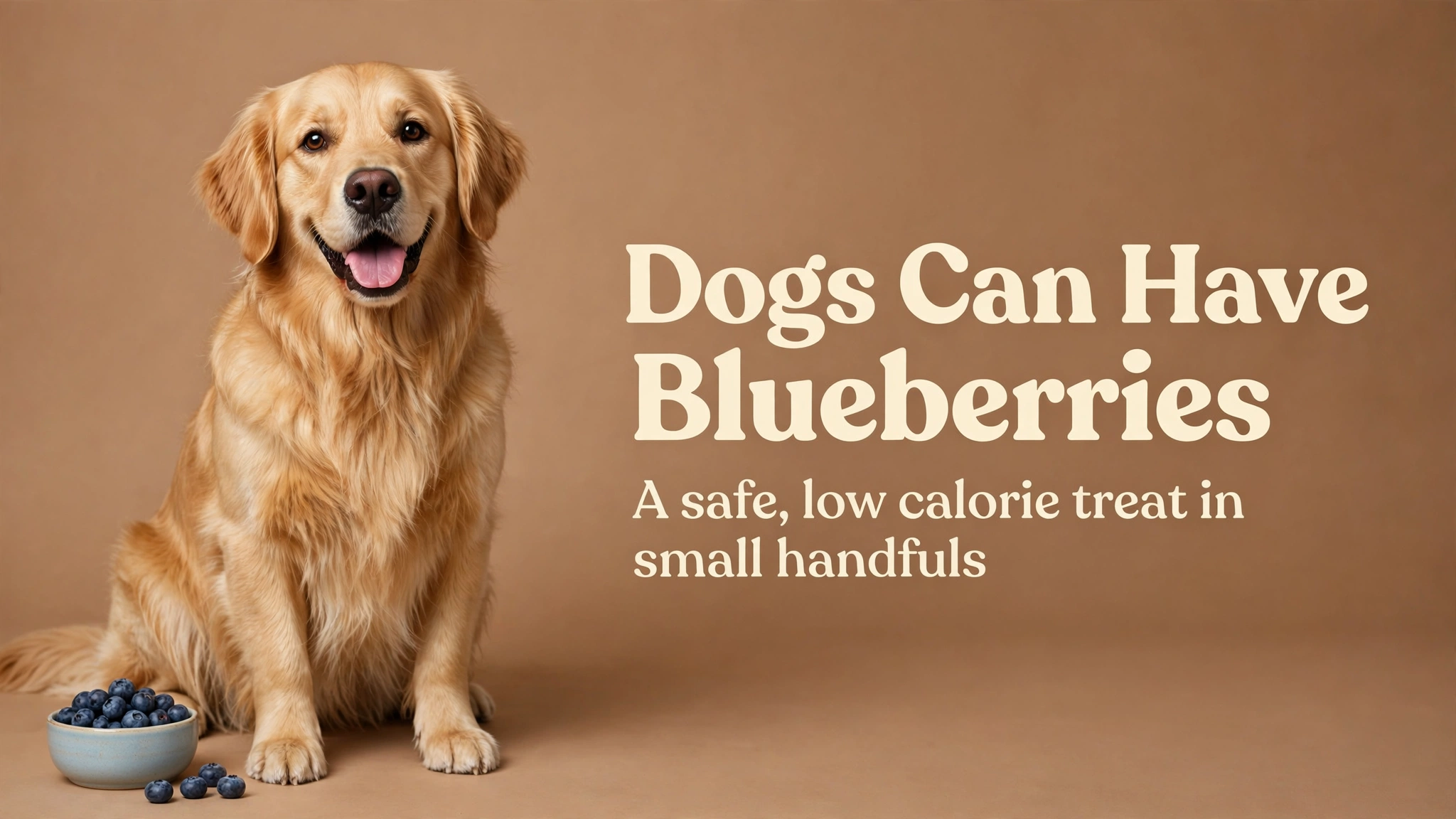
If your dog has been watching you eat blueberries with hopeful eyes, here is the good news. Yes, dogs can have blueberries. Fresh ones are safe, low in calories, and easy to portion, which makes them one of the simplest healthy treats you can share. But safe does not mean unlimited. The number matters, the form matters, and a few blueberry products on store shelves are not safe at all. This guide covers how many your dog can have by size, which forms are best, what to do if your dog eats too many, and which dogs should skip them.
The Short Answer: Yes, in Small Handfuls
Blueberries are not toxic to dogs. They do not appear on the ASPCA list of foods that poison dogs, and the American Kennel Club lists them among the fruits dogs can eat. A healthy adult dog can enjoy a few plain berries as an occasional treat with no problem at all.
The reason they work so well is their size and their calorie count. One berry carries about one calorie, so even a small handful barely dents the daily treat budget. That same small size is also the main risk, because a whole round berry can slip down the wrong way in a tiny dog or a dog that gulps food without chewing.
Keep the rules simple. Serve them plain, washed, and in small amounts. Keep every other treat in mind too, because the 10 percent rule counts all treats together, not just the berries. Get those basics right and blueberries become one of the easiest wins in your dog’s treat bowl.
What One Berry Actually Gives Your Dog
A cup of fresh blueberries holds about 84 calories, which sounds like a lot until you remember that a cup holds more than 100 berries and your dog will eat only a handful. Each berry brings a little fiber, a little vitamin C, a little vitamin K, and manganese, plus plenty of water. The deep blue color comes from anthocyanins, plant pigments linked to antioxidant effects. Botanically, the blueberry belongs to the Vaccinium family, a group that also includes cranberries and bilberries (see the full overview on Wikipedia: https://en.wikipedia.org/wiki/Blueberry).
For dogs, the honest picture is modest but real. Dogs make their own vitamin C, so the vitamin C in the berry is a top up, not a need. The antioxidants are the more interesting part. In one study, sled dogs given blueberries showed higher antioxidant levels in their blood after hard exercise. In another, older beagles fed a diet with blueberry extract did better on memory tasks than dogs without it. These were small studies, and whole berries are not medicine, so treat the findings as a nice bonus, not a reason to overfeed.
What matters most in daily life is what blueberries do not bring: almost no fat, little sugar next to most fruit, and no salt. That mix is why vets often suggest them as a swap for rich biscuits, especially for dogs that need to watch their weight.
How Many Blueberries by Dog Size
The 10 percent rule sets the ceiling. All treats together, blueberries included, should stay under 10 percent of your dog’s daily calories, with the rest coming from a complete dog food. Because one berry is about one calorie, the calorie math rarely forces the limit. Fiber and sugar do, so the counts below are ceilings for one serving, two or three times a week, not daily targets.
Toy dogs under 10 pounds: 2 to 3 berries, cut in half or mashed.
Small dogs, 10 to 25 pounds: 3 to 5 berries.
Medium dogs, 26 to 50 pounds: 5 to 8 berries.
Large dogs, 51 to 90 pounds: up to 10 berries.
Giant breeds over 90 pounds: a small handful, about 10 to 12 berries.
Start at the low end the first time. A 50 pound dog eating around 800 calories a day has about 80 calories for all treats, so ten berries use only an eighth of that budget. The risk is not weight gain. It is a loose stool from too much fiber at once, which is why the first serving should always be small.
Dogs can have blueberries a few times a week without any trouble, as long as the total treat budget stays in check. If your dog already gets biscuits, chews, and table scraps the same day, skip the berries that day and save them for a lighter one.
Fresh, Frozen or Dried: The Form Changes Everything
Fresh is the best starting point. Pick berries that are firm, dry, and deep blue, with no soft spots or mold. Rinse them under cool water before serving, and toss any that are split or mushy. Fresh berries keep for about a week in the fridge, so a single carton can cover several treat days.
Frozen berries are just as safe and make a great summer treat. The cold crunch suits hot days, and freezing does not change the nutrition in any meaningful way. Let them soften for a minute or two before serving to toy breeds and puppies, because a rock hard berry is firmer than a ripe one and harder to chew.
Dried berries need more care. Drying pulls the water out, so the sugar packs into a much smaller bite. A spoonful of dried berries can carry several times the sugar of the same spoonful of fresh ones. Many packs also add sugar or coat the berries in oil, so read the label and keep the portion to just a few. Never serve dried berries from a trail mix, because trail mix often hides raisins or chocolate, and both are toxic to dogs.
Canned or syrup packed berries are the form to avoid completely. The syrup adds sugar your dog does not need, and some cans use artificial sweeteners. If it comes in syrup, it stays on the shelf.
Wild Blueberries and Dangerous Lookalikes
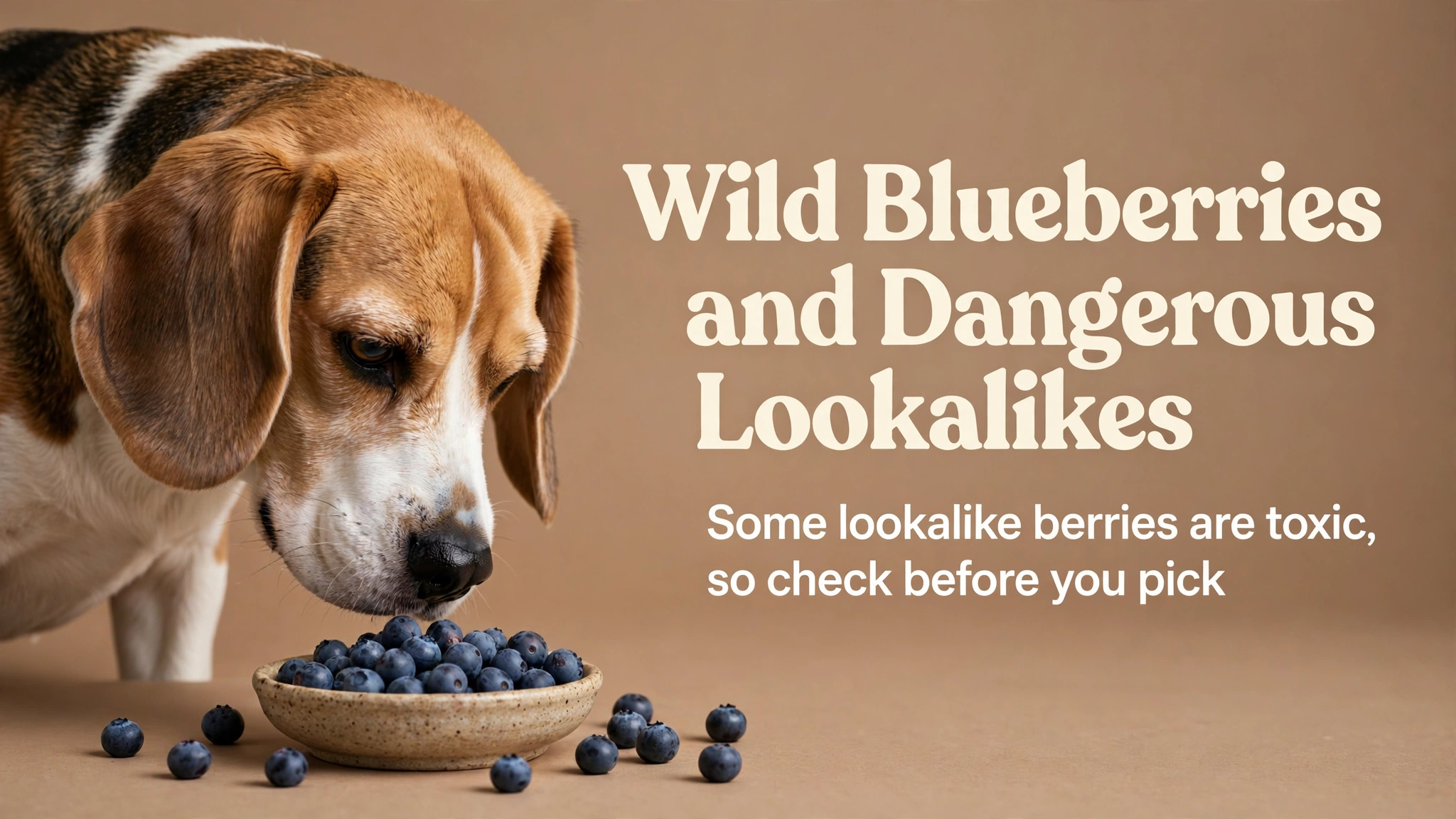
Wild blueberries are safe in the same small amounts, and they are smaller and often sweeter than the farmed kind. The catch is identification. A true blueberry has a five pointed, star shaped crown on the blossom end, which is a useful clue when you pick berries yourself.
The danger is not the wild blueberry. It is the berries that look like one. Pokeweed berries grow in dark clusters and are toxic. Yew berries hide a poisonous seed inside a red fleshy coat. Deadly nightshade carries shiny black berries that can fool anyone at a glance. None of these belong near a dog, and a dog that eats unknown berries on a walk needs a vet call right away.
If you are not completely sure what you picked, leave it where it grows. Store bought berries remove the guesswork entirely, and they cost less than a vet visit. Dogs that forage on walks should be watched closely in berry season, because a curious nose does not check labels.
The Choking Question: Gulpers, Toy Breeds and Puppies
A whole blueberry is round, smooth, and almost exactly the size that can lodge in a small throat. For most medium and large dogs that chew their food, the risk is low. For toy breeds like Chihuahuas, Pomeranians, and Yorkies, for puppies, and for any dog that inhales treats without chewing, the risk is real.
The fix takes seconds. Cut each berry in half, or press it lightly with a fork until it flattens. That one change removes the shape that causes trouble. For a determined gulper, scatter the halved berries across the floor or a snuffle mat instead of piling them in a bowl, so the dog has to slow down and hunt for each one.
Watch your dog eat the first few times. If you see coughing, gagging, or pawing at the mouth, stay calm and check whether the berry is stuck. Most of the time it clears on its own, but a dog that keeps struggling needs help right away. Prevention is simple, and halving is the habit that makes blueberries safe for every size of dog.
The First Taste Test: One Berry, Then Wait a Day
Every new food deserves a trial run, and blueberries are no exception. Start with a single berry, halved or mashed, and then wait a full day before offering more. One berry is enough to show whether your dog’s stomach agrees with the fruit, and it is too small to cause real trouble even if it does not.
Watch for loose stools, gas, vomiting, or extra itching over the next 24 hours. A mild loose stool after the first taste usually means the portion was too big or the stomach needs more time, not that blueberries are banned forever. Try again a week later with one berry and see if the result is different.
A true allergy to blueberries is rare in dogs, but it can happen. Signs include itchy skin, red patches, hives, swollen lips or face, vomiting, or diarrhea that starts within hours of eating. If you see swelling of the face or trouble breathing, treat it as urgent and call your vet at once. If the first taste goes well, move up slowly to the portion for your dog’s size over the next few servings, and never add two new foods on the same day, so you always know which one caused a problem.
Blueberry Products to Skip: Muffins, Yogurt, Jam and the Xylitol Trap
The berry is safe. The products built around it often are not. Blueberry muffins, pie, pancakes, bagels, jam, and jelly all carry added sugar, butter, and flour that your dog does not need, and some hide ingredients that are outright toxic.
The worst of these is xylitol, an artificial sweetener found in some sugar free muffins, fillings, and flavored yogurts. Even a small amount can send a dog’s blood sugar crashing and damage the liver, and the FDA warns that it can be deadly. Check the label for xylitol or birch sugar before your dog licks anything sweetened, and call your vet at once if either one appears.
Store bought blueberry yogurt is another trap. The berries are not the problem. The tub is. Flavored yogurt carries added sugar, and light or sugar free versions may contain xylitol. A spoonful of plain, unsweetened yogurt with a few fresh berries pressed in is fine for dogs that handle dairy, but the flavored tub should stay in your fridge, not your dog’s bowl.
Chocolate covered berries, blueberry jam, and syrup are all out too. Chocolate is toxic to dogs, jam is almost pure sugar, and syrup adds nothing but calories. When a product has more than one ingredient, read the label. Plain berries need no label at all, which is part of why they are the safest choice.
Dogs That Should Skip Blueberries Entirely
Most dogs can enjoy blueberries, but a few should skip them or get a vet’s approval first. Diabetic dogs top the list, because the natural sugar in fruit counts toward the daily carbohydrate load and can nudge blood sugar up. A few berries may be fine for a well managed diabetic dog, but the portion and timing need a vet’s say so.
Dogs with pancreatitis need care too. Blueberries are very low in fat, which makes them gentler than most treats, but any sudden change in diet can set off a flare in a sensitive pancreas. Introduce them slowly, in tiny amounts, and only after your vet agrees.
Dogs on a prescription diet or an elimination trial should get nothing outside the diet unless the vet approves. The whole point of those diets is control, and even a healthy extra can muddy the results. Dogs with a sensitive stomach that flares often may do better without new fruit until their digestion settles.
Puppies under about eight weeks should wait as well. A very young puppy needs complete puppy food at every meal, and fruit only takes up room in a tiny stomach. Once a puppy is eating solid food well, one mashed berry is a fine first taste.
Training With Blueberries: Why One Berry Beats One Biscuit
Here is a use for blueberries that most guides skip. They are one of the best training treats you can carry, and the reason is simple math. A standard training biscuit can hold 20 to 30 calories, while one blueberry holds about one. That means you can reward your dog twenty times with berries for the cost of a single biscuit, and your dog will work just as hard for them.
The small size helps too. A berry disappears in one bite, so there is no long chewing break between the reward and the next cue. That pace keeps a training session moving, which matters when you are teaching a new behavior and need many quick repetitions.
Keep a small pouch of washed berries in your pocket on walks. Use them for recall practice, loose leash work, and calm greetings, and save the biscuits for the end of the session. One warning still applies. Berries are treats, so they count toward the same 10 percent budget. On a heavy training day, cut back the rest of the treats so the total stays in check.
If Your Dog Ate Too Many: The Next 24 Hours
A dog that raids the carton is almost never in danger, so start by staying calm. Plain blueberries are not toxic, and the usual result of too many is a loose stool or a bit of gas, not a poisoning. The steps below cover the next day.
First, check what was actually eaten. Plain fresh or frozen berries are low risk. A baked good with xylitol, raisins, chocolate, or raw dough is a different matter and needs a vet call right away, so look for the wrapper and read the label.
Second, offer fresh water and let your dog rest. Skip vigorous play for a few hours so the stomach can settle, and feed the next regular meal as normal unless your dog is vomiting.
Third, expect some odd but harmless signs. Stools may turn dark blue, and teeth and tongue can stain blue for a while. Both fade on their own. Loose stools or gas should ease within a day.
Fourth, watch for the signs that do need a vet. Call if vomiting or diarrhea lasts more than a day, if your dog seems weak or refuses food, or if you see blood in the stool. Black, tarry stools in a dog that has not eaten berries are a separate warning and need a vet promptly. When in doubt, a quick call to your vet costs nothing and settles the worry.
Blueberries in Kibble: Does the Berry on the Bag Count?
Many dog foods and treats list blueberries on the bag, and it is natural to wonder whether that covers the fruit for your dog. The honest answer is that it mostly does not. Kibble usually carries blueberry extract or pomace, the leftover skins and pulp, in tiny amounts. It adds color and a marketing line, not a meaningful serving of fruit.
That does not make the food bad. It only means the berry on the bag is not a reason to skip fresh berries, and it is not a reason to add them either. Your dog’s nutrition comes from the complete food, and blueberries stay what they have always been: a small, optional extra on top.
The same rule applies to blueberry dog treats from the pet store. Read the label the way you would for any treat. If the first ingredients are oats, flour, and sugar, the blueberries inside are a flavor note, not a health food. A handful of plain fresh berries beats a bag of blueberry biscuits on every measure that matters.
If your dog likes berries in general, we also covered whether dogs can eat strawberries, another low calorie fruit with the same small portion rules (https://petscaneatit.com/can-dogs-eat-strawberry/).
Conclusion: The Bottom Line on Blueberries for Dogs
Dogs can have blueberries, and for most dogs they are one of the easiest treats to get right. Keep them plain and washed, cut them in half for small dogs and gulpers, and stay inside the portion for your dog’s size. Skip the muffins, the flavored yogurt, and anything sweetened with xylitol, and check with your vet first if your dog has diabetes, pancreatitis, or a prescription diet. Do that, and a little blue berry becomes a healthy habit your dog will look forward to every time you open the carton.
Frequently Asked Questions About Blueberries for Dogs
How many blueberries can a dog eat in a day?
It depends on size. Toy dogs can have 2 to 3 berries, small dogs 3 to 5, medium dogs 5 to 8, large dogs up to 10, and giant breeds a small handful of about 10 to 12. Offer them two or three times a week, not every day, and keep all treats under 10 percent of daily calories.
Can dogs eat frozen blueberries?
Yes. Plain frozen blueberries are just as safe as fresh ones and make a great cooling treat on hot days. Let them soften for a minute or two before serving to toy breeds and puppies, because a rock hard berry is harder to chew.
Can dogs eat dried blueberries?
A few unsweetened dried blueberries are fine, but keep the portion smaller than fresh, because drying concentrates the sugar. Never serve dried berries from trail mix, since it often contains raisins or chocolate, and both are toxic to dogs.
Can puppies eat blueberries?
Yes, once a puppy is weaned onto solid food, usually around 8 to 12 weeks. Start with one mashed or halved berry and watch for a day before offering more. Most of a puppy’s calories should still come from complete puppy food.
Can dogs eat blueberry muffins?
No. Muffins carry added sugar, butter, and flour, and some contain xylitol, chocolate chips, raisins, or raw dough, all of which are dangerous for dogs. Stick to plain berries only.
Are blueberries good for dogs with diabetes?
They are lower in sugar than most fruit, but the natural sugar still counts toward the daily carbohydrate load. Only offer them with your vet’s approval and a set portion, and never as a daily habit without guidance.
What happens if a dog eats too many blueberries?
Usually just loose stools or gas. Offer fresh water, let your dog rest, and skip treats for a day. Call your vet if vomiting or diarrhea lasts more than a day, or if your dog seems weak or refuses food.
Can dogs eat wild blueberries?
Yes, in small amounts, but only if you are sure they are blueberries. A true blueberry has a five pointed, star shaped crown on the blossom end. Lookalikes such as pokeweed, yew, and deadly nightshade berries are toxic, so when in doubt, leave them where they grow.
Bella Barker is a pet food safety writer with 10+ years of experience. She researches what dogs and cats can (and can't) eat and turns it into simple, practical guides for everyday pet parents. 🐶🐱
Can dogs eat mild cheddar cheese? Yes, a small cube of plain mild cheddar is usually fine for a healthy adult dog. Mild cheddar is one of the gentler cheeses you can share, because the aging process has already removed almost all of its milk sugar. The catch is the same one that follows every…
You open the pantry, find a tin of sardines in soybean oil, and your dog is already watching you with hopeful eyes. So, can dogs eat sardines in soybean oil? The calm answer is yes, for most healthy dogs, as an occasional treat, and only after you drain the oil. The fish itself is the…
Your dog is staring at your sandwich, and the slice of turkey hanging off the bread looks like the perfect treat to share. Before you hand it over, it helps to know what is really in that slice. Our broad guide to what human foods dogs can eat mentions deli meat only briefly, so this…
You open a durian at home and the smell fills the room in seconds. Your dog lifts its head, walks over, and stares at the creamy yellow flesh in your hand. The short answer is calm and simple. A tiny taste of plain flesh is not toxic for most healthy adult dogs, yet durian is…
Yes, dogs can eat watermelon. The pink flesh is safe when you remove the rind and seeds first. Give only a few small pieces as an occasional treat. Too much can upset your dog’s stomach. Dogs with diabetes should skip it unless your vet says it is fine. Can Dogs Eat Watermelon? The Short Answer…
If your dog just snatched a cherry off the floor, take a breath. In most cases, one cherry is not an emergency. The soft red flesh is not poisonous to dogs. The danger sits in the parts most owners throw away: the pit, the stem, and the leaves. So, are cherries toxic for dogs? It…