Your dog skipped breakfast. Then dinner. The bowl sits untouched, and by the next morning you are asking the question every owner asks: can a dog go a day without eating? Here is the short answer. Yes, a healthy adult dog can skip one day of food without harm. Dogs are built to handle the odd missed day. But that yes comes with clear limits. Water matters far more than food in those 24 hours, and puppies, seniors, and small breeds play by different rules.
This guide walks you through the first 12 hours, what the missed day does inside your dog’s body, how to read the behavior, and how to bring food back safely. How we checked this page: appetite loss basics follow the inappetence entry on Wikipedia; feeding guidance follows general veterinary advice on fasting and refeeding dogs.
The Short Answer: Yes, a Healthy Dog Can Skip One Day
A healthy adult dog can go a full 24 hours without food and be completely fine. This is not a guess. Dogs evolved as meal eaters, not grazers, and their bodies store enough energy to coast through a missed day. Vets often schedule routine fasting before surgeries or tests for this same reason.
So if your dog turned up its nose at breakfast and the whole day passes, do not panic. One quiet day off food is not an emergency for a healthy adult dog. The danger starts only when the fast stretches past that, or when the dog refusing food is very young, very small, old, or already sick. Those exceptions matter a lot, and they have their own section below.
Water Is the Real Deadline: Why Skipping Water Is Far More Serious Than Skipping Food
Here is the framing most articles miss. Food can wait a day. Water cannot. A dog can survive several days without food, but only a couple of days without water, and dehydration damages the body far faster than hunger does.
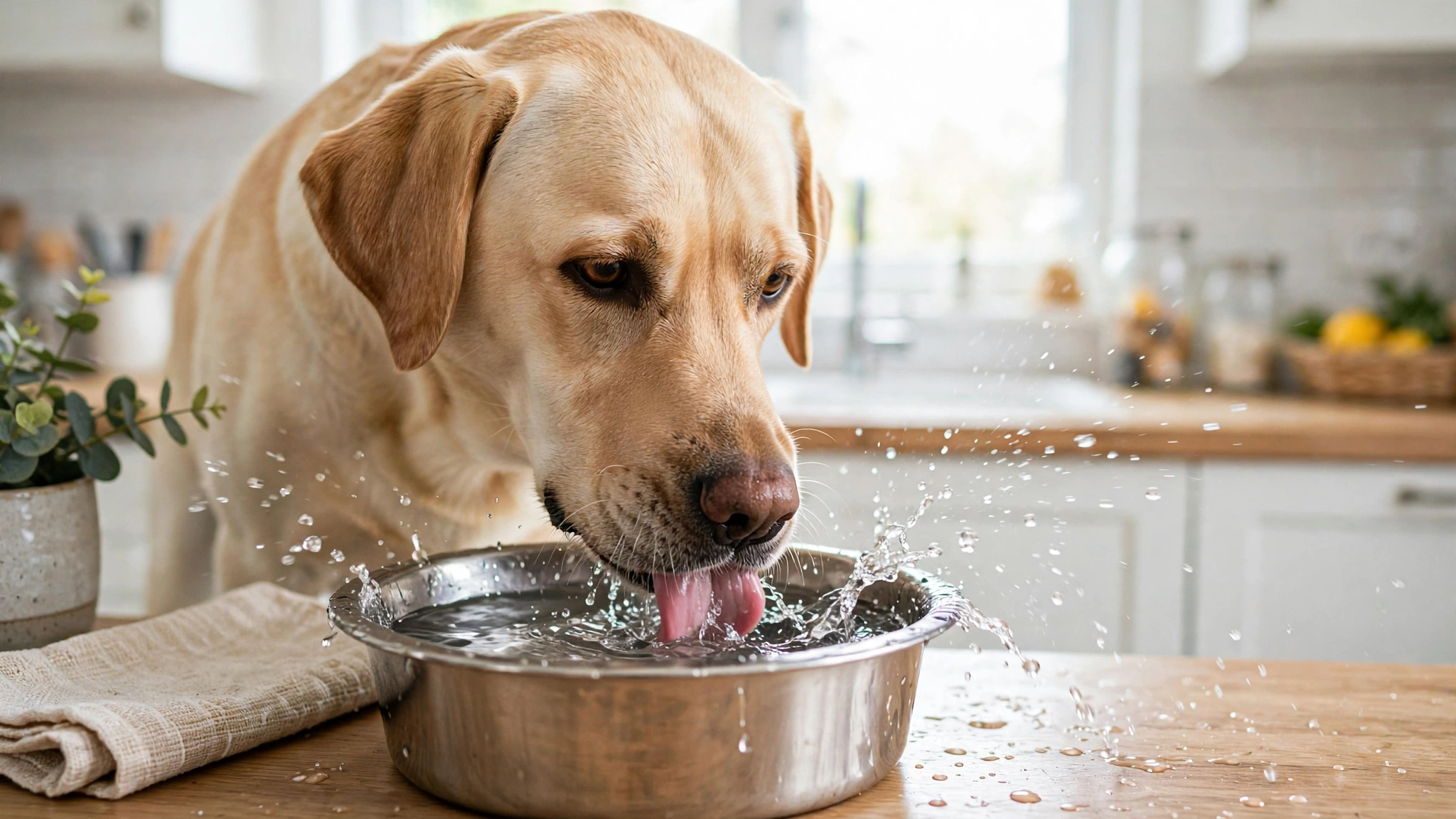
So the first thing to check is not the food bowl. It is the water bowl. Is your dog still drinking? If yes, that is a very good sign, and you have time to watch and wait. If your dog refuses both food and water for a full day, that changes the picture completely. Refusing water is one of the clearest signals that something is actually wrong, and it shortens your waiting window a lot.
Keep fresh water available at all times during the fast. Swap the bowl with clean water a few times through the day. A dog that keeps drinking while skipping food is almost always dealing with something mild, like an upset stomach or stress. A dog that stops drinking needs a vet sooner rather than later.
The First 12 Hours: What to Watch and What Not to Do
The first half of the skipped day is when owners do the most worrying and make the most mistakes. Here is a simple checklist for hours zero to twelve.
Watch the energy. A dog that is a little bored with food but still wagging, walking, and sniffing around is fine. Lethargy, the heavy flat kind where your dog will not get up, is the sign that matters.
Watch the water. Note whether your dog drinks. This is your main safety gauge.
Watch the stomach. Vomiting once can explain a skipped meal, because dogs often fast themselves after a mild stomach upset. Vomiting several times, retching with nothing coming up, or a swollen hard belly are warning signs.
Watch the stool and gums. If your dog passes stool, note blood or anything strange. Pale or white gums are a warning sign.
Now what not to do. Do not hand feed ten different treats to tempt your dog, because that can upset the stomach further and teaches picky eating. Do not force food into your dog’s mouth. Do not switch to a rich new food suddenly. And do not call the emergency vet in a panic at hour three for an otherwise normal dog. Watch first, act if warning signs show up.
Puppies, Seniors, and Small Breeds: The One-Day Exceptions
The general rule has real exceptions, and they all come down to body reserves and blood sugar.
Puppies under six months should not skip a full day of food. Young puppies have tiny energy reserves and can drop into low blood sugar fast. A puppy that refuses two meals in a row needs a vet call, not a wait and see approach.
Toy and small breeds under about 10 lb share the same risk. Their fast metabolism burns through stored energy quickly. Missing one full day is a bigger deal for them than for a labrador.
Senior dogs can skip a day, but age makes everything riskier. An old dog that refuses food may be masking pain, dental trouble, or organ problems that a young dog would show more clearly.
Dogs with diabetes, kidney disease, liver disease, or any ongoing illness should not fast without a vet’s okay. Medication schedules often depend on food, and skipping meals can throw blood sugar and drug levels off. If your dog takes daily medication, call your vet before the day ends.
What a Skipped Day Does Inside Your Dog’s Body
It helps to know what is actually happening during the fast, so the 24 hours feel less scary.
For the first several hours, your dog’s body burns the energy from the last meal. After that, it switches to stored fat and glycogen from the liver. This is a normal, well practiced system. Your dog’s ancestors did not eat on a schedule, and the machinery for a missed day is still in place.
Mild stomach upset often resolves during this time, which is why many dogs self fast after eating something odd and then bounce back on their own. The digestive system gets a quiet rest.
Nothing harmful happens in 24 hours for a healthy adult dog. Muscle breakdown and real starvation effects only begin after several days without food, which is a completely different situation from one skipped day. So the body during a single missed day is not in crisis. It is just waiting.
Appetite Strike or Warning Sign: Reading Your Dog’s Behavior
Dogs refuse food for two broad reasons, and learning to tell them apart is the most useful skill in this whole article.
An appetite strike looks like this. Your dog refuses the bowl but stays bright and active. It will still take a favorite treat or sniff a new food with interest. It drinks water normally. Common causes are stress from a change in routine, a new home, fireworks or storms, being picky about a new food, or mild nausea that passes. This version usually resolves within a day on its own.
A warning sign looks like this. Your dog refuses everything, including favorite treats. It lies around, ignores walks, or whimpers. It vomits repeatedly, drools heavily, pants oddly, or has a swollen belly. It refuses water too. These behaviors point to pain, poisoning, a blockage, dental agony, or a real illness. Do not wait out the full day when the whole picture looks wrong. Call your vet.
The key test is interest. A dog that is interested in life but bored of food can wait. A dog that has lost interest in everything cannot.
The Safe Restart: How to Feed Your Dog After a Day Without Food
This is the section competitors skip, and it matters. After a full day without food, your dog’s stomach is empty and a little sensitive. Dumping a huge bowl of rich food in front of it can trigger vomiting and diarrhea, which undoes the whole point of the restful fast.
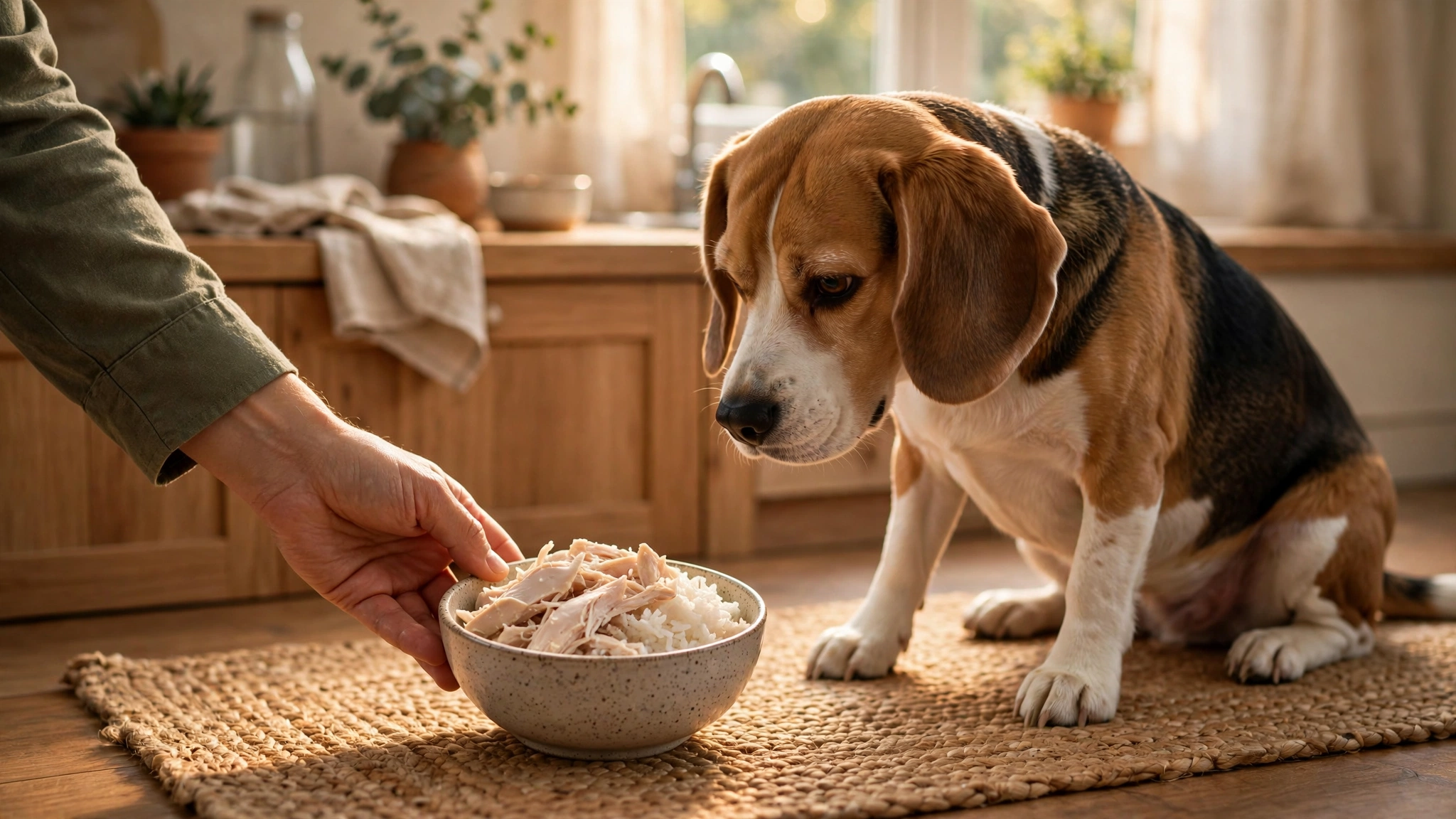
Start small. Offer about a quarter of a normal meal of something bland. Plain boiled chicken and white rice, or a spoonful of plain canned pumpkin with the regular kibble, works well. If your dog keeps that down for an hour or two, offer another small portion.
Return to normal meals over the next 12 to 24 hours, building back up gradually. Keep portions small and space them out. Most dogs handle the restart without any trouble at all.
One thing to avoid: the temptation to make up for the missed day with extra food. Your dog does not need to catch up. Doubling the next meal just overloads a rested stomach. Feed the normal daily amount across the restart period and nothing more.
When a Skipped Day Becomes a Pattern You Should Not Ignore
One skipped day is a blip. A pattern is a message. If your dog starts skipping meals regularly, even while staying lively, something deeper is going on.
A regular skipping pattern can point to chronic dental pain, food allergies, a food that has gone stale, or an underlying illness that flares up and settles down. It can also be behavioral: table scraps training your dog to hold out for better options, or stress that repeats on a schedule.
Keep a simple note of when it happens. Dates, which meals were skipped, and how the dog behaved each time. That log turns a vague worry into useful information your vet can actually work with. If your dog skips food more than twice in a week, or the pattern keeps repeating for two weeks, book a vet visit. Do not wait for the pattern to get worse.
Conclusion: One Day Off Food Is Not a Crisis, But It Is a Message
A healthy adult dog can go a day without eating, and most of the time it means very little. Watch the water, watch the energy, give the stomach a rest, and restart feeding gently. Remember the exceptions: puppies, tiny breeds, seniors, and sick or medicated dogs get a shorter leash and a quicker vet call. And treat a repeating pattern as the message it is. One quiet day off food is normal dog behavior. Two quiet days in a row is a vet conversation. For the science of appetite loss itself, see Wikipedia’s inappetence entry.
We take the same measured approach in our egg shell guide for dogs, where portions are matched to the dog’s size instead of guessed.
Frequently Asked Questions About Dogs Skipping a Day of Food
Can a dog go a day without eating and still be fine?
Yes, a healthy adult dog can skip 24 hours of food with no harm. The fast only becomes a concern if it stretches past a day, or if the dog is a puppy, a small breed, senior, or sick.
My dog has not eaten in 24 hours but is acting normal. Should I worry?
Probably not. A bright, active dog that drinks water and refuses only food is usually dealing with something mild. Keep watching, and offer a small bland meal to restart.
Is it okay for a dog to skip just one meal?
Yes. Skipping one meal is even less of a concern than a full day. Dogs sometimes skip a single meal from mild stomach upset, heat, or simply not being hungry. Resume the normal schedule at the next meal.
My dog will not eat but is drinking water. What should I do?
That is a reassuring combination. Keep the water fresh, watch for other symptoms, and do not force food. If the dog is otherwise normal, offer a small bland meal after 12 to 24 hours.
How long can a puppy go without eating?
Not a full day. Puppies under six months can develop low blood sugar quickly. If a young puppy refuses two meals in a row, call your vet instead of waiting.
Can a dog go two days without food?
A healthy adult dog can survive two days without food, but by day two you should already be talking to your vet. Two skipped days in a row moves the situation from a blip to a concern.
When should I take my dog to the vet for not eating?
Go the same day if your dog also refuses water, vomits repeatedly, has a swollen belly, is lethargic, or shows pain. Otherwise, a healthy adult dog gets one day of watching before the vet call.
Should I force feed my dog if it will not eat?
No. Force feeding can cause choking and more stress, and it can push food into lungs. If your dog truly cannot eat and a vet is not reachable, a vet can show you safe assisted feeding. Never do it on your own.
Is it bad to deliberately fast a dog for one day?
Occasional planned fasting is a common practice among some owners and raw feeders, but it is not necessary for a healthy dog. If you plan to fast your dog, keep water available and check with your vet first, especially for puppies, small breeds, and seniors.
Bella Barker is a pet food safety writer with 10+ years of experience. She researches what dogs and cats can (and can't) eat and turns it into simple, practical guides for everyday pet parents. 🐶🐱
You open a jar of apple sauce for lunch, and your puppy is already there, nose up, tail going. It smells sweet and looks harmless. It is just cooked apples, after all. So can puppies eat apple sauce? Yes, they can, as long as it is plain and unsweetened, the amount is tiny, and your…
If your dog grabbed a piece of raw salmon skin off the counter, you need a clear answer fast. Can dogs eat raw salmon skin? No. Raw salmon skin is not safe for dogs. It can carry a parasite that causes salmon poisoning disease, a serious illness that can kill a dog without treatment. It…
If you have ever sliced open a watermelon and found bright yellow flesh instead of red, you are not looking at an unripe melon. Yellow watermelon is a real variety of the same fruit, and many dog owners wonder whether the yellow kind follows the same feeding rules. The short answer is yes: dogs can…
No, dogs should not drink milk as a regular drink. Most adult dogs are lactose intolerant, so milk often causes gas, bloating, diarrhea, or vomiting. A small accidental lick is rarely dangerous, but milk gives dogs no nutrition they do not already get from good dog food. Fresh water is always the better choice. The…
Can dogs eat mild cheddar cheese? Yes, a small cube of plain mild cheddar is usually fine for a healthy adult dog. Mild cheddar is one of the gentler cheeses you can share, because the aging process has already removed almost all of its milk sugar. The catch is the same one that follows every…
Your dog is watching you snap green beans at the counter, and those long green pods look like the kind of thing a dog would love to crunch. When people ask about green beans for dogs, they usually mean plain fresh beans, not the casserole on the holiday table and not a can from the…




One Comment