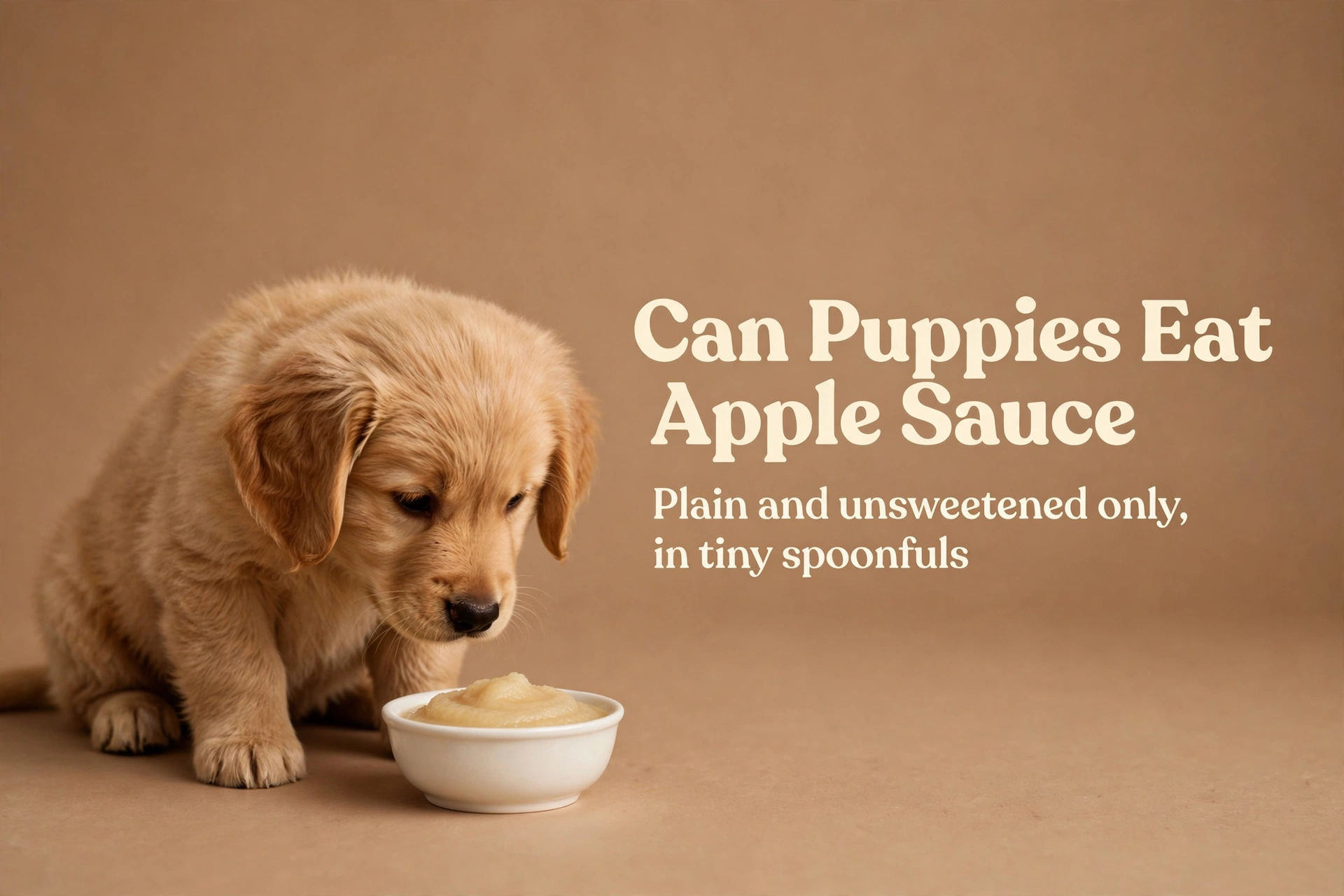
You open a jar of apple sauce for lunch, and your puppy is already there, nose up, tail going. It smells sweet and looks harmless. It is just cooked apples, after all. So can puppies eat apple sauce? Yes, they can, as long as it is plain and unsweetened, the amount is tiny, and your puppy is old enough to be eating solid food well, usually around 8 weeks.
The apple itself is never the problem. The problem is the jar. Store bought apple sauce can hide added sugar, spices, and one sweetener called xylitol that is toxic to dogs. A spoonful of the right kind is a gentle little treat. A bowl of the wrong kind can mean a vet visit.
This guide covers the age rule for starting, how much is safe by puppy size, the two label killers to avoid, a frozen teething trick most owners never hear about, and what to do if your puppy eats far more than planned.
The Short Answer for Busy Puppy Parents
Three rules cover almost everything.
One, the apple sauce must be plain and unsweetened. The ingredient list should read like a recipe: apples, water, and maybe ascorbic acid, which is just vitamin C. If you see sugar, high fructose corn syrup, honey, cinnamon, nutmeg, or any sweetener you cannot pronounce, put the jar back.
Two, the amount must be tiny. Puppies are small and their stomachs are still learning. A teaspoon or less per serving is plenty, once or twice a week.
Three, the puppy must be ready. New foods only belong in the life of a puppy that is fully weaned and settled on solid puppy food, which usually happens around 8 weeks of age. A very young puppy that is still nursing has no business with apple sauce yet.
Follow those three and apple sauce is a safe little extra. Break any of them and you are asking for an upset stomach at best.
The 8 Week Rule: When Your Puppy Is Ready for Apple Sauce
Puppies are not born ready for extras. For the first three to four weeks they drink only milk. Soft food starts around week three or four, and most puppies are fully weaned onto solid puppy food between six and eight weeks.
Wait until your puppy has been eating solid puppy food happily for at least a week or two before adding any treat beyond puppy food. The gut needs time to settle into its new job. Adding apple sauce too early can cause loose stool, and with a tiny puppy, even mild diarrhea can dehydrate fast.
Small and toy breeds deserve extra caution. A two pound puppy has almost no margin for a stomach upset, so keep the first taste to a quarter teaspoon and watch for a full day before offering more.
The easiest checkpoint is the first vaccination visit. Ask your vet whether your puppy is ready for little extras like apple sauce. Vets see the puppy in front of them, which beats any general rule on the internet.
What Apple Sauce Actually Gives a Growing Puppy
The apple sauce you buy is mostly water carrying soft cooked apple. The honest truth is that a teaspoon of it does not transform your puppy’s nutrition, and it should not. A complete puppy food already covers every vitamin and mineral a growing puppy needs.
What it does offer, in small amounts: pectin, a gentle soluble fiber that can help keep stools normal; vitamin A for vision and skin; vitamin C as an antioxidant; potassium for muscles and nerves; and a hydration boost, since apple sauce is around 80 percent water. Cooked apple is also easier on a young stomach than raw apple pieces.
So is applesauce good for dogs beyond the puppy months? The same rules carry over. Healthy adult dogs can enjoy plain unsweetened apple sauce the same way, in spoonfuls, as an occasional treat. Nobody should feed it for the vitamins, because the safe portion is too small to matter much. Feed it because your puppy enjoys the taste, and keep the nutrition job with the puppy food.
The Two Jar Killers: Xylitol and Added Sugar
Two things turn a safe food into a dangerous one, and both hide on labels.
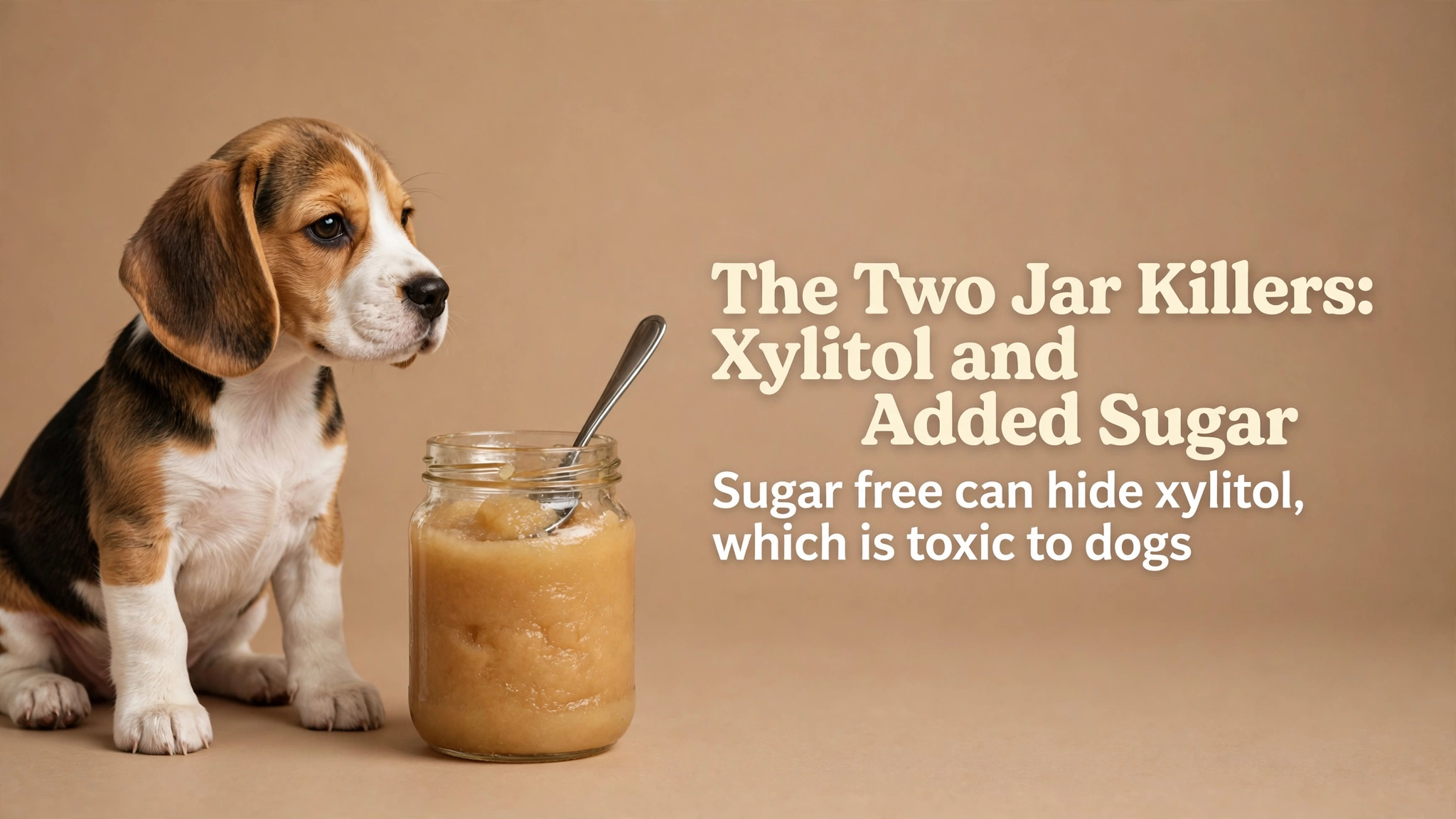
Xylitol is the first and the serious one. It is a sugar substitute also sold as birch sugar, and it shows up in sugar free, low sugar, diet, and no sugar added products, including kids’ squeeze pouches that end up on low tables. Xylitol is highly toxic to dogs. Even a small amount can crash a dog’s blood sugar and damage the liver within hours. This is the one ingredient that turns apple sauce from a treat into an emergency.
Added sugar is the second. Most regular grocery store apple sauce is sweetened, and extra sugar means extra calories, weight gain over time, tooth trouble, and stomach upset. A puppy does not need any of it.
Two more label guests to skip: nutmeg, which contains a compound called myristicin that is unsafe for dogs, and heavy cinnamon flavoring, which can irritate a young stomach in larger amounts. A light dusting of pure cinnamon in a homemade batch is not toxic, but it is also not needed.
Learn the ten second label check. Flip the jar, read the ingredients, and ask one question: could I make this at home with apples and water? If the list is longer than that, choose another jar or make your own.
The Tiny Spoon Rule: How Much by Puppy Size
Every vet source that answers can puppies eat apple sauce agrees on one point: start smaller than you think. Treats of any kind should stay under 10 percent of daily calories, and for a growing puppy that 10 percent is already small.
Use this as a starting point for plain unsweetened apple sauce, once or twice a week at most:
Under 10 pounds: half a teaspoon. Think Chihuahua, Yorkie, and Maltese puppies.
10 to 25 pounds: one teaspoon. Think Beagle, Cocker Spaniel, and French Bulldog puppies.
25 to 50 pounds: two teaspoons. Think Labrador, Golden Retriever, and German Shepherd puppies.
Over 50 pounds: one tablespoon. Think Great Dane and Saint Bernard puppies.
The first time, give half the suggested amount and watch your puppy for 24 hours. Mild gas or one soft stool can simply mean the gut noticed something new. Vomiting, ongoing diarrhea, itching, or a swollen face means stop and call your vet.
Frequency matters as much as amount. Apple sauce is a sometimes treat, not a daily habit. Even natural fruit sugar adds up in a small body, and a puppy’s main calories should always come from balanced puppy food.
Frozen Apple Sauce: A Teething Puppy Trick Nobody Talks About
Between three and six months, puppies teethe, and sore gums make them chew everything in reach. Here is a use for apple sauce none of the big guides mention: freeze it.
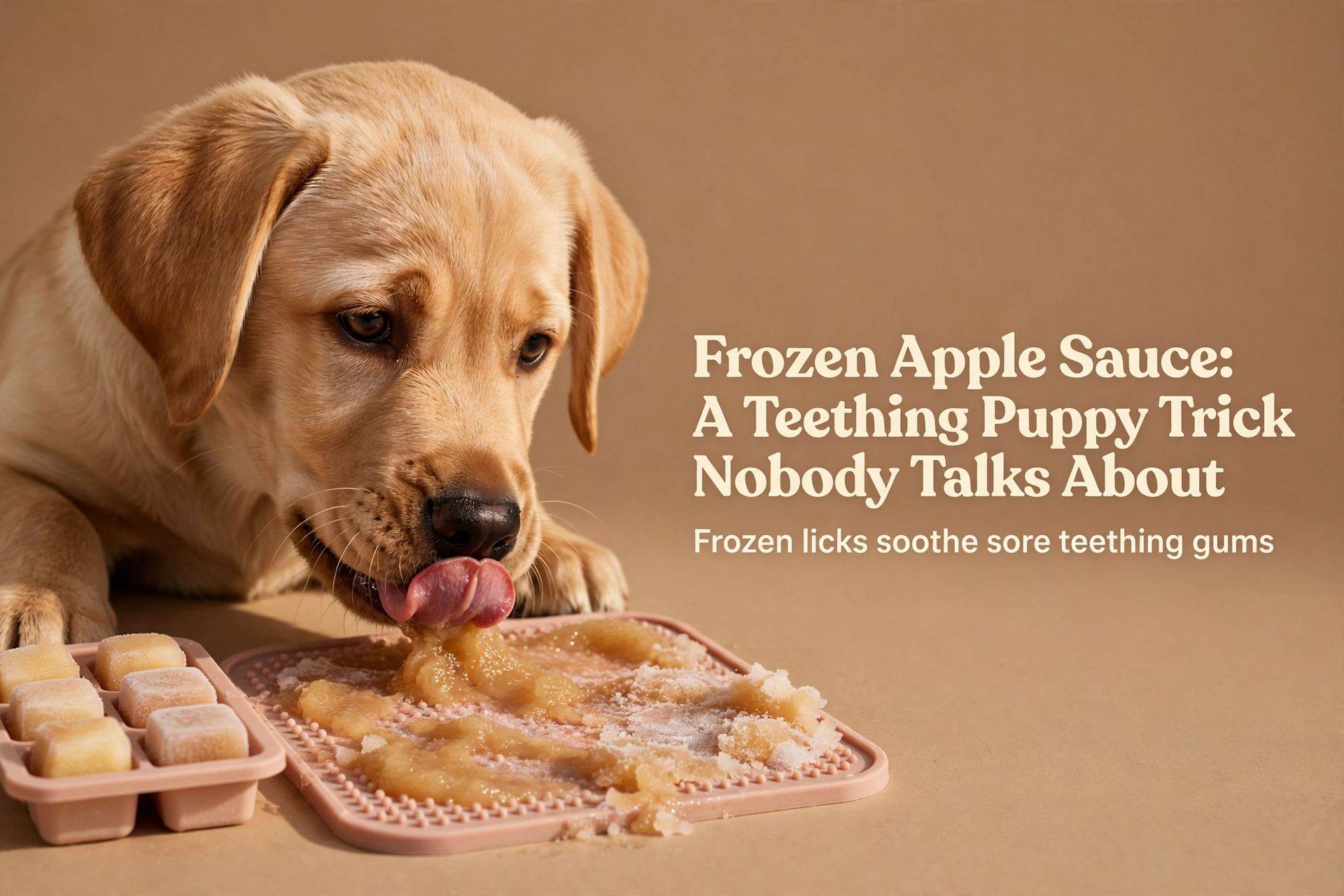
Spread a thin smear of plain unsweetened apple sauce on a lick mat or freeze a teaspoon in an ice cube tray, and you get a cold little treat that soothes sore gums and keeps a busy puppy occupied for real minutes. The cold numbs the ache the way a cold washcloth soothes a teething baby, and the licking itself is calming for an anxious young dog.
Keep three rules for the frozen version. One, plain unsweetened only, since freezing does not make a bad ingredient safe. Two, one small frozen serving counts as the treat for the day, not an extra on top. Three, always supervise. A puppy that chews chunks off a lick mat or cracks an ice cube tray needs you watching.
Puppy owners who try this usually report the same thing: the puppy that was chewing the table leg suddenly has a better plan.
Three Smart Ways to Serve It (and One to Skip)
Once the jar is the right kind and the spoon is the right size, serving is simple.
First, the training lick. A dab of apple sauce on the tip of a spoon makes a fine reward for recall practice or calm crate behavior. It is quick, it is cheap, and most puppies find it more exciting than another piece of kibble.
Second, the slow feeder topper. Stir a teaspoon into your puppy’s regular food or smear it inside a Kong with a little kibble. It turns an ordinary meal into a small project, which is welcome news for a bored puppy on a rainy day.
Third, the two minute homemade batch. Peel, core, and seed one sweet apple, chop it, simmer with a splash of water for 15 minutes, and mash. Cool it fully before serving. It keeps five days in the fridge, and you can freeze spoonfuls in an ice cube tray for the teething trick above. No sugar, no spices, nothing to check on a label.
The one to skip: letting your puppy lick straight from your bowl or the jar. Portion control vanishes, your jar may be sweetened anyway, and a puppy that learns the jar is a toy will raid the pantry next. Serve the spoonful in the puppy’s own bowl, every time.
If your puppy loves crunchy extras too, carrots are another gentle option that most puppies enjoy.
When Apple Sauce Is a Bad Idea for Your Puppy
Safe for most puppies does not mean safe for every puppy. Skip apple sauce for now if any of these fit.
Your puppy is under 8 weeks or still weaning. The gut is not ready, and there is no benefit that outweighs the risk of diarrhea in a tiny body.
Your puppy has active vomiting or diarrhea. Wait until the stomach has been calm for a couple of days, and check with your vet first. Plain apple sauce is gentle, but a sick puppy’s stomach needs rest more than new foods.
Your vet has flagged weight or blood sugar concerns. Some breeds run toward diabetes or obesity, and even natural fruit sugar works against a careful feeding plan.
Your puppy shows sensitivity signs after the first taste. Itching, red skin, ear scratching, hives, repeated vomiting, or swelling around the face all mean stop and call the vet. True apple allergy is uncommon in dogs, but any new food can disagree with an individual puppy.
Your puppy takes medication on an empty stomach or a strict schedule. A dab of apple sauce can hide a pill nicely, but check with your vet first, since some medicines must be given without food.
Your Puppy Ate the Whole Cup: What to Do Now
Puppies steal food. It is practically their job. If yours got into the apple sauce, stay calm and work through these steps in order.
Step one, grab the container and read the ingredients. Look for xylitol, birch sugar, or any artificial sweetener. If any of those appear, call your veterinarian or a pet poison helpline right away, even if your puppy looks fine. Xylitol poisoning can start within 30 minutes, and waiting for symptoms wastes the window for treatment.
Step two, if the apple sauce was plain and unsweetened, expect a stomach protest. A whole cup is far more sugar and fiber than a puppy’s gut is built for, so loose stool or gas in the next 6 to 12 hours is likely. Offer water, skip treats for the rest of the day, and feed a normal bland next meal. Call your vet if you see repeated vomiting, bloody stool, a painful or swollen belly, extreme tiredness, or refusal to drink.
Step three, puppy proof the snack zone. Move squeeze pouches and open jars to high shelves, because a puppy that succeeded once will absolutely try again.
Conclusion: The Bottom Line on Apple Sauce for Puppies
Can puppies eat apple sauce? Yes, in tiny spoonfuls, once they are past 8 weeks and eating solid food well. Keep it plain and unsweetened, match the spoon to your puppy’s size, and read every label for xylitol before the jar ever opens. The frozen teething trick is the best use most owners never try, and the whole cup protocol above covers the worst case. When in doubt, your vet knows your puppy better than any article, so ask at the next visit.
Frequently Asked Questions About Apple Sauce and Puppies
Can puppies eat apple sauce every day?
No. Apple sauce is a sometimes treat, once or twice a week at most. Even the natural sugar in plain apple sauce adds up in a small puppy, and daily extras can unbalance a carefully formulated puppy diet.
What is the best age to give a puppy apple sauce?
Wait until your puppy is fully weaned and settled on solid puppy food, usually around 8 weeks of age, and has been eating well for a week or two. Ask your vet at the first vaccination visit if you want a personal answer for your puppy.
Is apple sauce good for puppies with diarrhea?
Be cautious. A tiny amount of plain unsweetened apple sauce is gentle, but puppies dehydrate faster than adult dogs. If diarrhea lasts more than 24 hours, or your puppy is lethargic, vomiting, or refusing water, call your vet instead of trying home fixes.
Can puppies have cinnamon apple sauce?
Skip store bought cinnamon apple sauce. It usually carries added sugar and sometimes nutmeg, which is unsafe for dogs. A tiny pinch of pure cinnamon in a homemade batch is not toxic, but your puppy does not need it.
Can puppies eat Mott’s applesauce?
Check the exact jar. Mott’s Natural, with no sugar added, is fine in tiny amounts. Mott’s Original contains added sugar, so skip it for your puppy. Labels change, so read the ingredients every time you buy.
Can I use apple sauce to give my puppy medicine?
A small dab can hide the taste of a pill or liquid medicine, and the sweet smell helps. Check with your vet first, because some medicines must be given on an empty stomach or at exact times.
Is homemade apple sauce better for puppies?
Yes. Peel, core, and remove the seeds from a sweet apple, simmer the pieces with a little water until soft, then mash and cool completely. No sugar, no spices, no label to decode. It keeps five days refrigerated or three months frozen in small portions.
What should I do if my puppy ate sugar free apple sauce?
Check the ingredients for xylitol or birch sugar immediately. If either is listed, call your veterinarian or a pet poison helpline at once, even if your puppy seems fine. If the sweetener is something else, watch closely for vomiting or lethargy and call your vet for guidance.
Bella Barker is a pet food safety writer with 10+ years of experience. She researches what dogs and cats can (and can't) eat and turns it into simple, practical guides for everyday pet parents. 🐶🐱
If your dog watches you eat breakfast, you may wonder: can dogs eat bagels and cream cheese? The short answer is yes, but only as a tiny, plain, rare bite. It is not a meal, it is not a daily treat, and the flavored versions that people love most are the ones that cause the…
Yes, dogs can eat watermelon. The pink flesh is safe when you remove the rind and seeds first. Give only a few small pieces as an occasional treat. Too much can upset your dog’s stomach. Dogs with diabetes should skip it unless your vet says it is fine. Can Dogs Eat Watermelon? The Short Answer…
You open a durian at home and the smell fills the room in seconds. Your dog lifts its head, walks over, and stares at the creamy yellow flesh in your hand. The short answer is calm and simple. A tiny taste of plain flesh is not toxic for most healthy adult dogs, yet durian is…
Parsley sits on almost every plate as a garnish, and sooner or later some of it lands near your dog. A sprig falls on the floor, or your dog gives the herb pot on the windowsill a hopeful sniff, and you wonder if it is safe. The short answer is yes, a dog can eat…
You are slicing tomatoes for a salad, one wedge rolls toward the edge of the board, and your dog is suddenly sitting very straight and very close. Tomatoes look harmless. They are soft, juicy, and part of half the meals in the house. So why does this one fruit come with so many warnings? The…
If your dog grabbed a piece of raw salmon skin off the counter, you need a clear answer fast. Can dogs eat raw salmon skin? No. Raw salmon skin is not safe for dogs. It can carry a parasite that causes salmon poisoning disease, a serious illness that can kill a dog without treatment. It…