You are slicing tomatoes for a salad, one wedge rolls toward the edge of the board, and your dog is suddenly sitting very straight and very close. Tomatoes look harmless. They are soft, juicy, and part of half the meals in the house. So why does this one fruit come with so many warnings?
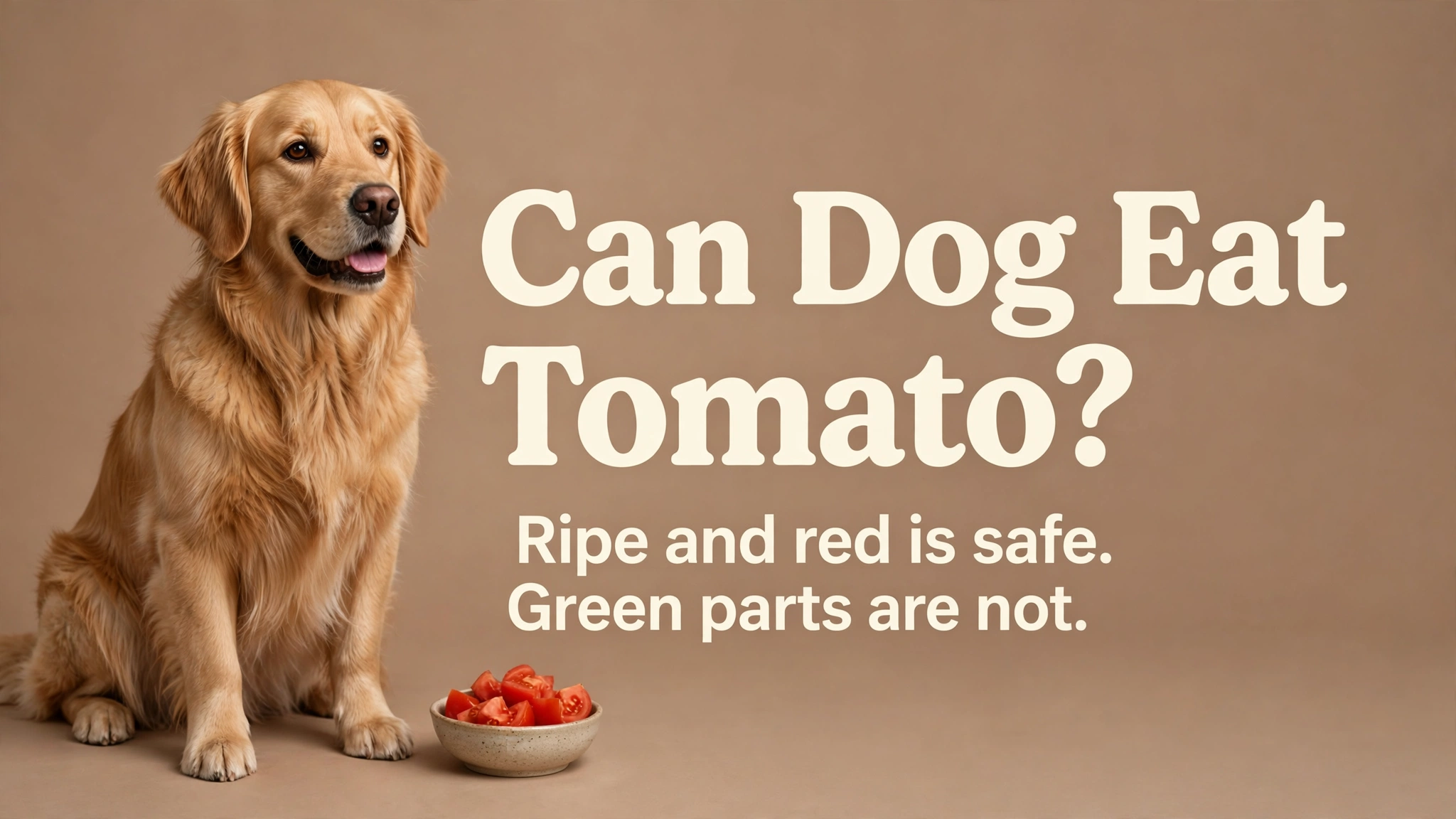
The short answer is yes, a dog can eat ripe red tomato flesh in small amounts. But can dog eat tomato in every form? No. The color is the whole story here. Red and ripe is fine for most healthy dogs. Green fruit and every green part of the plant are not. This guide sorts the plant part by part, sets the portions by dog size, explains the two compounds behind the warnings, and shows what to do if your dog raids the garden.
The Short Answer: Ripe and Red Is the Rule
Yes, dogs can eat ripe tomatoes in small, plain pieces. The soft red flesh of a fully ripe tomato is not toxic, and a few cubes as an occasional treat will not harm most healthy adult dogs.
The rule is really about ripeness. A tomato starts green and hard, then softens and turns red as it matures. The plant chemicals that worry vets live in the green stage. Once the fruit is fully red, those chemicals have dropped to trace levels in the flesh.
Keep the treat framing. A complete dog food already gives your dog everything it needs. Tomato is a juicy extra for dogs that enjoy it, never a food group, and a dog that turns away from it is missing nothing.
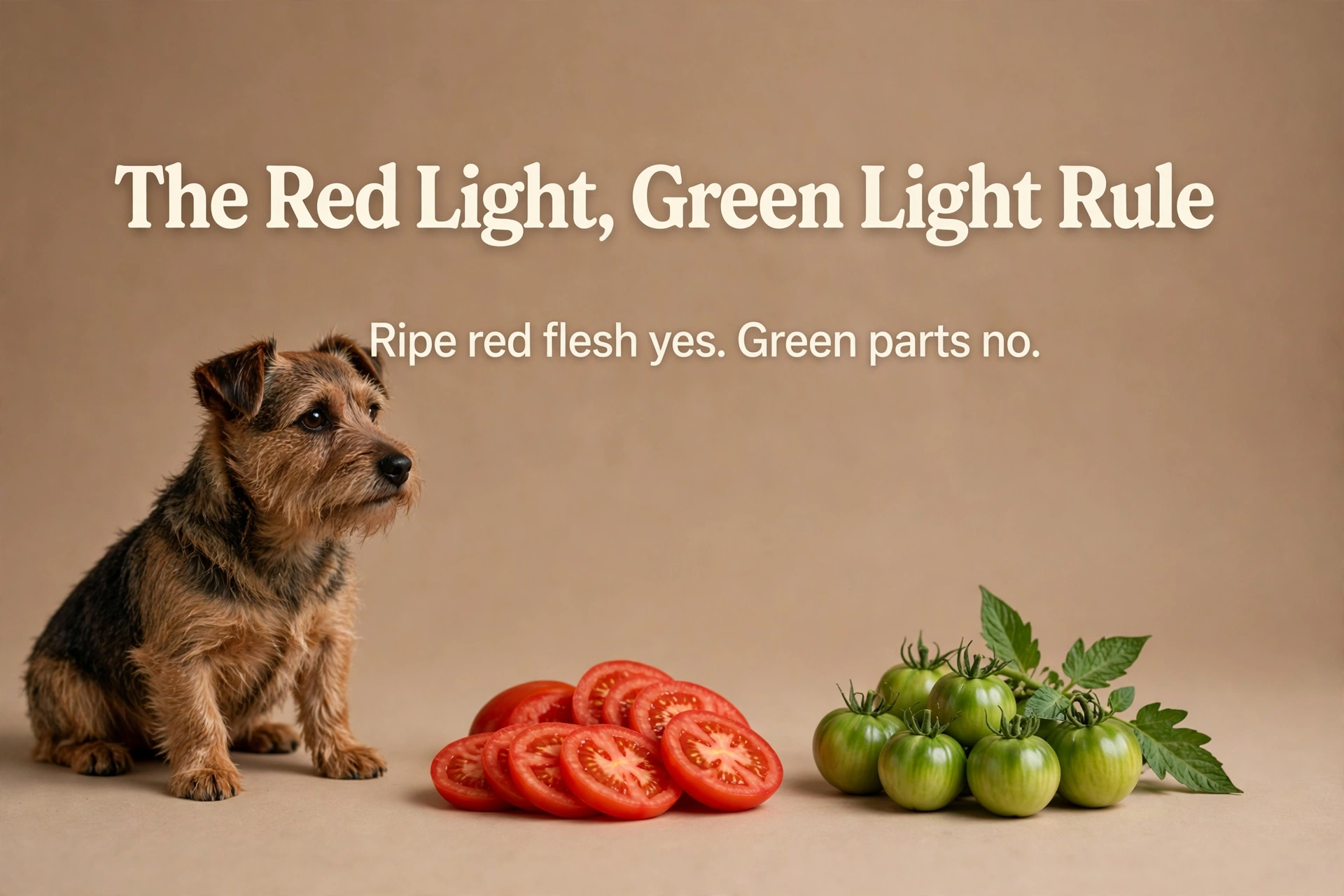
The Red Light, Green Light Rule: Sorting the Plant Part by Part
Most guides blur this. Here is the plant sorted plainly, part by part.
Ripe red flesh is the green light. Soft, fully red, and plain, it is the only part you should ever offer on purpose.
Cherry and grape tomatoes follow the same rule. Ripe ones are fine, but their round shape is a choking risk, so cut them into halves or quarters first.
Green, unripe fruit is a red light. A hard green tomato holds far more of the plant’s defensive chemicals than a ripe one, and it is the part curious dogs pull off garden vines.
Stems, leaves, and vines are the strongest red light of all. These green parts carry the highest levels of those chemicals, and no amount of them belongs in a dog bowl.
Tomato is not the only garden food that splits this way. Avocado has the same pattern of a safe part and risky parts, and our guide on whether dogs can eat avocado walks through that split in the same way. With both foods, the part and the amount decide everything.
Tomatine and Solanine: Why Green Means Stop
Two compounds sit behind every tomato warning. They are called tomatine and solanine, and both belong to a family of plant chemicals named glycoalkaloids. They are the tomato plant’s built in defense system, there to discourage insects and animals from eating the plant before the fruit is ready to spread its seeds.
As the fruit ripens, the tomatine level falls steeply. That is why the red flesh is considered safe while the same fruit picked green is not. Solanine is better known from green potatoes, a close plant relative, and tomato leaves and stems carry some of it too.
In real life, poisoning needs quantity: a good amount of green fruit or plant material for the dog’s size. A small dog that eats leaves is at more risk than a large dog that nibbles one stem. The signs to know are heavy drooling, vomiting, diarrhea, loss of appetite, weakness, wobbly walking, and tremors. Serious cases are uncommon, but the signs are real enough that green parts should simply stay out of reach. It is also why the ASPCA lists the tomato plant itself as toxic to dogs, even though the ripe fruit is fine.
What a Ripe Tomato Actually Gives Your Dog
The tomato is a fruit from the nightshade family, and it is about 95 percent water. That makes ripe pieces a hydrating little snack on a warm day.
The useful nutrients are lycopene, the red pigment and a natural antioxidant, plus vitamin A, vitamin C, vitamin K, potassium, and a little fiber. A medium tomato holds roughly 22 calories, so a few cubes add almost nothing to the daily count.
Here is the honest limit, as with most fruits and vegetables for dogs. Your dog would need to eat far more tomato than is wise to gain real nutrition from it, and that much acidity would upset the stomach first. Balanced dog food covers all of these nutrients already. Tomato adds freshness and variety, nothing more.
The Slice Rule: How Much by Dog Size
There is no official tomato serving for dogs, because tomato is not a dog food. The pattern vets and owners use is a small piece count matched to body size, a few times a week at most, inside the usual rule that all treats together stay under about 10 percent of daily calories.
Small dogs under 20 pounds get one or two small cubes of ripe flesh, or half a cherry tomato cut into pieces. Medium dogs between 20 and 50 pounds get two or three cubes, or one cherry tomato cut into quarters. Large dogs over 50 pounds can have a few cubes or one thin slice chopped into pieces.
Start smaller than that the first time. Offer one piece, then watch your dog for a day. If the stool stays normal and there is no vomiting, you can use the full amount next time. Too much tomato at once, even ripe, commonly shows up as soft stool or gas because of the acidity and fiber.
How to Serve Tomato the Safe Way
Wash it well. Tomatoes from a shop or garden can carry soil and spray residue, so rinse the fruit under running water and pat it dry.
Pick truly ripe fruit. The tomato should be red all over and slightly soft. Green shoulders near the stem mean it is not ready, and that part holds more of the compounds you are avoiding.
Cut away the stem and every green bit. The stem scar and any leaf pieces come off before the fruit goes anywhere near your dog.
Cut it small. Cubes for large dogs, smaller pieces for small dogs, and cherry tomatoes always cut lengthwise into halves or quarters so they cannot roll and block a throat.
Serve it plain. No salt, no oil, no dressing, no seasoning. A plain piece of ripe tomato is the treat. Everything people add to tomatoes is for people.
Tomato Products Are a Different Story
This is where most tomato trouble actually starts, because products hide ingredients that fresh fruit never has.
Pasta sauce and pizza sauce almost always contain onion and garlic, both harmful to dogs, plus salt, sugar, and oil. Ketchup is mostly sugar and salt in tomato clothing. Salsa adds onion, chili, and lime, and the onion alone is reason enough to skip it. Tomato soup usually carries onion, garlic, and cream. Canned tomatoes often sit in juice with added salt.
The simple rule: if it came out of a jar, can, or packet, it is not a dog treat. The only product form that is close to fine is plain puree you make yourself from ripe tomatoes with nothing added, and even that is easier to skip. Fresh, ripe, and plain covers everything your dog needs from this fruit.
Dogs That Should Skip Tomatoes
Some dogs should not get tomato at all, even ripe.
Dogs with acid reflux or sensitive stomachs come first. Tomato is acidic, and that acidity can irritate an already tender stomach and bring back vomiting or discomfort.
Dogs with kidney disease should skip it unless your vet says otherwise. Tomato carries potassium, and kidney diets control minerals like potassium closely. Struggling kidneys should not get unplanned extras.
Young puppies should skip it too. Their stomachs are sensitive, and their small size means any green part they grab in a garden carries more risk per bite. Older puppies can try one tiny cube of ripe flesh, but there is no need to rush it.
Dogs on a prescription diet should get no extras at all without the vet’s okay. Those diets are balanced for a condition, and side treats can quietly work against them.
My Dog Ate Green Tomato or Plant Leaves: What to Do Now
First, stay calm, and work out what was actually eaten. A dog that stole one ripe slice off the floor needs nothing but watching. A dog that chewed through garden vines is a different case.
Take away any remaining plant material. Note roughly how much is missing and which parts: fruit, leaves, or stems. Size matters too. The same amount of leaves is a bigger dose for a small dog than for a large one.
Watch over the next day for heavy drooling, vomiting, diarrhea, loss of appetite, unusual tiredness, wobbly walking, or tremors. Call your veterinarian if your dog ate leaves or stems in any real quantity, if your dog is small, or if any of those signs appear. A photo of the plant helps the vet judge what was eaten. Do not try to make your dog vomit unless a professional tells you to.
For garden dogs, prevention is the real fix. A low fence around the tomato patch and picking up fallen green fruit removes the usual accident before it happens.
Conclusion: The Bottom Line on Tomatoes for Dogs
So, can dog eat tomato without worry? Ripe, red, and plain, in small pieces matched to size, yes, most healthy dogs can. The color check takes two seconds: red flesh is the treat, green fruit and every green part of the plant stay off the menu. Skip the sauces and soups, keep portions to a few pieces a few times a week, and fence the garden patch if your dog grazes. Judged by its color and its part, the tomato is a safe little extra.
Frequently Asked Questions About Tomatoes and Dogs
Are tomatoes toxic to dogs?
The ripe red flesh is not toxic. The green parts are the problem: unripe fruit, stems, and leaves carry tomatine and solanine, plant chemicals that can cause drooling, vomiting, diarrhea, weakness, and tremors when a dog eats enough of them.
Can dogs eat cherry tomatoes?
Yes, if they are fully ripe, washed, and plain. Always remove the stem and cut cherry tomatoes into halves or quarters first, because their round shape is a choking risk, especially for small dogs.
Can dogs eat green tomatoes?
No. Green, unripe tomatoes hold much higher levels of tomatine than ripe ones. Keep them away from your dog, and pick up any that fall in the garden before your dog finds them.
Can dogs eat tomato sauce?
No. Tomato sauce usually contains onion and garlic, which are harmful to dogs, along with salt, sugar, and oil. The same goes for ketchup, salsa, and tomato soup. Plain fresh tomato is the only safe form.
Can puppies eat tomatoes?
It is better to skip them for young puppies. Their stomachs are sensitive and their small size raises the risk from any green parts. An older puppy can try one tiny cube of ripe flesh, but there is no need for it.
How much tomato can I give my dog?
A few pieces matched to size: one or two small cubes for small dogs, two or three cubes for medium dogs, and a few cubes or a chopped thin slice for large dogs, a few times a week at most.
What happens if my dog eats tomato leaves?
Watch for heavy drooling, vomiting, diarrhea, weakness, or wobbly walking over the next day. Call your veterinarian if your dog ate more than a nibble, is small, or shows any of these signs.
Can dogs eat tomatoes every day?
There is no need. Tomato is a treat, not a nutrient source your dog depends on, and daily servings add acidity that can bother the stomach. A few pieces a few times a week is plenty.
Bella Barker is a pet food safety writer with 10+ years of experience. She researches what dogs and cats can (and can't) eat and turns it into simple, practical guides for everyday pet parents. 🐶🐱
If you have ever sliced open a watermelon and found bright yellow flesh instead of red, you are not looking at an unripe melon. Yellow watermelon is a real variety of the same fruit, and many dog owners wonder whether the yellow kind follows the same feeding rules. The short answer is yes: dogs can…
Yes, most healthy adult dogs can have lactose free milk in small amounts. The sugar that causes most milk trouble is already broken down before the milk reaches the bowl, so a careful owner can share a small splash without the usual stomach upset. That does not make it a health food, and it does…
Your dog is staring at your sandwich, and the slice of turkey hanging off the bread looks like the perfect treat to share. Before you hand it over, it helps to know what is really in that slice. Our broad guide to what human foods dogs can eat mentions deli meat only briefly, so this…
You open a jar of apple sauce for lunch, and your puppy is already there, nose up, tail going. It smells sweet and looks harmless. It is just cooked apples, after all. So can puppies eat apple sauce? Yes, they can, as long as it is plain and unsweetened, the amount is tiny, and your…
If you have ever caught your dog sniffing the sesame topping on your bagel, you have probably asked yourself: can dog eat sesame seeds? The short answer is yes, plain sesame seeds are safe for dogs in tiny amounts. They are not toxic, and a small pinch as an occasional treat will not harm a…
Your dog smells the jar before you even open it. The tail starts thumping and the eyes lock on your hand. That reaction is normal, because most dogs love the taste and smell of this spread. The good news is that peanut butter for dogs can be a safe treat. The catch is that only…