Yes, dogs can eat carrots. Served raw or cooked, plain and cut to a safe size, they make a healthy low calorie treat for most dogs. They are packed with beta carotene, fiber, and vitamins that support the eyes, digestion, and the immune system. Like every treat, they belong inside the 10 percent rule: all extras combined should stay under 10 percent of your dog’s daily calories.
This guide covers which parts of the plant are safe, raw versus cooked, exact portions by dog size, special rules for puppies and seniors, and the few times you should skip them. How we checked this page: nutrition facts follow USDA FoodData Central and the carrot entry on Wikipedia; treat limits follow WSAVA guidance on the 10 percent rule.
The Short Answer: Yes, Dogs Can Eat Carrots
This veggie is not toxic to dogs, and most dogs love the sweet taste and satisfying crunch. A medium one has only about 25 calories, so it is one of the cheapest healthy treats you can pull straight from the fridge.
Two quick cautions before you share. First, always wash them well to remove dirt and pesticide residue. Second, if your dog eats a prescription diet or has a health condition such as diabetes, check with your vet before adding any new food, even a healthy one.
Raw or Cooked: Which Way Is Better?
Both are safe, and the better choice depends on your dog.
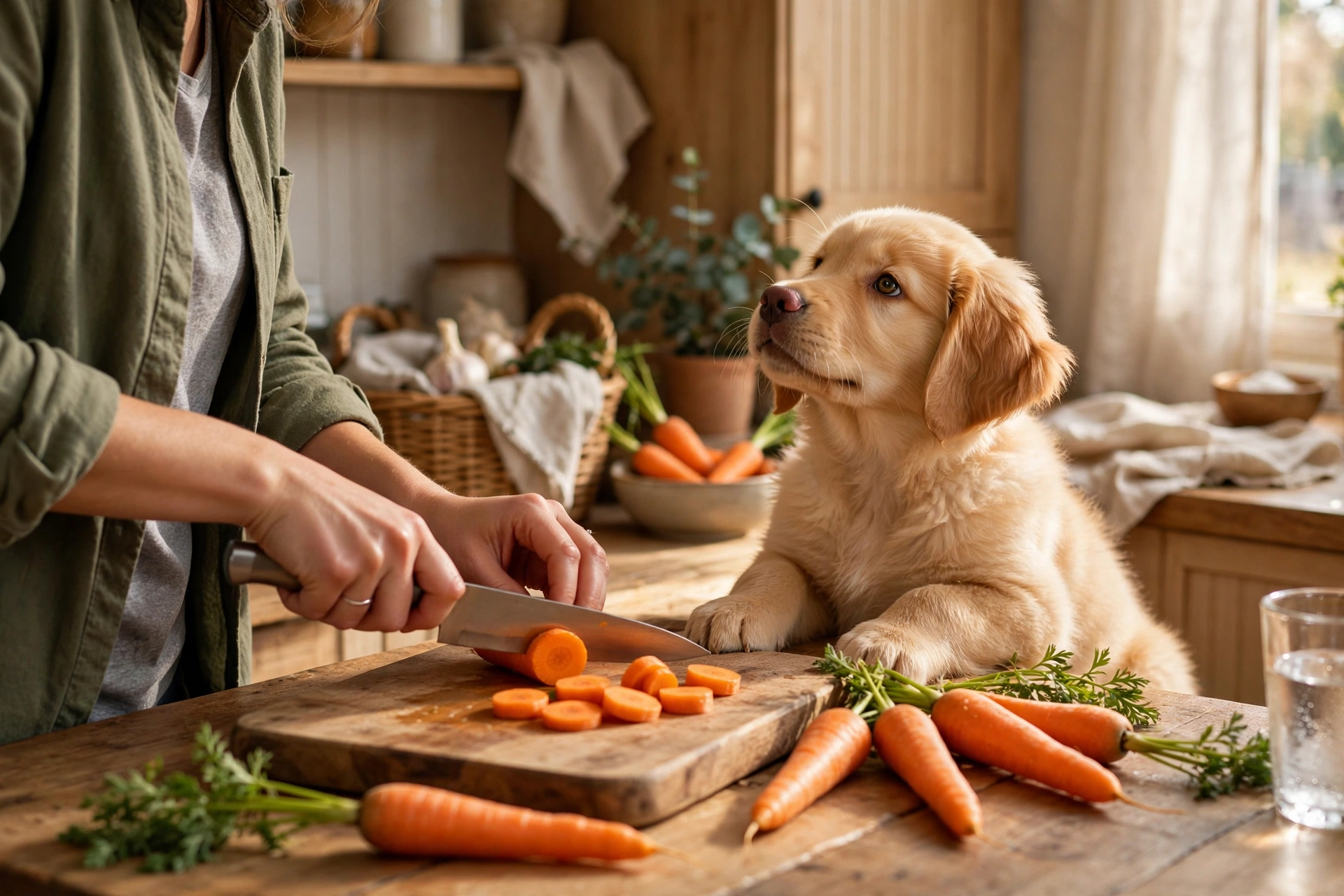
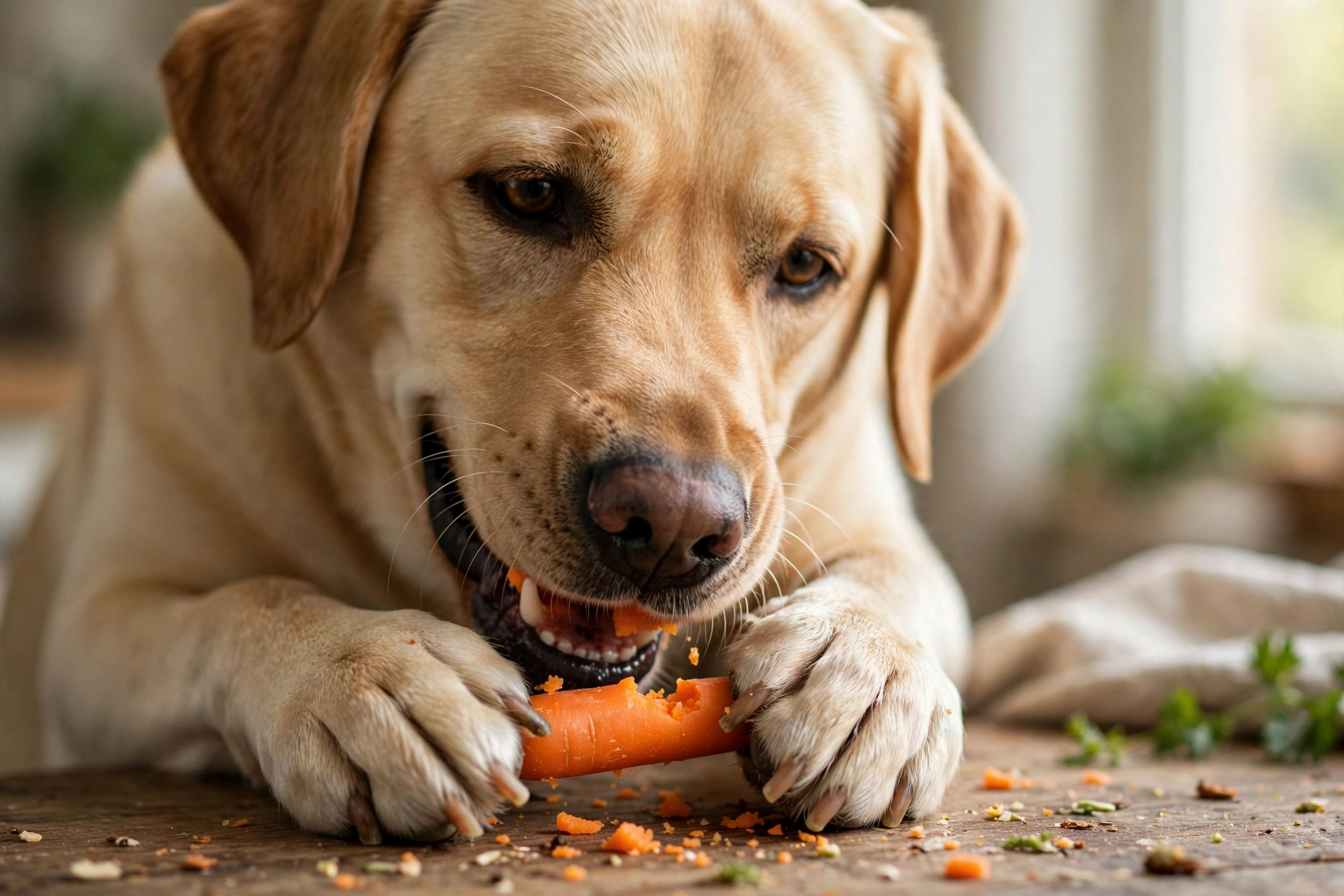
Raw keeps the famous crunch. That hard texture gives your dog something fun to chew, and chewing raw pieces may help reduce plaque on the teeth. Cut them into bite size pieces first, because a whole raw one can be a choking hazard, especially for small dogs and fast gulpers.
Cooked is softer and gentler. Steaming or boiling makes them easier to chew and digest, and the body can actually absorb beta carotene more easily from cooked pieces. That makes cooked the better pick for puppies, senior dogs, dogs with sensitive stomachs, and dogs with dental trouble.
Simple rule: healthy adult dogs who love to chew do great with raw pieces, while puppies, seniors, and sensitive tummies do better with cooked. Whichever you choose, keep them plain. No butter, oil, salt, or seasonings, and never cook them with onion or garlic, which are harmful to dogs. The orange color comes from beta carotene, which the body turns into vitamin A (Wikipedia).
Which Parts of the Plant Are Safe?
Not every form you find in the kitchen is equal. Here is the full rundown.
The root is the safest part. Wash it well; peeling is optional, and the skin is fine to eat.
The peel is safe too. If you peel them for your own cooking, the peels can go to your dog as long as they are clean and cut small.
The green tops are safe in small amounts. Chop them finely, since the earthy flavor puts some dogs off and long strands are harder to chew.
Baby carrots are safe but need cutting. Their round shape can lodge in a small dog’s throat, so slice them into pieces first.
Carrot juice and puree are safe only in small amounts. They carry more sugar and less fiber than the whole veggie, so treat them as an occasional taste, not a daily serving.
Frozen pieces are safe in small chunks and make a great summer cooler. Very hard frozen chunks can be tough on teeth, so let them soften slightly for aggressive chewers.
Skip the rest. Canned ones packed in salted water have too much sodium. Glazed, seasoned, or fried versions add sugar, fat, and salt your dog does not need. And carrot cake is a firm no: the sugar and fat alone can upset the stomach, and many recipes hide xylitol, raisins, chocolate, or nutmeg, which are dangerous for dogs.
How Many Carrots Can Your Dog Eat in a Day?
Follow the 10 percent rule from the World Small Animal Veterinary Association: all treats combined, including this veggie, should stay under 10 percent of daily calories. The other 90 percent should come from a complete and balanced dog food.
Use this table as a starting point for a healthy adult dog. A baby carrot is about 10 calories; a small one is about 25.
Extra small dogs, 2 to 10 lb: 1 to 2 baby carrots, 2 to 3 times per week.
Small dogs, 11 to 20 lb: 2 to 3 baby carrots, 2 to 3 times per week.
Medium dogs, 21 to 50 lb: 3 to 4 baby carrots or half a small one, 2 to 3 times per week.
Large dogs, 51 to 90 lb: 4 to 5 baby carrots or 1 small one, 2 to 3 times per week.
Extra large dogs, 91 lb and up: 5 to 6 baby carrots or up to 1 large one, 2 to 3 times per week.
If your dog has never tried them, start with one small piece and watch for 24 hours before offering more. We use the same size based approach in our banana guide for dogs, which follows the same 10 percent rule for another sweet treat.
5 Easy Ways to Serve Them
Slicing them plain works fine, but these ideas make the treat more fun.
Frozen sticks for hot days and teething pups. Cut them into sticks, freeze for an hour, and hand one over after a walk. Always supervise, and skip this for dogs with fragile teeth.
Grated topper for picky eaters. Grate a little over dinner to add color, crunch, and fiber without many calories.
Pea size training bits. Because they are so low in calories, you can reward often in a training session without blowing the treat budget.
Lick mat or KONG filling. Spread finely grated or mashed cooked pieces on a lick mat for a calming enrichment snack.
Mixed into dinner. Stir small cooked pieces into the food bowl with plain rice or other dog safe vegetables for extra texture and nutrients.
Puppies and Senior Dogs: What Changes
Puppies can eat them once they are weaned and eating solid food. Cut pieces tiny to prevent choking, and start with a very small amount since young digestive systems are sensitive. The crunch is wonderful for teething puppies who want something safe to gnaw. Keep portions small: a puppy’s diet is carefully balanced for growth, and treats must stay under 10 percent. Skip them during bouts of diarrhea.
Flat faced breeds such as pugs and French bulldogs need extra care at any age. They tend to gulp, so use smaller pieces than you think you need and feed them slowly, or offer grated pieces on a lick mat instead.
Senior dogs often do best with the cooked version. Softer pieces are kinder on worn teeth and older stomachs, and the low calorie count helps with the weight gain that creeps in with age. Cut everything small, since older dogs may chew less thoroughly.
When to Skip Them: Risks and Warning Signs
This is a safe veggie for most dogs, but these are the exceptions.
Natural sugar matters for some dogs. They contain more sugar than leafy greens, so dogs with diabetes or serious weight problems should only get them with the vet’s approval.
Choking and blockage are the biggest physical risks. Whole ones and large chunks can lodge in the throat or, rarely, block the gut. This is most likely in small breeds, puppies, and dogs who swallow without chewing. Always cut to a safe size and supervise.
Too much too fast upsets stomachs. Extra fiber can cause gas or loose stool when you overdo it, so introduce them gradually. Do not be alarmed if the stool looks orange afterward; that tint comes from beta carotene and is usually harmless.
Allergies are uncommon but possible. Stop and call your vet if you notice itching, red ears, vomiting, or diarrhea after eating them.
If your dog raids the bag and eats far too many, most healthy dogs just get gassy or loose stool for a day. Offer water and normal meals, and call your vet if you see repeated vomiting, belly pain, no stool, or unusual lethargy.
Conclusion: Can Dogs Eat Carrots?
Yes. They are safe, cheap, low in calories, and full of nutrients that support your dog’s eyes, digestion, teeth, and immune system. Serve them plain, cut to a size that matches your dog, and keep them inside the 10 percent treat rule a few times a week. Choose raw for the crunch or cooked for gentler digestion, skip every seasoned or sugary version, and check with your vet first if your dog has diabetes or eats a prescription diet. Done right, this humble orange veggie is one of the best treats in your kitchen.
Frequently Asked Questions About Dogs and Carrots
Can dogs eat raw carrots?
Yes. Raw pieces are safe and the crunch may help keep teeth cleaner. Wash them well and cut them into bite size pieces to prevent choking, and skip whole ones for small dogs and gulpers.
Can puppies eat carrots?
Yes, once weaned. Use tiny pieces, since puppies are prone to choking and have sensitive stomachs. They are excellent for teething. Keep the amount small so the balanced puppy diet stays on track.
How many carrots can a dog eat per day?
It depends on size. Most dogs do well with 1 to 6 baby carrots a few times a week, matched to body weight using the table above. All treats combined should stay under 10 percent of daily calories. When in doubt, ask your vet.
Can dogs eat baby carrots?
Yes, but cut them up first. Their small round shape is exactly the size that can get stuck in a dog’s throat, so slice each one into two or three pieces before serving.
Are carrots good for a dog’s teeth?
The crunch of raw pieces can help scrape away some plaque, which supports dental health. They are a helpful extra, not a replacement for tooth brushing and regular vet dental checks.
Can diabetic dogs eat carrots?
Only with your vet’s approval. The natural sugar can affect blood glucose, so your vet needs to fit them into your dog’s diet plan before you share.
Can dogs eat carrot tops or greens?
Yes, in small amounts. Chop the greens finely to make them easy to chew. Some dogs dislike the earthy taste, so do not worry if yours turns up their nose.
Why is my dog’s poop orange after eating carrots?
That orange tint comes from beta carotene passing through, and it is usually harmless. If the stool change comes with vomiting, diarrhea that lasts more than a day, or lethargy, call your vet.
Bella Barker is a pet food safety writer with 10+ years of experience. She researches what dogs and cats can (and can't) eat and turns it into simple, practical guides for everyday pet parents. 🐶🐱
No, dogs should not drink milk as a regular drink. Most adult dogs are lactose intolerant, so milk often causes gas, bloating, diarrhea, or vomiting. A small accidental lick is rarely dangerous, but milk gives dogs no nutrition they do not already get from good dog food. Fresh water is always the better choice. The…
Figs look like a healthy snack. They are soft, sweet, and full of fiber, so it is natural to wonder if your dog can share one. The short answer is yes, fresh ripe figs are safe for dogs in small amounts. But the form of the fig matters a lot. Dried figs, fig cookies, fig…
Your dog is watching you snap green beans at the counter, and those long green pods look like the kind of thing a dog would love to crunch. When people ask about green beans for dogs, they usually mean plain fresh beans, not the casserole on the holiday table and not a can from the…
Yes, dogs can eat watermelon. The pink flesh is safe when you remove the rind and seeds first. Give only a few small pieces as an occasional treat. Too much can upset your dog’s stomach. Dogs with diabetes should skip it unless your vet says it is fine. Can Dogs Eat Watermelon? The Short Answer…
If you have ever watched your Frenchie stare at your breakfast bowl, you know the question comes fast: can French bulldogs eat raspberries? The short answer is yes. Fresh, plain raspberries are safe when you keep the portion small and serve them the right way. A few berries make a sweet, low calorie treat. A…
If you sliced open a dragon fruit at breakfast and your dog stared at the pink skin and speckled white flesh, you have probably asked the exact question in this title: is dragon fruit good for dogs? Here is the short answer: yes, the soft fresh flesh is safe for most healthy dogs in small…








6 Comments