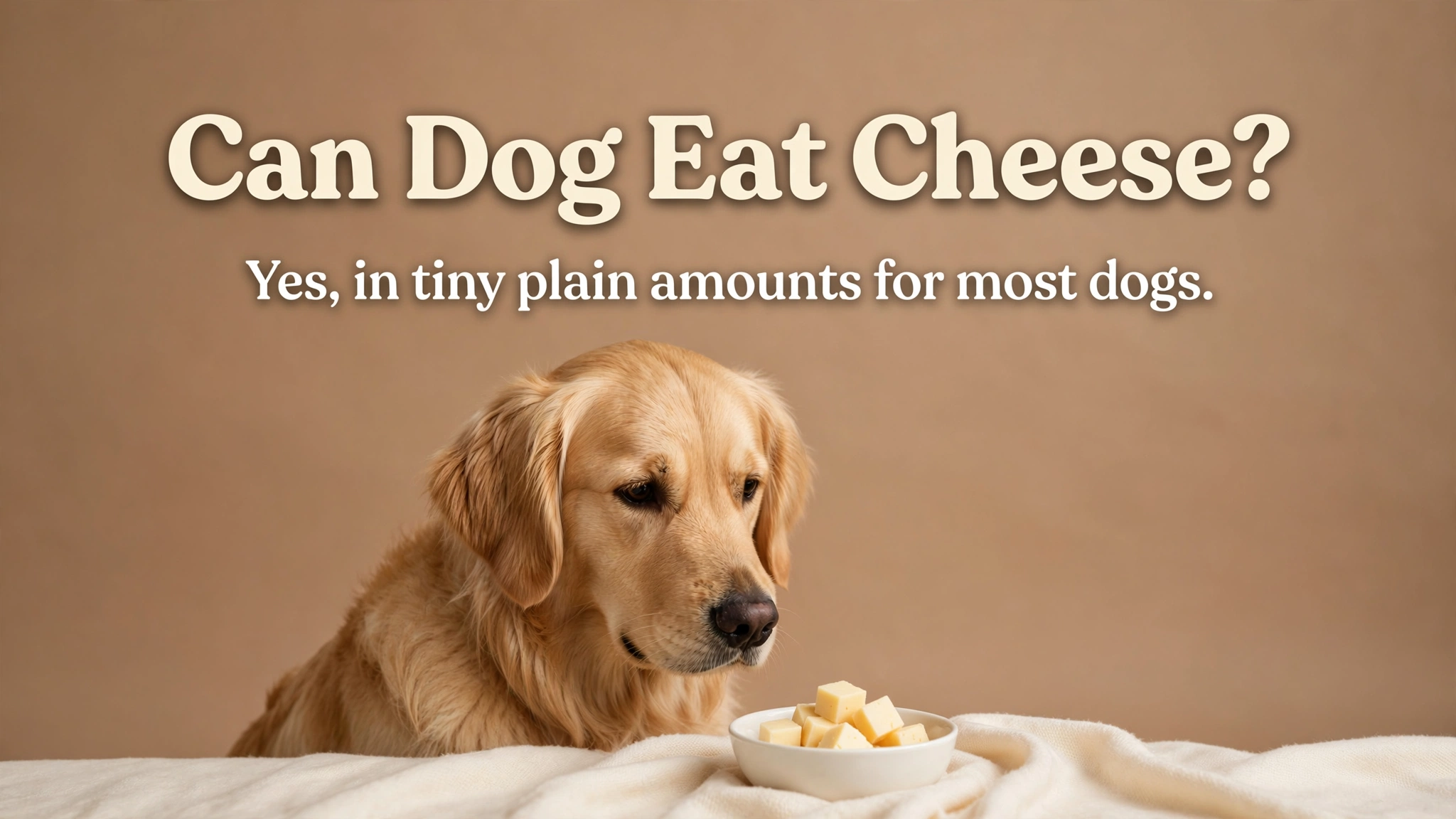
If your dog does the full body stare every time you open the fridge near the cheese drawer, you have probably asked yourself, can dog eat cheese? Here is the short answer: yes, in most cases. Cheese is not toxic to dogs. A tiny piece of plain cheese now and then is fine for most healthy adult dogs. But there is one condition that decides everything: how your dog handles dairy. This guide explains why, which cheeses are safe and which belong nowhere near your dog, the right portion, and a simple test to learn your own dog’s tolerance.
The Short Answer: Yes, With One Condition
Yes, dogs can eat cheese as an occasional treat. Cheese carries real nutrition: protein, calcium, and B vitamins. It is also one of the most motivating training rewards in the kitchen because it is soft, aromatic, and easy to cut small.
The condition is lactose. Most adult dogs produce very little lactase, the enzyme that digests milk sugar. So while a tiny piece of plain cheese is fine for many dogs, a big serving can bring gas, soft stool, vomiting, or a sore belly. The type of cheese matters too. Some cheeses are gentle and mild. One family of cheeses is genuinely dangerous. Knowing the difference is the whole game.
Why Adult Dogs Struggle With Dairy: The Lactase Fade
Puppies digest milk without trouble. Their bodies make plenty of lactase to break down the milk sugar in their mother’s milk. After weaning, that enzyme production drops off and usually stays low for the rest of the dog’s life. Think of it as a fade, not a switch. The enzyme quietly declines as the puppy grows.
This is why age matters with cheese. Aged and hard cheeses went through a long fermentation, and much of their lactose was already broken down by bacteria during that process. That is why cheddar, Swiss, and parmesan are easier on dogs than soft fresh cheeses. Cottage cheese is the gentlest of all, low in lactose and low in fat, which is why vets reach for it when a dog needs a bland diet. For background on how milk sugar digestion works.
It is also why dairy trouble looks the way it does. When undigested lactose reaches the lower gut, gut bacteria ferment it. That fermentation makes gas and draws water in, which is exactly why the classic symptoms are gas, rumbling, and loose stool a few hours after a dairy treat. None of this means every dog reacts badly. It means your dog’s personal level of lactase decides the safe amount, and there is a simple way to find it.
The Safe Shelf and the Never Shelf: Cheese by Cheese
Open your fridge and sort what you see into two shelves.
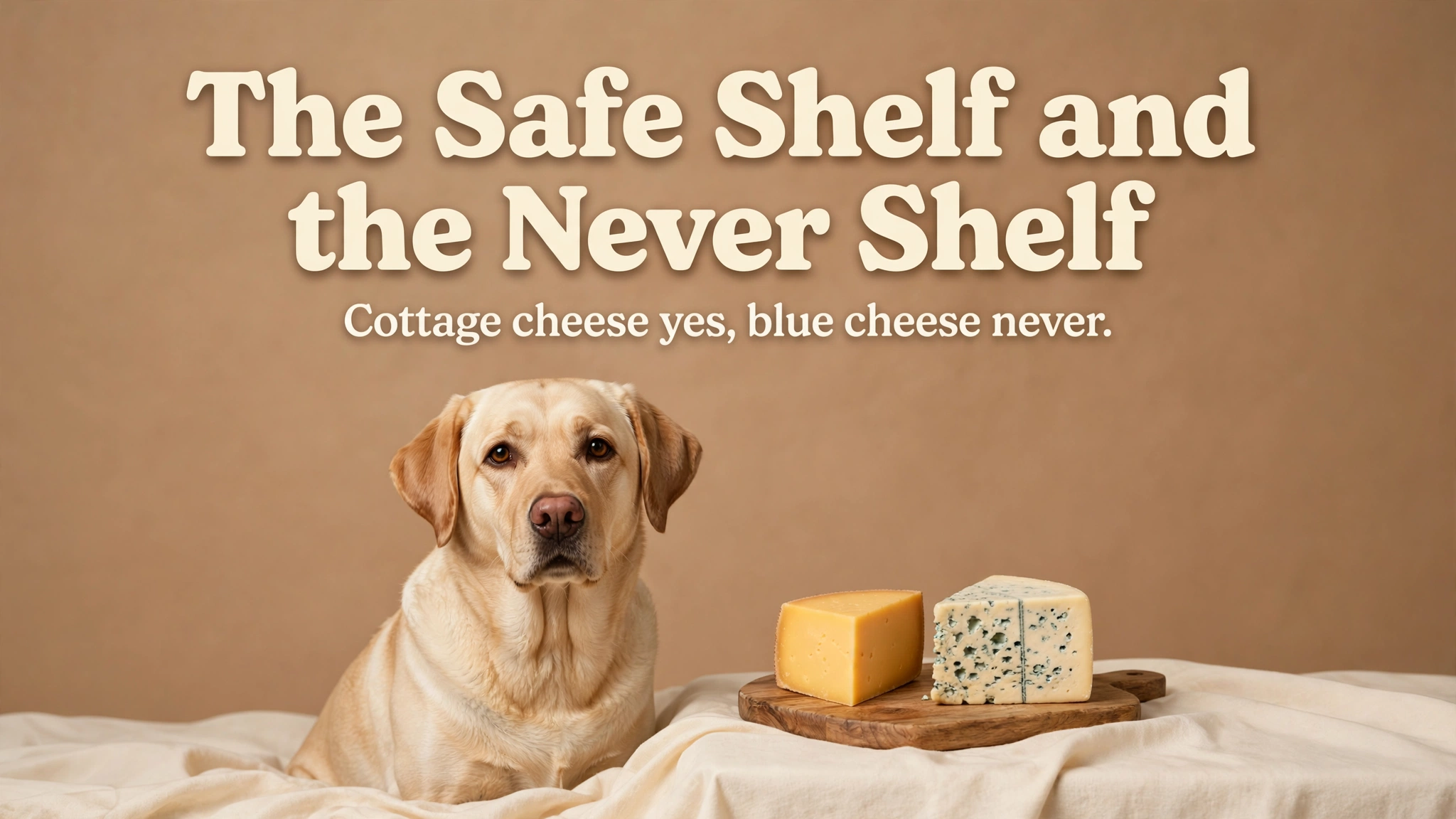
On the safe shelf, in tiny amounts: plain cottage cheese, plain mozzarella, mild cheddar, Swiss, and plain ricotta. These are the mildest in lactose and salt, and vets use cottage cheese and mozzarella as go to training treats. Hard cheeses like parmesan are very low in lactose, but they are salty, so keep the piece smaller than you think.
On the never shelf: blue cheeses (roquefort, gorgonzola, stilton) because they contain roquefortine C, a mold byproduct that can cause vomiting, tremors, and seizures in dogs. Any cheese mixed with onion, garlic, chives, or leeks, because those are toxic to dogs and damage red blood cells. Peppered, herbed, and spiced cheeses, since many contain garlic or onion powder hidden in the seasoning. Very salty processed slices and cheese spreads, since the sodium load is rough on small dogs. And anything from a finished dish: pizza cheese, mac and cheese, and cheesy casseroles are loaded with butter, salt, garlic, and fatty meats, so skip the dish even though the cheese itself started safe.
String cheese deserves a special note. It is usually just mozzarella, so it is not dangerous, but it is high in salt and most dogs inhale it in long ribbons. If you use it, tear off a pea sized bit and put the stick away. A whole string cheese is a sodium bomb for a small dog.
Portion Rule: The Pea Cube Method
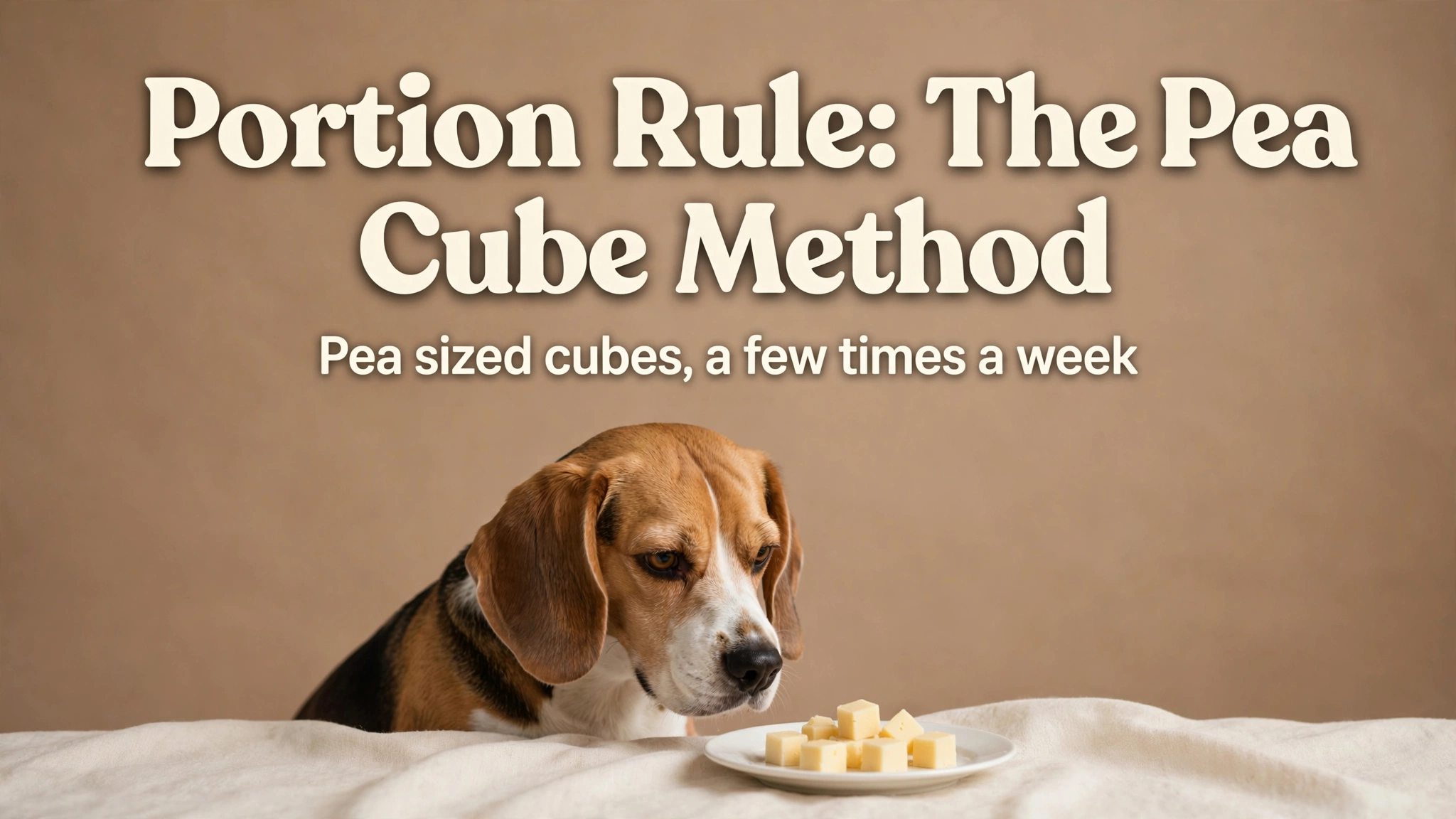
Cheese is calorie dense. A single small cube of cheddar carries about 25 to 30 calories. For a ten pound dog that needs roughly 300 calories a day, that one cube is nearly ten percent of the whole day’s budget. This is why trainers cut cheese into pea sized cubes. Three pea sized cubes feel like three rewards to the dog but barely register on the calorie counter.
A sensible guide: for dogs under 20 pounds, one or two pea sized cubes as an occasional treat. For medium dogs, two to three. For large dogs, three to four, or a single thumbnail sized piece of cottage cheese. A few times a week is a safe rhythm. Every day in small amounts is workable for most healthy dogs, but daily fatty cheese pushes small breeds and older dogs toward pancreatitis risk territory, so keep the weekly pattern rather than a daily habit.
Here is the training economics angle trainers actually use. Cheese shines as a high value reward for hard moments: recall practice, vet visit desensitization, the first nail trim. It is wasted on tasks your dog already does for free. For everyday reps like sit and stay, use a low calorie commercial treat. Save the cheese for the moments that need the big payoff. Your dog works harder and the calorie budget survives.
The One Bite Test: Finding Out If Your Dog Tolerates Cheese
No competitor tells you how to actually learn your own dog’s dairy tolerance. Here is the test, and it takes five minutes of your attention plus one patient day.
Give a single pea sized cube of plain mozzarella or cottage cheese. Nothing else new that day. Then watch for 24 hours. You are looking for gas, rumbling belly sounds, soft stool, vomiting, or loss of appetite. If none of those appear, your dog tolerated it. You can repeat with the same tiny amount two or three days later and then settle into the pea cube rhythm from the portion section.
If you do see symptoms, your dog is telling you clearly. Drop cheese from the treat rotation entirely. There is no training reward worth chronic loose stools. Dogs that react to a pea sized cube should also skip other dairy like milk and cream. And if a dog that used to handle cheese starts reacting, check with your vet, because new digestive sensitivity can signal something changing in the gut.
Dogs That Should Skip Cheese Entirely
Most healthy adult dogs can have the occasional tiny piece. A few should skip cheese completely.
Dogs with a pancreatitis history must not have cheese. The fat load is dangerous even in small servings, and pancreatitis is a serious condition that can require hospitalization. Overweight and obese dogs do not need cheese calories crowding out their balanced food. Dogs with kidney disease or on a sodium restricted diet should skip it, because cheese sodium adds strain. Puppies under three months have still maturing digestion, so stick to puppy formulated treats. And dogs with a confirmed dairy allergy, which is different from intolerance and shows up as itchy skin or chronic ear trouble, should avoid all dairy.
When in doubt, ask your vet how much is safe for your specific dog, based on size, breed, and health history.
If Your Dog Ate Cheese It Should Not Have
Dogs counter surf. Here is how to handle the common cheese situations calmly.
If your dog ate too much plain cheese, expect possible stomach upset within 6 to 12 hours. One episode of vomiting or one loose stool in an otherwise normal acting dog can be managed at home. Offer water, skip one meal, then return to small bland meals. Call your vet if vomiting or diarrhea repeats, if your dog refuses food for more than a day, or if you see lethargy, a hunched back, or belly pain. That pattern in the 24 to 72 hours after a fatty binge can signal early pancreatitis, which needs same day vet care.
If your dog ate blue cheese, treat it as urgent. Roquefortine C can cause tremors, weakness, and seizures. Call your vet or an animal poison control line right away and tell them the type and amount. Do not wait for symptoms.
If your dog ate cheese that included onion or garlic, for example pizza or a herbed cheese log, call your vet. Describe the dish and how much went missing. Onion and garlic damage is dose related, so your vet needs the details to judge the risk, and watch for vomiting, weakness, or pale gums in the hours after.
Conclusion: The Bottom Line on Cheese for Dogs
Cheese is safe for most dogs as a rare, tiny, plain treat, and it earns its reputation as a top training reward. Sort your fridge into the safe shelf (cottage cheese, mozzarella, mild cheddar, Swiss) and the never shelf (blue cheeses, onion or garlic flavored cheese, heavily salted processed cheese, and finished cheesy dishes). Learn your own dog’s tolerance with the one bite test before making cheese a habit. Keep every serving pea sized and occasional, and skip cheese entirely for dogs with pancreatitis, kidney trouble, obesity, or young puppies. For another dog treat question with a calm honest answer, see our guide on carrots for dogs: https://petscaneatit.com/can-dogs-eat-carrots/
Frequently Asked Questions About Cheese and Dogs
Can dog eat cheese if it is lactose intolerant?
It depends on the level of intolerance. Dogs with mild intolerance often handle a pea sized piece of low lactose cheese like cottage cheese or mozzarella. Dogs that react even to a tiny test piece should skip all dairy, including milk, cream, and yogurt.
What is the best cheese for dogs?
Plain cottage cheese is the gentlest choice, low in lactose and fat. Plain mozzarella is a close second and a favorite training treat. Mild cheddar is fine in tiny amounts. Skip extra sharp varieties, which carry more salt.
Can dogs eat blue cheese?
No. Blue cheeses like roquefort, gorgonzola, and stilton contain roquefortine C, which can cause vomiting, tremors, and seizures in dogs. Keep all blue cheese far away from your dog and treat any blue cheese eating as an urgent vet call.
Can dogs eat string cheese?
It is not dangerous, since string cheese is usually mozzarella, but it is high in salt. Tear off a pea sized piece and put the rest away. A whole stick is too much sodium for a dog, especially a small one.
Can dogs eat cream cheese?
Only in tiny smear amounts, and only the plain unflavored kind. Cream cheese is very high in fat, so a little on a toy or Kong is the limit. It should never be a regular treat.
Can puppies eat cheese?
Puppies over three months can have a single pea sized piece of mild cheese as a test, then watch for 24 hours. Very young puppies under three months should stick to puppy food and puppy formulated treats while their digestion is still maturing.
How much cheese can a dog eat per day?
Keep it tiny: one or two pea sized cubes for small dogs, two to three for medium dogs, three to four for large dogs, a few times a week. All treats combined should stay under ten percent of your dog’s daily calories. For more on how milk sugar digestion works in mammals, see
Can dogs eat cheese every day?
In very small amounts, most healthy dogs can, but it is a poor habit. Daily fat and salt add up quietly, especially for small breeds and dogs over age seven. Three times a week at the pea cube portion is a safer rhythm than every day.
Bella Barker is a pet food safety writer with 10+ years of experience. She researches what dogs and cats can (and can't) eat and turns it into simple, practical guides for everyday pet parents. 🐶🐱
If your dog stares at you while you chop peppers for dinner, you have probably asked yourself this question. Can dogs have capsicum? Yes, they can. Sweet capsicum, the kind sold as bell peppers in red, yellow, orange and green, is safe for most healthy dogs when you serve it plain and in small amounts….
You are eating a rice cake, your dog is watching every bite, and you wonder if one small piece is safe to share. The short answer is yes, but only if the rice cake is plain, unsalted, and unflavoured. Most rice cakes in shops are not plain. They carry salt, sweet coatings, chocolate, cheese powder,…
If your dog has sniffed a mint plant in the garden or watched you make a cup of tea, you may have wondered: is mint okay for dogs? The short answer is that a small amount of fresh spearmint or peppermint is usually fine for a healthy adult dog, but the type of mint and…
If your dog just stole a pretzel off the couch, you probably want one clear answer fast. The short version is this: a plain pretzel is not poisonous to dogs, but pretzels are still a poor snack choice, and some flavored kinds can be genuinely dangerous. Salt is the main problem, and a few hidden…
Figs look like a healthy snack. They are soft, sweet, and full of fiber, so it is natural to wonder if your dog can share one. The short answer is yes, fresh ripe figs are safe for dogs in small amounts. But the form of the fig matters a lot. Dried figs, fig cookies, fig…
If your dog grabbed a piece of raw salmon skin off the counter, you need a clear answer fast. Can dogs eat raw salmon skin? No. Raw salmon skin is not safe for dogs. It can carry a parasite that causes salmon poisoning disease, a serious illness that can kill a dog without treatment. It…






4 Comments