If your cat is staring at your breakfast plate, you are probably wondering, can cats eat eggs? Here is the short answer: yes. A fully cooked, plain egg is a safe and protein rich treat for most cats. But there are a few rules that matter, and the yolk and the white are not quite the same thing for your cat. This guide walks through both, the right portion size, the kitchen mistakes to avoid, and what to do if your cat got into egg it should not have.
The Short Answer: Yes, When Cooked and Plain
Yes, cats can eat eggs when they are fully cooked and served with nothing added. Boiled, scrambled, or poached are all fine. The cooking must be complete, with the white fully set and the yolk firm. Raw or runny eggs are not safe, and eggs cooked with butter, oil, salt, milk, cheese, or seasoning are not either. Keep the portion small, a spoonful at a time, a couple of times a week at most.
Eggs are a genuinely good treat because of what they contain. They are one of the most complete protein sources available, and their protein is easy for a cat to digest and use. They also bring B vitamins, vitamin A, vitamin D, selenium, and choline. None of this makes egg a meal for a cat. A balanced commercial cat food is still the foundation. Think of egg as a bonus, not a base.
Why the Yolk and the White Are Different Treats
An egg has two parts, and for cats they work differently. The white is almost pure protein with very little fat. It is the leaner half and the better choice for a cat that needs to watch its weight. The yolk holds most of the vitamins, the healthy fats, and the taurine supporting amino acids, but it also holds most of the calories and fat. A cat can have both once cooked, but it helps to know which one you are serving.
This difference is practical. If your cat is overweight, give mostly white. If your cat is lean and healthy, a little yolk is fine and gives extra nutrients. Either way, the same cooking and plain rules apply.
There is also a science reason cooking matters for the white. Raw egg white contains a protein called avidin that blocks the absorption of biotin, a B vitamin important for coat and skin health. One raw white will not cause a problem, but repeated raw egg whites over time can lead to coat and skin trouble. Cooking weakens avidin, so a fully cooked egg removes this risk along with the bacteria risk.
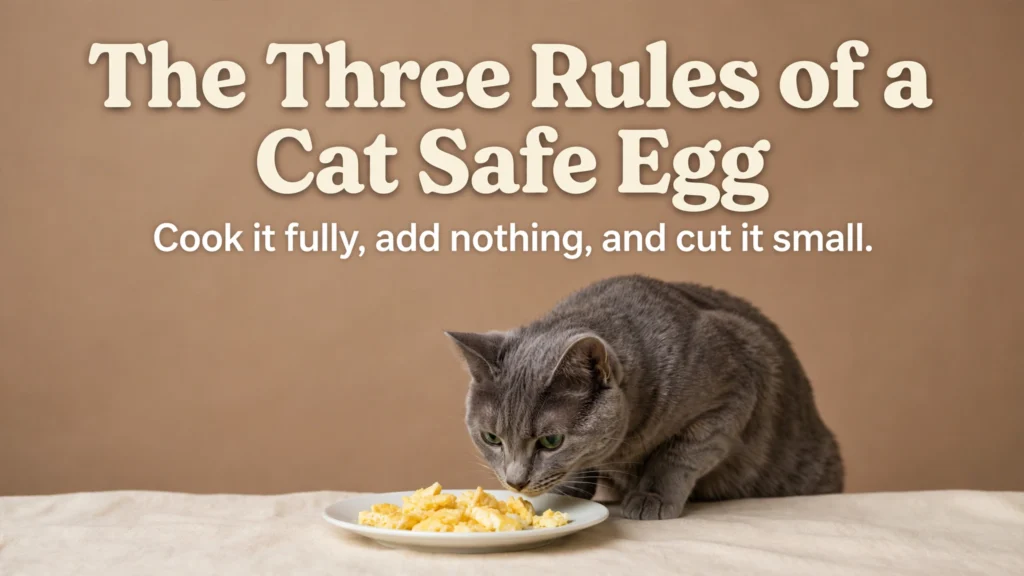
The Three Rules of a Cat Safe Egg
Once you know these three rules, making egg for your cat is simple.
Rule one: cook it fully. Boil it, scramble it in a dry nonstick pan, or poach it. No runny yolks and no soft whites. This kills bacteria like Salmonella that raw or undercooked eggs can carry, and it neutralizes the avidin in the white.
Rule two: add nothing. No butter or oil in the pan, no salt or pepper, no milk or cream in the scramble, no cheese, no hot sauce, and especially no onion, garlic, chives, or leeks in any form. Onion and garlic are toxic to cats and can damage their red blood cells. Many adult cats are also lactose intolerant, so the milk you stir into your own scrambled eggs can give your cat loose stools.
Rule three: cool it and cut it small. Let the egg reach room temperature so it cannot burn a curious mouth, then chop or mash it into small pieces. Cats can eat chunky food, but small pieces are easier and safer.
Portion Size: The Spoonful Rule
A whole egg carries about 70 calories, which is a big share of a day’s food for a cat. An average ten pound cat needs roughly 200 to 250 calories a day, so one egg is almost a third of the daily budget. That is why a spoonful, not an egg, is the right portion.
A good guide is one teaspoon of cooked egg for a small cat, up to one tablespoon for a large cat, given one or two times a week. All treats combined should stay under ten percent of your cat’s daily calories. Start with a tiny taste the first time and wait a day to see how your cat’s stomach handles it, the same as with any new food.
It is easy to overdo this if your cat loves eggs. They often do. But extra egg means extra calories that quietly add up to weight gain, and a cat that fills up on egg may eat less of its balanced food. Small and occasional keeps the treat a treat.
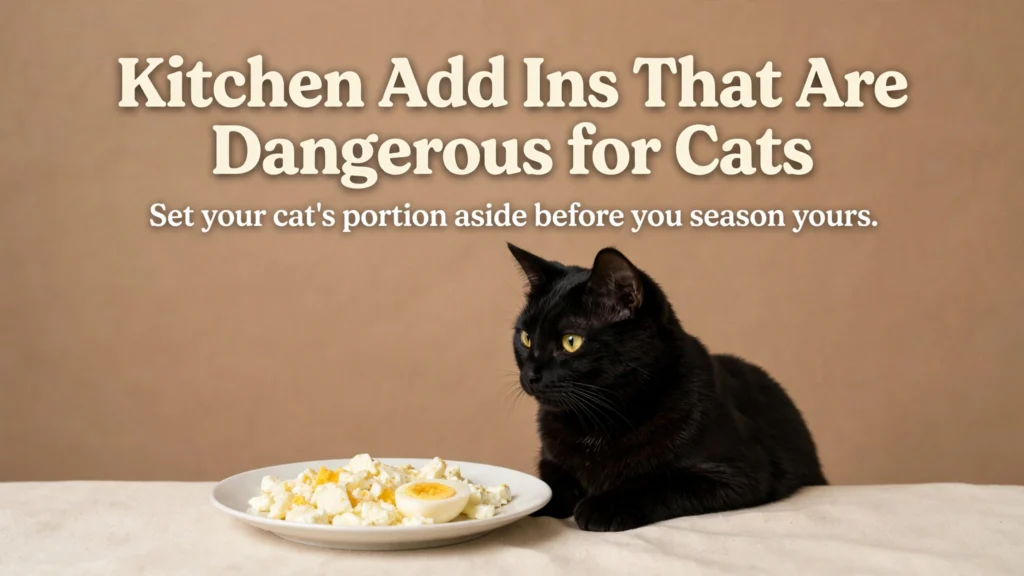
Kitchen Add Ins That Are Dangerous for Cats
The egg itself is safe, but kitchens are full of add ins that are not. Knowing them by name is more useful than a vague warning.
Onion, garlic, chives, and leeks, whether fresh, powdered, or cooked, are the serious ones. They are toxic to cats and can cause vomiting, weakness, pale gums, and in worse cases damage to red blood cells. Call your vet if your cat ate egg cooked with any of these.
Milk, cream, butter, and cheese are not toxic, but they can upset the stomach. Butter and oil add fat that can lead to weight gain or a sore stomach, and many adult cats cannot digest milk well. Salt and spice blends can irritate the stomach, and some seasoning mixes contain onion or garlic powder, which brings you back to the toxic list.
The safest habit is simple. Set aside a plain portion for your cat before you season your own breakfast. Keeping the cat’s part boring is exactly what keeps it safe.
Cats That Should Skip Eggs
Most healthy adult cats can enjoy a little egg. A few should skip it or check with a vet first.
Kittens that are still weaning should stick to their kitten food. Once a kitten is eating solid food well, a tiny taste of cooked egg now and then is usually fine, but keep it tiny.
Overweight cats do not need the extra calories, so egg is a poor choice while a cat is on a diet. Cats with kidney disease, pancreatitis, or diabetes should only have egg if their vet says so, because protein, fat, and calorie limits are part of their treatment. Cats with a history of food allergies should be introduced carefully, since cats can be allergic to egg just like any food. If you see vomiting, diarrhea, itching, or skin trouble after egg, stop and talk to your vet.
If Your Cat Ate Egg It Should Not Have
Cats get into things. Here is how to handle the common egg situations calmly.
If your cat licked a raw egg off the counter, do not panic. One small taste is unlikely to make a cat sick, but watch for vomiting, diarrhea, or loss of appetite over the next day. Call your vet if any of these appear or if your cat seems off.
If your cat ate egg cooked with onion or garlic, call your vet right away. Describe what the egg was cooked with and how much your cat ate. Watch for vomiting, weakness, pale gums, or dark urine in the following hours. Onion and garlic damage is dose related, so your vet needs the details to judge the risk.
If your cat ate a whole seasoned breakfast or a large amount of plain egg, expect possible stomach upset. Watch for vomiting or diarrhea, keep water available, and feed a normal small meal next time. Call your vet if the upset lasts more than a day or your cat refuses food and water.
Conclusion: The Bottom Line on Eggs for Cats
Eggs are one of the simpler safe treats for cats: fully cooked, plain, and in small amounts. Choose more white for a dieting cat and a little yolk for extra nutrients in a healthy one. Keep butter, oil, milk, salt, and especially onion and garlic far away from the cat’s portion. Skip eggs for kittens still weaning, overweight cats, and cats with kidney, pancreas, or diabetes issues unless your vet agrees. A spoonful once or twice a week, served calmly as a bonus on top of balanced cat food, is all the egg your cat needs. For another protein treat question, see our guide on whether cats can eat chicken bones
Frequently Asked Questions About Eggs and Cats
Can cats eat raw eggs?
No. Raw eggs can carry Salmonella and E. coli, and raw egg whites contain avidin, which blocks biotin absorption over time. Always cook eggs fully before sharing them with your cat. If your cat licked a small amount of raw egg, watch for stomach upset and call your vet if symptoms appear.
Can cats eat scrambled eggs?
Yes, as long as they are plain. Cook them in a dry nonstick pan with no butter, oil, milk, or salt, cook until fully set, let them cool, and serve a small spoonful.
Can cats eat boiled eggs?
Yes. A hard boiled egg is one of the easiest safe ways to serve egg. Peel it, let it cool, and chop or mash it into small pieces before offering a teaspoon or two.
Can cats eat egg yolks?
Yes, once fully cooked. The yolk holds most of the vitamins and fat. It is fine for a healthy lean cat in small amounts, but for an overweight cat the leaner white is the better choice.
Can cats eat egg shells?
Only in a very limited way. A tiny amount of finely ground cooked shell can act as a calcium source, but your cat does not need it if it eats balanced cat food. Pieces of shell are a choking hazard, so never offer shell fragments as a treat.
How much egg can I give my cat?
About one teaspoon for a small cat up to one tablespoon for a large cat, one or two times a week. A whole egg is around 70 calories, so more than that starts to unbalance the diet.
Can kittens eat eggs?
Only a tiny taste, and only once the kitten is eating solid food well. Very young kittens that are still weaning should stick to kitten food. Ask your vet before making egg a regular part of a kitten’s diet.
Is egg a complete meal for cats?
No. Egg is a treat, not a meal. It does not have the full set of nutrients a cat needs, including enough taurine and other feline specific nutrients in the right balance. Egg should stay under ten percent of your cat’s daily calories, with the rest coming from complete cat food. For more on how eggs are prepared as human food, see
Bella Barker is a pet food safety writer with 10+ years of experience. She researches what dogs and cats can (and can't) eat and turns it into simple, practical guides for everyday pet parents. 🐶🐱
You are shelling pistachios on the sofa, the shells are piling up, and your cat is watching every crack and crunch like it is the best show on television. One nut rolls toward the cushion edge. Before it drops, you are already wondering whether you need to move faster than your cat. The short answer…
If your cat just stole a chicken bone off your plate, you are probably asking, can cats eat chicken bones, with your heart racing. Here is the short answer. No, cats should not eat chicken bones, and cooked bones are the dangerous ones. Cooking makes bones brittle, so they splinter into sharp pieces that can…
Yes, cats can eat a small amount of plain cilantro, also called coriander or Chinese parsley. The ASPCA lists cilantro (Coriandrum sativum) as non-toxic to cats, but that does not mean it is a necessary treat or provides proven health benefits. If your cat just nibbled a leaf while you were cooking, there is generally…
Your cat is watching you make a salad again, eyes fixed on every leaf you tear. Some cats bat at lettuce out of curiosity, and a few actually crunch it down with real enthusiasm. If you have ever wondered whether that leaf is safe to share, you are not alone. The short answer is yes,…
If you are wondering, can cats eat blueberries, here is the short answer. Yes, fresh ones are safe for cats in very small amounts. They are not toxic, and a berry or two will not harm a healthy cat. But cats are obligate carnivores, which means their bodies run on meat, not fruit. These berries…
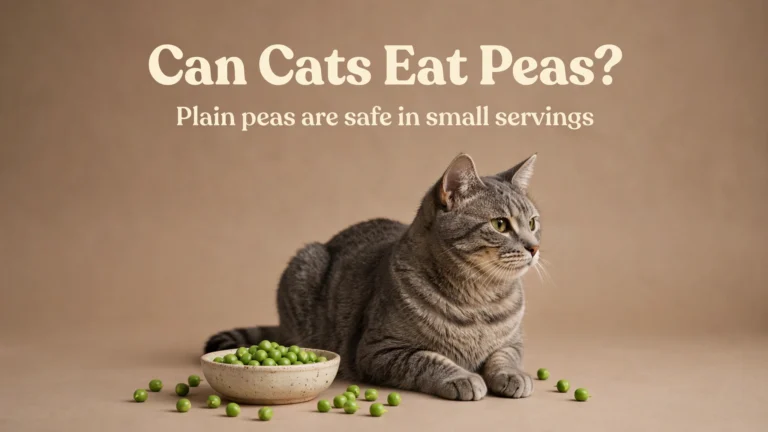
A pea rolls off the counter, your cat pounces on it like it is a mouse, and suddenly you are wondering: can cats eat peas? The short answer is yes. Peas are not toxic to cats, and a few plain peas make a harmless occasional treat. But there is a longer answer worth reading, because…









3 Comments