If your cat just stole a chicken bone off your plate, you are probably asking, can cats eat chicken bones, with your heart racing. Here is the short answer. No, cats should not eat chicken bones, and cooked bones are the dangerous ones. Cooking makes bones brittle, so they splinter into sharp pieces that can cut the mouth and throat, block the intestines, or puncture the gut. Raw bones are softer and less likely to splinter, but they still carry bacteria and choking risks. This guide explains the difference, tells you exactly what to do if your cat already ate one, and shows you safer ways to give the same benefits.
The Short Answer: Can Cats Eat Chicken Bones?
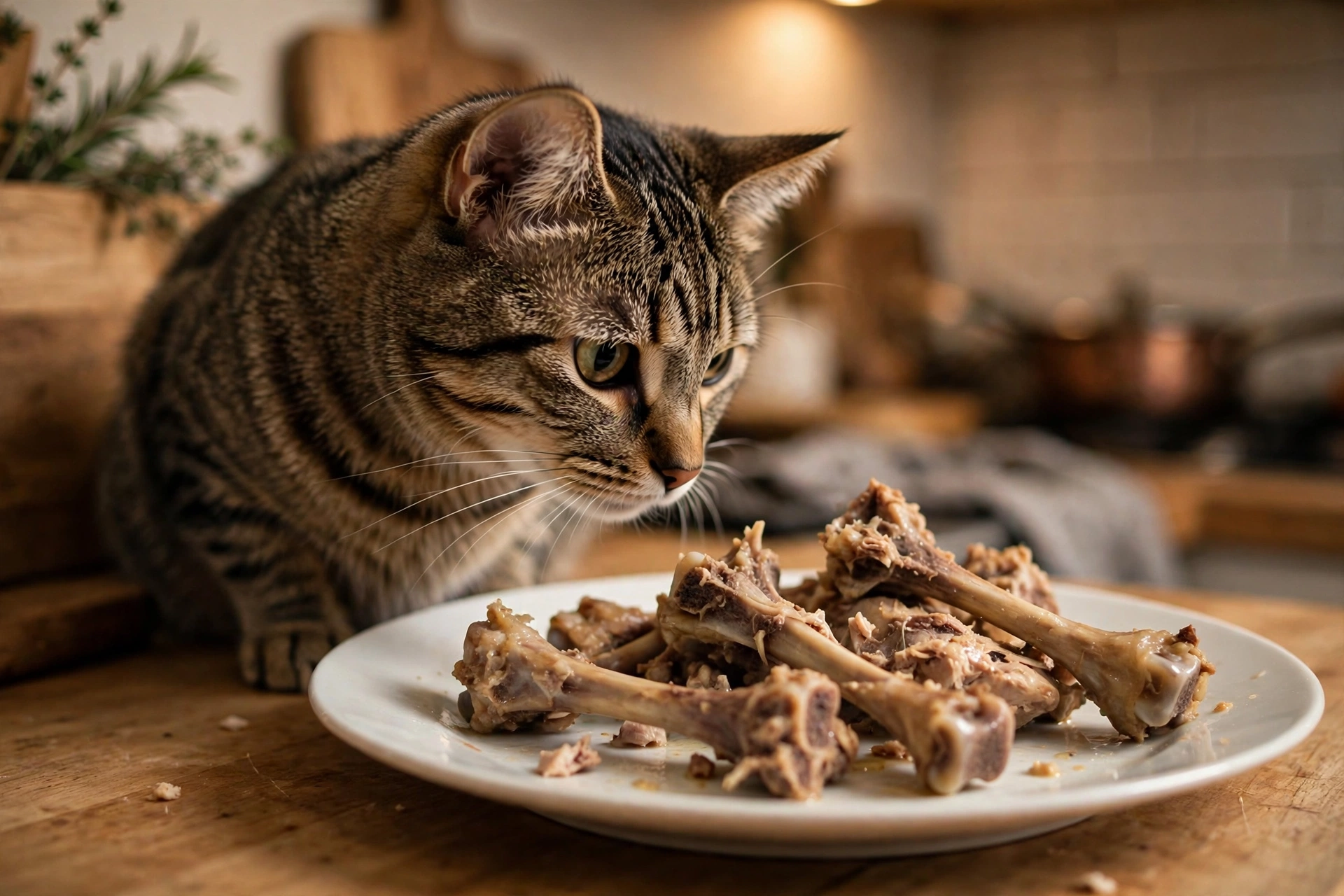
Cooked chicken bones: never. Heat changes the bone structure and makes it dry and brittle. When your cat crunches a cooked bone, it snaps into sharp splinters. Those splinters can lodge in the throat, tear the esophagus, block the intestines, or puncture the stomach wall. Any of these can become an emergency.
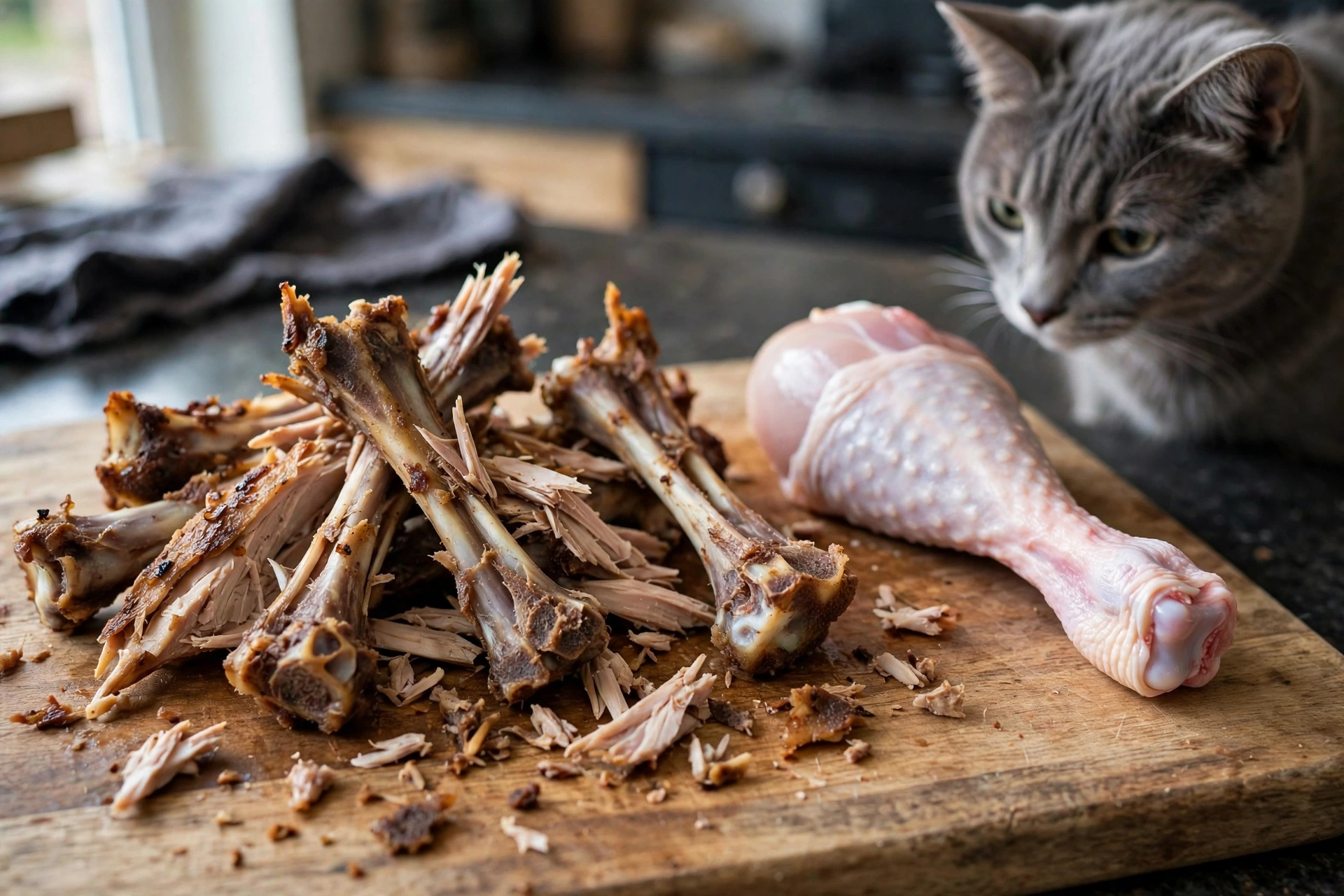
Raw chicken bones: rarely, and only with caution. Raw bones are softer, bendier, and less likely to splinter. Some raw feeders give small raw meaty bones like wing tips under close supervision. But raw bones can still carry Salmonella and other bacteria, and a wrong sized piece can still choke a cat. Most veterinarians say the risks outweigh the benefits and recommend skipping bones entirely.
So the practical rule is simple. Keep all chicken bones away from your cat, cooked or raw. If your cat already grabbed one, do not panic, but act fast. The next sections tell you how.
Why Cooked Chicken Bones Turn Dangerous
It helps to know what cooking actually does to a bone. A raw bone is a living material. It has collagen fibers running through the mineral, which lets it flex a little under pressure. Think of it like a green twig that bends.
Cooking drives out moisture and breaks down that collagen. The bone becomes dry, hard, and brittle, like a dead twig that snaps. When teeth hit it, it does not bend. It shatters. The broken ends are sharp enough to cut soft tissue.
That is why the same bone can be relatively safe raw and dangerous cooked. The danger is not the bone itself. It is what heat does to it. Seasonings add another problem. Cooked chicken bones often carry salt, garlic, onion powder, or rich sauces, and garlic and onion are toxic to cats on their own.
This is also why bones from fried chicken, rotisserie chicken, and grilled wings are the worst offenders. High dry heat makes them the most brittle of all.
What Raw Bones Do Differently
Raw feeders point to nature here. Wild cats eat whole prey, bones included. A raw chicken bone is softer and more flexible, so it usually crushes rather than splinters. Chewing raw meaty bones can clean teeth, work the jaw muscles, and give calcium and phosphorus in a natural balance. Supporters also note that cats evolved eating raw bone, and their stomach acid is strong enough to soften small pieces.
Those points are fair, but they come with real limits. Raw chicken can carry Salmonella, Campylobacter, and parasites, which can sicken your cat and spread to your kitchen. A bone that is too large can still choke a cat or get stuck. And raw bones do nothing for a cat that gulps instead of chews.
If someone you trust feeds raw bones, they will tell you the rules: raw only, meaty bones only, size matched to the cat, always supervised, never left alone with the bone. Even then, most vets prefer safer alternatives that give the same nutrition without the gamble. For the biology of what a bone actually is, see Wikipedia’s bone page.
My Cat Ate a Chicken Bone: What to Do Right Now
Act calmly and quickly. Do these steps in order.
1. Stay calm and take the bone away. If your cat is still chewing, gently take any remaining pieces. Do not chase your cat around the house, since panic makes choking more likely.
2. Do NOT make your cat vomit. This is the most important rule. Vomiting can drag sharp splinters back up through the throat and cause the exact damage you are trying to avoid.
3. Do NOT try to pull a stuck bone out yourself. If you can see a piece lodged in the mouth and your cat lets you, you may gently remove it. But never push fingers deep into the throat.
4. Call your veterinarian right away. Describe what happened: cooked or raw, how big the piece was, how long ago, and how your cat is acting now. Your vet will tell you whether to come in immediately or to watch at home.
5. Watch closely for the next 48 hours. Keep your cat indoors and calm. Note appetite, energy, vomiting, stool, and breathing. Write down anything odd with the time, since your vet will ask.
Most cats that swallow a small bone piece pass it without trouble. But the only safe call after a cooked bone is a vet call.
Warning Signs to Watch for 48 Hours
Bone problems often show up hours later, not right away. Call your vet immediately if you see any of these.
Gagging, retching, or repeated swallowing can mean a piece is stuck in the throat or esophagus.
Vomiting, especially repeated vomiting, can signal irritation or a blockage forming.
Loss of appetite or refusing water for more than a few hours is a red flag after bone ingestion.
Lethargy or hiding when your cat is normally social suggests pain or developing trouble.
Abdominal pain, swelling, or a hunched posture can point to gut injury.
Bloody or black tarry stool means there may be bleeding in the digestive tract.
Difficulty breathing, drooling heavily, or pawing at the mouth needs emergency care right away.
Constipation or straining with no result for over a day can mean a blockage. Do not wait this one out at home.
Which Cats Must Never Get Near Bones
Some cats face higher risk than others, and for them bones are never worth discussing.
Kittens under one year. Their throats are tiny, their chewing is clumsy, and their digestive tracts are still developing. Keep all bones far away.
Senior cats with dental disease. Bad teeth mean poor chewing, which means bigger swallowed pieces and higher choking risk.
Cats with inflammatory bowel disease or chronic digestive trouble. Their guts are already sensitive, and bone fragments can trigger a painful flare.
Cats that gulp food. If your cat inhales meals without chewing, any bone becomes a choking hazard.
Cats on prescription diets. These diets are carefully balanced. Bones add uncontrolled minerals and can undo the diet’s purpose.
When in doubt about your cat, the answer is always the same. No bones, and ask your vet about safe chews instead.
Bone Free Ways to Get the Same Benefits
People offer bones for good reasons: calcium, jaw exercise, dental cleaning, and mental fun. You can get every one of those without a bone.
For calcium, a complete commercial cat food already has the right balance. That is the simplest answer and the one most vets give first.
For chewing fun, try silvervine sticks, cat safe dental chews, or crunchy dental treats made for cats. They satisfy the chew urge with far less risk.
For dental health, regular tooth brushing beats any bone. Dental treats and vet cleanings do the rest. No bone cleans teeth as reliably as a brush.
For mental enrichment, food puzzles, lick mats, and interactive play give your cat the hunting and working experience without anything sharp involved.
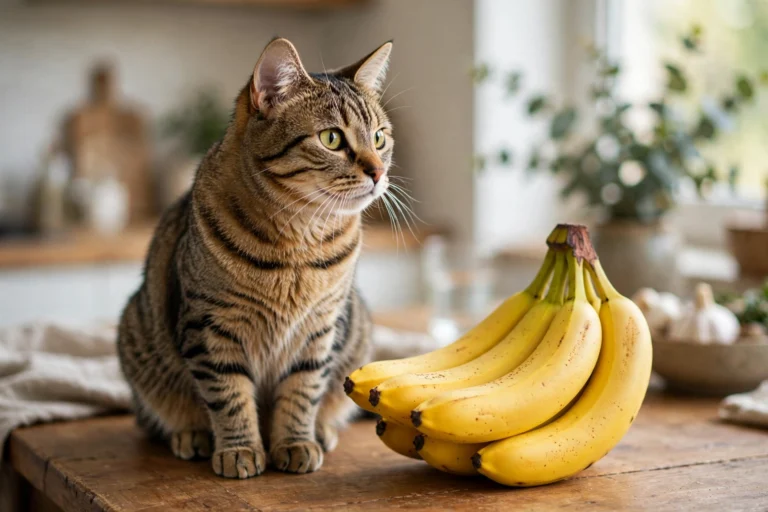
For a meaty treat, small pieces of plain boneless cooked chicken or turkey give the protein cats crave. We cover other safe fruit treats too, like whether cats can eat bananas, for cats that like variety.
How to Bone Proof Your Kitchen
Prevention beats emergency vet visits. Most bone incidents happen the same way: a plate left alone for one minute.
Clear plates the moment the meal ends. Do not leave chicken carcasses on counters, even while you step away.
Use trash cans with locking lids. Cats are skilled at fishing bones out of open bins.
Tell everyone in the house the rule. Guests and kids are the most common accidental bone givers.
Store leftovers in sealed containers in the fridge, not covered loosely on the counter.
Watch the grill and outdoor tables too. Cats patrol barbecue areas, and cooked wing bones are everywhere at cookouts.
A two minute cleanup habit removes nearly all the risk.
Conclusion: Can Cats Eat Chicken Bones?
No. Cooked chicken bones are never safe, because heat turns them into splintering hazards that can choke, block, or puncture. Raw bones are less dangerous but still carry bacteria and choking risks that most vets say are not worth it. If your cat eats a bone, stay calm, do not induce vomiting, call your vet, and watch for warning signs for 48 hours. Give your cat the benefits another way: balanced food for calcium, dental chews for teeth, and boneless meat for treats. That keeps all the good and none of the sharp.
Frequently Asked Questions About Cats and Chicken Bones
Bella Barker is a pet food safety writer with 10+ years of experience. She researches what dogs and cats can (and can't) eat and turns it into simple, practical guides for everyday pet parents. 🐶🐱
Your cat is watching you make a salad again, eyes fixed on every leaf you tear. Some cats bat at lettuce out of curiosity, and a few actually crunch it down with real enthusiasm. If you have ever wondered whether that leaf is safe to share, you are not alone. The short answer is yes,…
If you are wondering, can cats eat bananas, here is the short answer. Yes, bananas are not toxic to cats, and a tiny taste is unlikely to harm a healthy adult cat. But cats are obligate carnivores, which means their bodies are built to run on meat, not fruit. A banana gives your cat nothing…
Yes, cats can eat a small amount of plain cilantro, also called coriander or Chinese parsley. The ASPCA lists cilantro (Coriandrum sativum) as non-toxic to cats, but that does not mean it is a necessary treat or provides proven health benefits. If your cat just nibbled a leaf while you were cooking, there is generally…
If you are wondering, can cats eat blueberries, here is the short answer. Yes, fresh ones are safe for cats in very small amounts. They are not toxic, and a berry or two will not harm a healthy cat. But cats are obligate carnivores, which means their bodies run on meat, not fruit. These berries…
You are shelling pistachios on the sofa, the shells are piling up, and your cat is watching every crack and crunch like it is the best show on television. One nut rolls toward the cushion edge. Before it drops, you are already wondering whether you need to move faster than your cat. The short answer…
If your cat is staring at your breakfast plate, you are probably wondering, can cats eat eggs? Here is the short answer: yes. A fully cooked, plain egg is a safe and protein rich treat for most cats. But there are a few rules that matter, and the yolk and the white are not quite…








One Comment