You lean in for a cuddle and your cat’s breath stops you. It is strong, sour, or rotten, and it does not fade the way a food smell does. That smell has a medical name, halitosis, and in cats it is a symptom, not a disease on its own. Most of the time it points to dental disease, but a small share of cases point to illness elsewhere in the body, so find the cause instead of covering it up.
This guide covers cat bad breath causes – dental disease signs in the order owners need them: the causes ranked by how often they happen, the signs you can spot at home, what the smell can tell you, when the problem needs a vet the same day, and what you can safely do while you wait. It also points you to our full guides on kidney disease and diabetes, where bad breath is only a secondary symptom.
First, Is Bad Breath Ever Normal in a Cat?
A healthy cat’s breath is fairly neutral. It should not smell pleasant, exactly, but it should not make you flinch either. Right after a meal, especially a fish based meal, a faint food smell is normal, and it should fade within minutes.
What is not normal is breath that stays bad all day, keeps getting stronger over days or weeks, or suddenly changes character. A cat can have bad breath and still eat, play, and act normal, because cats hide pain well. If the smell is constant, strong, or new, treat it as a reason to look closer, not as a quirk of your cat.
The Causes, Ranked by How Often They Happen
Bad breath in cats has many possible causes, but they are not equally likely, so start with the most common.
Dental disease. Plaque and tartar along the gumline, and the gum infection that follows, cause most cases by a wide margin. Roughly 7 in 10 cats over the age of three have some form of dental disease.
Tooth resorption. The tooth structure breaks down from the inside, often at the gumline. It is painful and common, especially in older cats.
Stomatitis. Severe, widespread inflammation of the mouth, where the immune system overreacts to plaque. It causes very bad breath and heavy drooling.
Something stuck in the mouth. A blade of grass, a piece of string, a bone shard, or food wedged between teeth can rot and smell, often with sudden pawing at the face.
Mouth ulcers. These can come from a virus such as feline calicivirus, or from kidney disease in older cats.
Kidney disease. When the kidneys cannot clear waste properly, the breath can smell like ammonia or urine.
Diabetes. Uncontrolled diabetes can give the breath a sweet or fruity smell, sometimes like nail polish remover.
Liver disease. This can give the breath a musty or sour character, often with yellowing of the gums or eyes.
Oral tumors. Growths in the mouth can become infected or ulcerated and produce a strong rotten odor. Squamous cell carcinoma is the most common mouth cancer in cats.
Diet and teething. Strong smelling food leaves a passing odor, and kittens who are teething can have temporarily unpleasant breath. These are the least worrying causes, and the smell should pass quickly.
How Dental Disease Builds Up, Step by Step
Dental disease does not appear overnight. It builds in stages, and knowing the stages helps you see where your cat stands.
It starts with plaque, a soft, sticky film of bacteria that forms on the teeth every day. If plaque is not removed, it hardens into tartar within days, the yellow brown crust you can see near the gumline, which traps even more bacteria against the tooth.
Tartar irritates the gums and causes gingivitis, the red, swollen gum inflammation that is the earliest stage of dental disease, often seen as a thin red line where the gum meets the tooth. Gingivitis is still reversible with a professional cleaning and good home care.
If gingivitis is left alone, it can progress to periodontitis. The inflammation moves below the gumline and destroys the gum, the ligament, and the bone that hold the tooth in place. Teeth loosen, pockets of infection form, and the damage is not reversible. Bacteria and damaged tissue break down and release foul smelling sulfur compounds, and that is where the rotten smell comes from.
Most cats show some signs of periodontal disease by age three, according to the American Veterinary Medical Association. Cats keep eating through mouth pain and only change how they eat, not whether they eat.
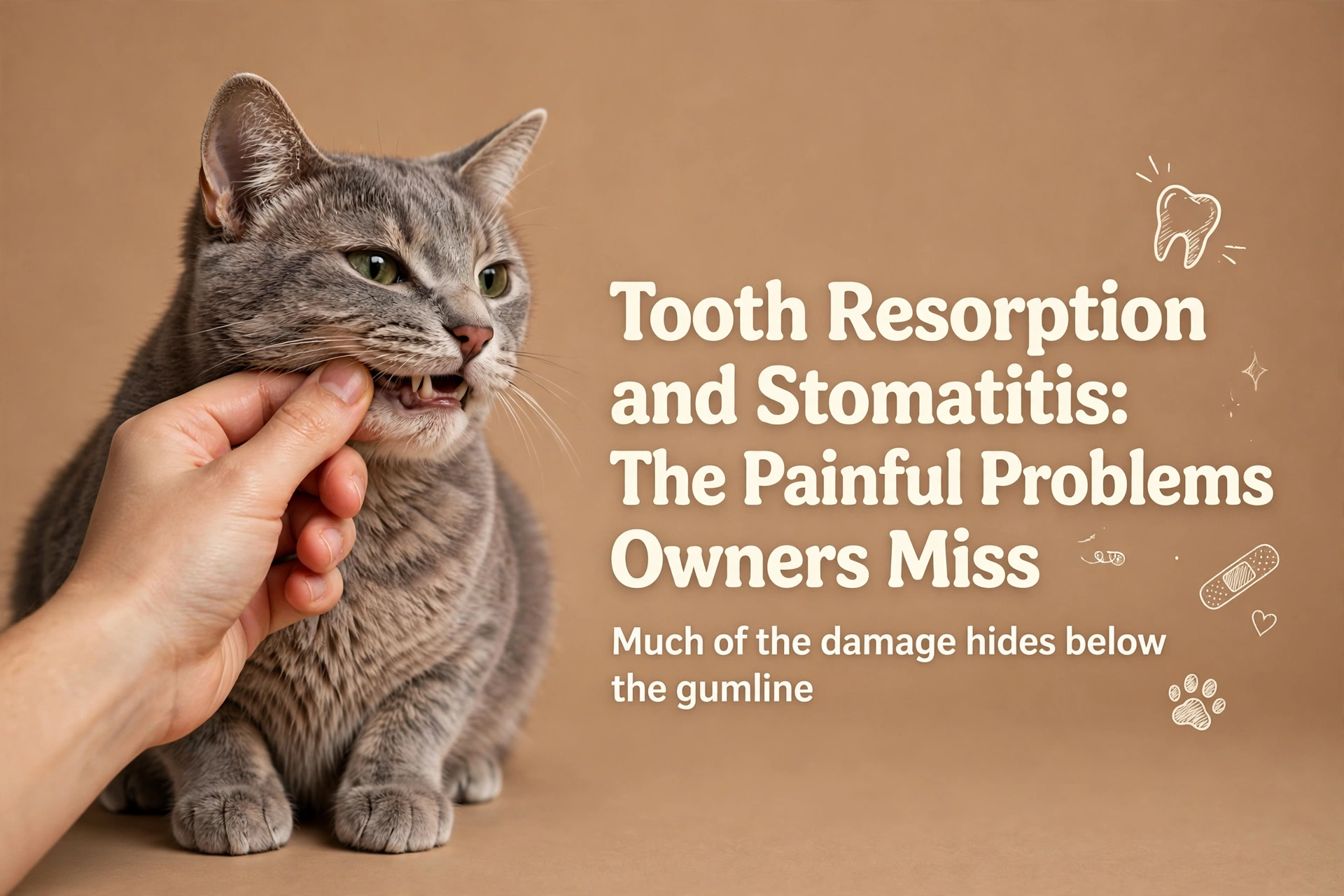
Tooth Resorption and Stomatitis: The Painful Problems Owners Miss
Tooth Resorption and Stomatitis: The Painful Problems Owners Miss
Two dental problems cause a large share of bad breath and are easy to miss, because much of the damage hides below the gumline.
Tooth resorption is a condition in which the body’s own cells slowly destroy the tooth, often starting at the gumline or below it. The tooth looks almost normal from the outside while it is being eaten away from within. It is painful and common: studies have found it in roughly a quarter to two thirds of adult cats, and it affects up to 7 in 10 cats over the age of seven. Because it hides below the gumline, it usually cannot be found by looking alone. Dental X-rays under anesthesia are how a vet finds it, and the affected tooth often needs to be removed.
Stomatitis, also called feline chronic gingivostomatitis, is severe inflammation across the gums and the tissues at the back of the mouth, where the immune system overreacts to plaque and the mouth becomes bright red, ulcerated, and extremely sore. Cats with stomatitis often drool heavily, paw at their face, approach food and then back away because they expect it to hurt, and lose weight. Feline calicivirus is often involved. Brushing or treats will not fix it. It needs veterinary treatment, and in severe cases removing most or all of the teeth works best, with many cats eating happily again afterwards.
If your cat’s breath is very bad but the teeth look only mildly dirty, one of these two problems is likely, and it is a reason to book a dental exam rather than wait.
What the Smell Itself Can Tell You
The character of the smell is a useful clue. It is not a diagnosis on its own, but it helps you judge urgency and describe the problem accurately to your vet.
A fishy smell is the most common complaint, and it usually means plaque and tartar, or a recent fish based meal. If it is constant rather than passing, dental disease is the likely driver.
A rotten smell, like something has died, points to significant infection or tissue breaking down, such as an abscess, advanced periodontitis, or an ulcerated growth in the mouth. Do not wait this one out.
An ammonia or urine like smell can be a sign of kidney disease, especially in a senior cat. If it comes with drinking more water, urinating more, and weight loss, see your vet promptly.
A sweet, fruity, or nail polish remover smell can point to diabetes, particularly a dangerous complication called diabetic ketoacidosis. A cat with sweet smelling breath who is also vomiting, sleepy, or not eating needs a vet the same day.
A sour or musty smell with yellowing of the gums or eyes can point to liver disease. Yellowing, which vets call jaundice, always needs a vet promptly.
If the smell does not fit any of these, note when it started, whether it is getting worse, and what else has changed, and let the vet work from that.
Bad Breath as a Secondary Symptom: Kidney and Diabetes
Sometimes the mouth is not the origin. In kidney disease and diabetes, bad breath is a secondary symptom of a whole body illness, and fixing the teeth alone will not fix the breath.
In chronic kidney disease, common in older cats, the kidneys can no longer clear waste efficiently. Toxins such as urea build up in the blood, and the breath can smell like ammonia or urine. Mouth ulcers can appear too. Other signs are drinking more water, urinating more, weight loss, and a dull coat. Our full guide covers the early signs and stages in detail: cat kidney disease early signs and stages
In diabetes, the sweet or fruity breath smell comes from ketones, compounds the body makes when it burns fat for fuel because it cannot use sugar properly. Other signs are heavy thirst, frequent urination, weight loss even with a good appetite, and low energy. Our full guide covers the symptoms and treatment here: cat diabetes symptoms and treatment
The point here is simple: if bad breath comes with heavy thirst, extra urination, or weight loss, the cause may be outside the mouth, and bloodwork is part of the answer. Tell your vet about the smell and the other changes together, because the combination is what points to the cause.
The Dental Disease Signs You Can See at Home
Bad breath rarely arrives alone. Look for the other signs of dental disease, because cats show mouth pain in behavior more than in sound.
Check the gums first. A thin red line along the gumline, or gums that look swollen and bleed easily, point to gingivitis. Yellow or brown crust near the gumline is tartar. Loose, missing, chipped, or broken teeth need a vet.
Watch how your cat eats. Eating more slowly, dropping food, chewing on one side only, turning the head while chewing, or switching from dry food to wet food are all ways a cat avoids a sore spot. A cat that approaches the bowl and then walks away may be hungry and hurting at the same time.
Watch the rest of the cat too. Drooling, especially drool with blood in it, pawing at the face, rubbing the mouth against furniture, grooming less, hiding more, being less active or less affectionate, and losing weight all belong on the same list as the bad breath. Any one alone may mean little. Several together mean the mouth deserves a proper look.
How to Check Your Cat’s Mouth Safely at Home
A quick home check can tell you a lot and gives your vet useful detail. It only works if your cat tolerates it, so keep it short and calm.
Wait for a relaxed moment, when your cat is resting or sleepy, not right after play or a meal. Sit in good light, with your cat on your lap or beside you, and let your cat sniff your hand first.
Gently lift the upper lip on one side to see the outer surface of the back teeth and the gumline. Look for a red line along the gums, yellow brown tartar, swelling, or sores on the cheek. Then check the other side. If your cat allows it, glance at the front teeth and the tongue.
Healthy gums are pink, not red, white, or yellow. Healthy teeth are white, not crusted brown. A small amount of tartar on the back teeth is common in adult cats, but a thick crust, red and puffy gums, or any sore or lump is worth showing to a vet.
Stop at once if your cat pulls away, cries, flattens its ears, or tries to bite. Never force the mouth open or pry the jaws apart. A scared cat will not let you near its mouth again, and a painful cat can bite without warning. Even a ten second look is useful. Take a photo of anything you find, so you can show the vet exactly what you saw.
Same-Day Red Flags or a Routine Vet Visit?
Same-Day Red Flags or a Routine Vet Visit?
Most bad breath can wait for a routine appointment within a few days. Some signs cannot. Sorting the two is the most useful thing this guide can do.
Call the vet the same day if you see any of these: breath that smells sweet, fruity, or like nail polish remover; your cat has not eaten for more than 24 hours; heavy drooling or drool mixed with blood; swelling of the face or jaw; sudden heavy drooling in a cat that was fine an hour ago; yellow gums, eyes, or ears; trouble breathing or swallowing; or a cat that is suddenly very sleepy, wobbly, or limp. A sudden change with lethargy can also mean the cat swallowed something toxic, so check for chewed plants, chemicals, or medicines, and tell the vet what you find.
Book a routine visit within a few days if the breath is persistently bad but your cat is eating, drinking, and acting normally, if you can see tartar or a red gumline, or if eating has become slower or messier. At the visit, the vet will start with an oral exam, and may use sedation if the mouth is too painful to examine fully. Dental X-rays, bloodwork, and a urine test are the usual next steps, because they show disease below the gumline and rule out kidney disease, diabetes, and liver problems. A professional cleaning is done under anesthesia, with scaling above and below the gumline, polishing, and removal of any teeth that cannot be saved.
If you are unsure which group your cat falls into, call the vet clinic and describe the smell and the other signs. A short phone call is a safe way to decide.
Kittens and Senior Cats Need a Faster Response
Age changes how fast you should act, because the causes and the risks are different at each end of life.
Kittens under one year can have mildly bad breath while teething, and that usually passes on its own. What should not wait is a kitten that stops eating, drools heavily, or has a very sore looking mouth. Small bodies lose water fast, and a kitten that will not eat can become weak in a day. Retained baby teeth can crowd the mouth and trap plaque, and the vet may need to remove them. Kittenhood is also the best time to start tooth brushing, while the cat is young enough to accept it as routine.
Senior cats, aged seven and older, carry the highest risk. Tooth resorption rises sharply with age, and kidney disease becomes common at the same time, so an older cat can have two causes at once. Weight loss matters more in a senior cat, because it can mean pain, kidney disease, or both. A senior cat with new bad breath, a change in appetite, or weight loss should be seen sooner rather than later, and bloodwork is usually part of the visit.
Home Care While You Wait, and What NOT to Do
Home care cannot fix an infection, an abscess, or a body wide illness, but while you wait for the vet visit, a few simple steps can keep your cat comfortable.
Offer soft or wet food if chewing seems to hurt, and keep fresh water available at all times. If your cat already accepts tooth brushing, keep it up with a cat specific toothbrush and enzymatic toothpaste, using short, gentle sessions on the outer surfaces only. Dental treats and diets approved by the Veterinary Oral Health Council can help slow plaque, but they are support, not treatment, and they do nothing for tartar that is already there. Write down when the smell started and any changes in eating, drinking, weight, or behavior, so you can give the vet a clear history.
There are also things you should not do. Never use human toothpaste, because several of its ingredients can upset a cat’s stomach or worse. Never use mouthwash, breath mints, or breath sprays made for people. Never scrape tartar off at home with a tool, because you can injure the gum and push bacteria deeper. Never pull a loose tooth yourself, and never force your cat’s mouth open to look inside. Do not mask the smell with a dental product and then wait, because the smell is the warning, not the problem. If the breath stays bad after a few days of home care, the vet visit is still needed.
A Note on Health Advice
This article is general information for cat owners. It is not a diagnosis, and it is not a substitute for veterinary advice. Only a vet who can examine your cat, run bloodwork, and take dental X-rays can find the cause of bad breath with confidence. If you are worried about your cat, call your vet clinic and describe what you see.
Conclusion: Cat Bad Breath Causes – Dental Disease Signs, in Brief
Bad breath in a cat is usually dental disease, and dental disease is common, painful, and easy to miss because cats hide it. The causes ranked by likelihood run from plaque and tartar through tooth resorption and stomatitis to problems outside the mouth, such as kidney disease and diabetes. The smell itself is a clue: fishy usually means the teeth, rotten means infection, ammonia points toward the kidneys, and sweet means call the vet the same day. Check the gums, the teeth, and the way your cat eats, and act faster for kittens and seniors. To sum up cat bad breath causes – dental disease signs, the rule is simple: breath that stays bad is a reason to look in the mouth, and a mouth that looks sore is a reason to call the vet.
Frequently Asked Questions About Cat Bad Breath and Dental Disease
Is it normal for a cat’s breath to smell bad?
A faint food smell right after a meal is normal and should fade within minutes. Breath that is strong, constant, or getting worse is not normal, and it usually points to dental disease or another health problem that needs a vet check.
What does it mean if my cat’s breath smells like fish?
A fishy smell usually means plaque and tartar on the teeth, or a recent fish based meal. If the smell is constant rather than passing, dental disease is the likely cause, and a dental exam is due.
Can bad breath in cats be caused by kidney disease?
Yes. When the kidneys cannot clear waste properly, toxins build up in the blood and the breath can smell like ammonia or urine. It often comes with drinking more water, urinating more, and weight loss, especially in senior cats.
How can I tell if my cat has dental disease at home?
Lift the lip gently and look for a red line along the gumline, yellow brown tartar on the teeth, swollen or bleeding gums, and loose or broken teeth. Changes in eating, such as dropping food or chewing on one side, are also strong clues.
Can I brush my cat’s teeth to fix bad breath?
Brushing with a cat specific toothbrush and enzymatic toothpaste helps prevent plaque, and it can improve breath once a vet has treated the underlying problem. Brushing alone cannot fix tartar, an abscess, tooth resorption, or stomatitis, and you should never use human toothpaste on a cat.
How fast should I see a vet about my cat’s bad breath?
Book a routine visit within a few days if the breath is persistently bad but your cat is eating and acting normally. Go the same day if the breath smells sweet or fruity, your cat has not eaten for over 24 hours, there is heavy or bloody drooling, face swelling, or sudden lethargy.
Why does my kitten have bad breath?
Kittens can have mildly bad breath while teething, and that usually passes. A kitten that stops eating, drools heavily, or has a sore looking mouth needs a vet quickly, because small bodies lose water fast. Retained baby teeth can also trap plaque and need a vet to remove them.
Will dental treats fix my cat’s bad breath?
No, not on their own. Dental treats and diets approved by the Veterinary Oral Health Council can help slow plaque, but they cannot remove tartar that is already there or treat infection, resorption, or stomatitis. They work best as support after a vet has treated the cause.
Bella Barker is a pet food safety writer with 10+ years of experience. She researches what dogs and cats can (and can't) eat and turns it into simple, practical guides for everyday pet parents. 🐶🐱
If your cat has started emptying the water bowl faster than usual, you may be seeing the first sign of feline diabetes. This condition changes how your cat’s body handles sugar from food, and it is more common than many owners realize. About 1 in 100 cats develops it, and overweight cats face the highest…
If your cat suddenly starts visiting the litter box again and again, or leaves tiny spots of urine around the house, it is natural to worry. Cats are good at hiding pain, so a change in bathroom habits is often the first clue that something is wrong inside. Learning the early cat urinary tract infection…
You walk into the room and your dog is licking bright blue crumbs off the floor while your child holds an empty yellow tub. Your stomach drops, and the first question in your head is simple: your dog ate play doh, so is your dog in real danger? A small bite of store bought Play-Doh…
Baking soda sits in almost every kitchen. You may use it to bake, to clean a sink, or to freshen a carpet. If you share your home with a cat, one question matters more than the rest: is baking soda safe for cats when they walk through it, lick it off a paw, or get…
Finding loose stools in the litter box is worrying, even when your cat seems fine in every other way. Diarrhea is not a disease on its own. It is a sign that something has upset the gut, changed how water is absorbed, or sped up how food moves through the intestines. Most mild cases in…
Few things frighten a dog owner like a first seizure. Your dog was fine a minute ago, and now they are on their side, legs paddling, eyes unfocused, and nothing you say seems to reach them. When it passes, one question takes over: what can cause dogs to have seizures, and will it happen again?…