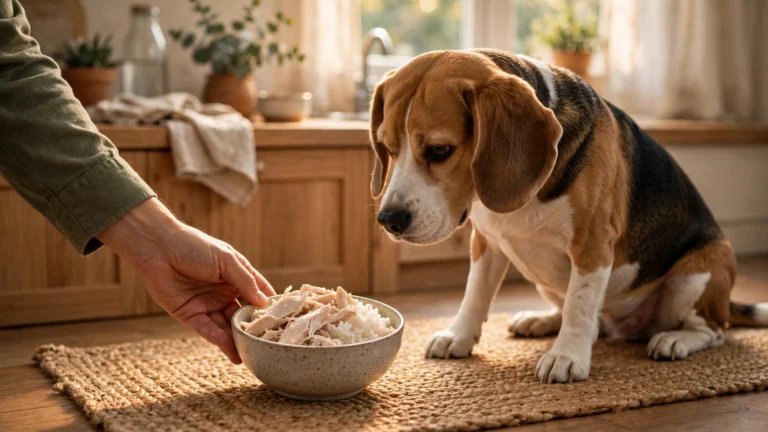
Can dogs eat mild cheddar cheese? Yes, a small cube of plain mild cheddar is usually fine for a healthy adult dog. Mild cheddar is one of the gentler cheeses you can share, because the aging process has already removed almost all of its milk sugar. The catch is the same one that follows every cheese into a dog bowl: fat and salt. One cube carries more calories than most owners expect, and the block in your fridge may wear a wax coat or sit beside flavored slices that are not safe at all. This guide gives you the numbers for mild cheddar itself, the portion that fits your dog size, and the exact forms to skip.
Can Dogs Eat Mild Cheddar Cheese? The Short Answer
Yes, most healthy adult dogs can eat a small piece of plain mild cheddar now and then. It is not toxic, it is low in lactose, and most dogs love the smell and taste enough that a tiny cube works as a high value training reward. The limits are portion and form. Keep the piece small, keep it plain, and keep it occasional.
A cube the size of a pea is a good starting point. A whole slice or a handful of shreds is already too much for a small dog, and a daily habit will add weight and stomach trouble over time. If your dog has reacted to dairy before, or if your vet has put your dog on a low fat or low sodium diet, skip cheddar entirely and ask your vet for a safer reward.
Our broader guide to whether dogs can eat cheese covers the whole cheese drawer, from cottage cheese to blue cheese. This article goes deeper on one cheese only: mild cheddar, the block most owners actually buy.
Mild Cheddar vs Sharp Cheddar: What Changes for Your Dog
Mild cheddar and sharp cheddar start from the same milk and the same recipe. The difference is time. Mild cheddar ages for about 2 to 3 months. Sharp cheddar ages for 6 to 12 months, and extra sharp cheddar ages for a year or longer. That extra time changes three things your dog cares about.
First, lactose. Bacteria eat milk sugar while cheese ages, so the longer a cheddar sits, the less lactose it holds. Mild cheddar still holds only a trace, about 0.1 grams per ounce, and sharp cheddar holds even less. Both are far below milk, where a single cup holds about 12 grams. For a dog with mild lactose trouble, the difference between mild and sharp is small, and either one beats a fresh soft cheese.
Second, sodium. As cheddar ages it loses moisture, so the salt concentrates a little. Sharp cheddar runs slightly higher in sodium per ounce than mild cheddar. The gap is small, but for a dog on a sodium restricted diet, mild is the slightly better pick of the two.
Third, flavor. Sharp cheddar tastes stronger, which is useful. A dog that gets the same excitement from a smaller piece of sharp cheddar eats fewer calories. Mild cheddar tastes gentler, which makes it the easier first cheddar for a puppy or a dog trying cheese for the first time.
Fat is nearly the same in both, about 9 grams per ounce, so neither one is a low fat food. If you had to pick one cheddar for your dog, mild cheddar is the safer default: a touch less sodium, a gentler flavor, and the same tiny lactose load.
White cheddar and orange cheddar are the same cheese with one difference. Orange cheddar gets its color from annatto, a natural coloring made from achiote seeds. White cheddar has no annatto. Annatto is not considered toxic to dogs in the small amounts found in cheese, so the color makes no difference to safety. Buy whichever your household prefers and judge the cheese by its label, not its color.
What Is in Mild Cheddar? The Numbers That Matter
A single ounce of mild cheddar, about 28 grams or one small cube, holds roughly 114 calories, 9 grams of fat, 7 grams of protein, 180 milligrams of sodium, and 200 milligrams of calcium. Lactose sits near 0.1 grams, which is why most dogs handle a small piece without the gas and loose stool that milk can cause. Per 100 grams the numbers scale up to about 403 calories, 33 grams of fat, and 621 milligrams of sodium.
The protein and calcium are real, but they are not a reason to feed cheddar. A complete dog food already supplies both in the right amounts. Cheddar is a treat, not a supplement, and its value is behavioral: smell, taste, and a texture that is easy to cut small.
The sodium number deserves a second look. One ounce of mild cheddar holds about the same sodium as a small bag of salted crisps, and a dog on a vet set sodium limit can use a large share of the day on a single cube. If your vet has set a sodium limit for heart or kidney disease, ask them directly before offering any cheese, because the limit belongs to your dog and no table can replace it.
Cheddar takes its name from the village of Cheddar in Somerset, England, and the full story of how cheddar is made explains why aging removes so much lactose. The curds are stacked and pressed, a step called cheddaring, and then the cheese rests for months while bacteria finish eating the milk sugar.
The Wax Rind Rule: Peel It Before You Share
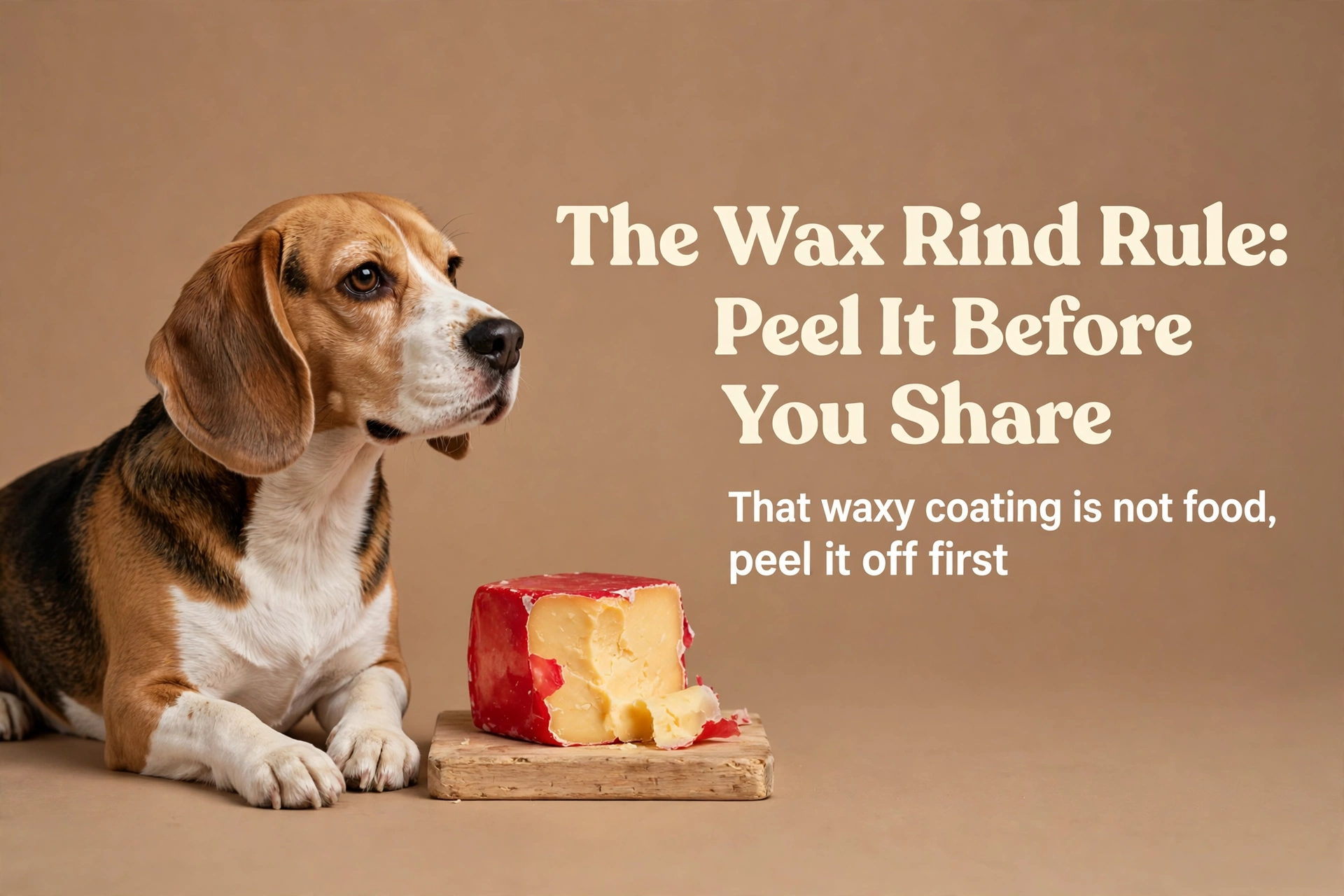
Many cheddar blocks come sealed in a coat of wax, often red or black, and some farmhouse cheddars wear a cloth rind instead. The wax keeps the cheese from drying out on the shelf. It is not food, and it is not part of the treat.
Peel the wax off before you cut a piece for your dog. Wax does not digest. A small swallowed flake usually passes without trouble, but a larger chunk can cause vomiting, loss of appetite, or straining, and in a small dog it can add to a blockage risk. The cloth rind on a farmhouse cheddar is the same story: cut it away and throw it out.
This matters most with dogs that grab food off a counter. A dog that steals a whole wax coated block may eat the wax along with the cheese, so check what is missing and tell your vet if wax went down with it. Keep the block in a closed container or a high shelf, and cut your dog piece from the middle of the block, away from the rind.
How Much Mild Cheddar Can a Dog Have? The Portion Math by Dog Size
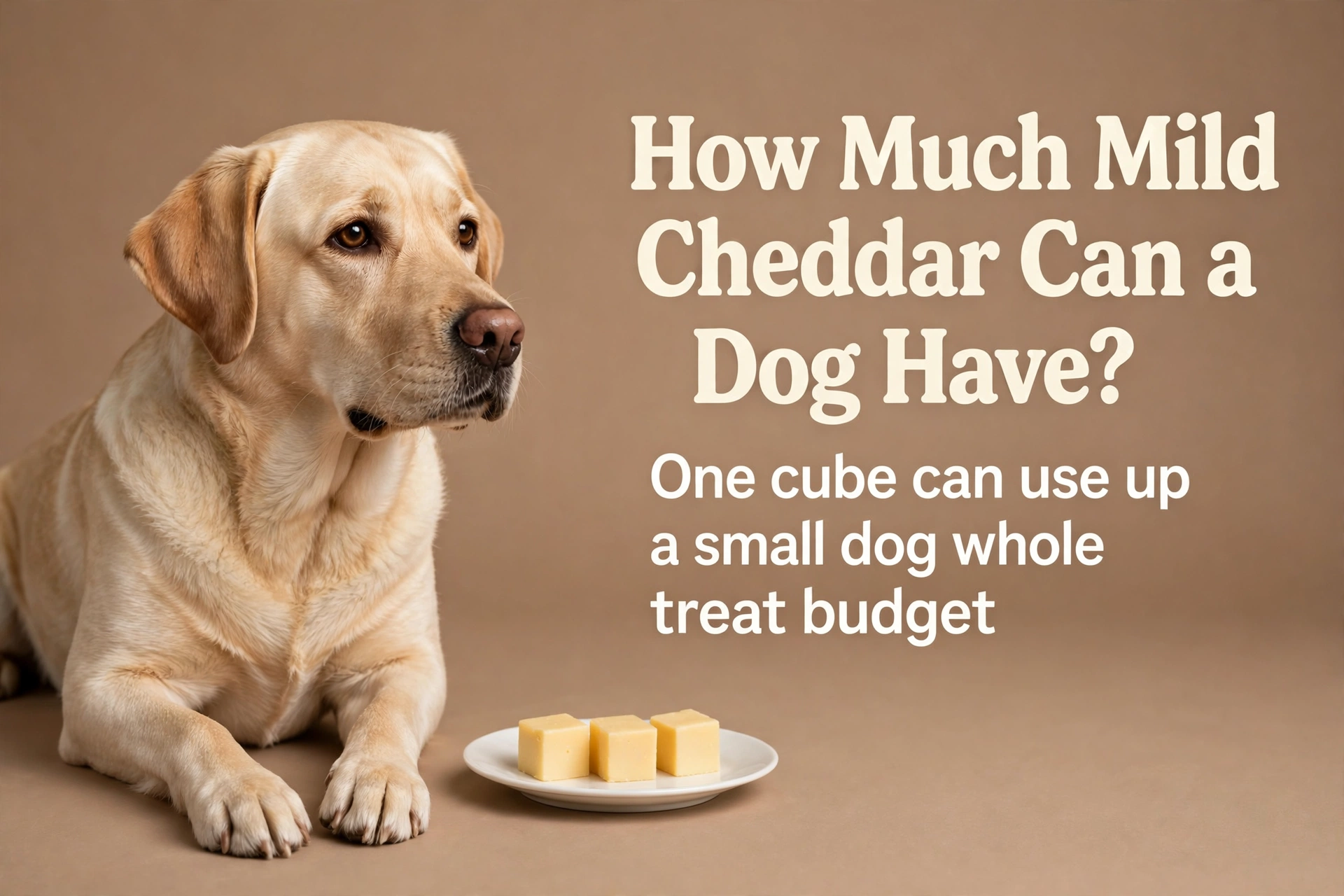
All treats together should stay under 10 percent of your dog daily calories, and cheddar uses that budget fast. A half inch cube of mild cheddar weighs about 3 to 4 grams and holds about 15 calories. A one inch cube weighs about 28 grams and holds about 114 calories. For a 10 pound dog that needs roughly 300 calories a day, one inch cube is already more than a third of the whole day treat budget.
Use this table as a ceiling, not a target. It shows the most mild cheddar that fits in a day if cheddar is the only treat, and only when your dog is healthy and has passed the tolerance test below.
Dog size
Daily calories about
Treat budget about
Most mild cheddar
10 lb dog
300
30 calories
About 7 g, one half inch cube
25 lb dog
550
55 calories
About 12 g, two half inch cubes
50 lb dog
900
90 calories
About 20 g, three half inch cubes
80 lb dog
1300
130 calories
About 28 g, one ounce
In practice, most dogs do better with far less than the ceiling. A pea sized piece gives your dog the smell and the taste and the fun of joining snack time without the fat and salt load. If your dog already had other treats today, skip the cheddar and save the treat budget for something lighter. A training session with twenty cheese rewards and a cube of cheddar on top is already over budget for most dogs, even if each piece felt small on its own.
Weigh the piece on a kitchen scale the first few times. Eyes lie about cheese. A cube that looks small in your hand can weigh twice what you guessed, and a small dog pays for that guess in calories.
The Cheddar Tolerance Test: One Cube, 24 Hours
No article can tell you how your own dog handles dairy. This test can, and it takes five minutes of your attention plus one patient day.
Give a single pea sized cube of plain mild cheddar. Offer nothing else new that day, so you know what caused any reaction. Then watch your dog for the next 24 hours. You are looking for gas, a rumbling belly, soft stool, vomiting, or loss of appetite.
If none of those appear, your dog tolerated the test. You can repeat with the same tiny amount two or three days later and then settle into the portion guide above. If you do see symptoms, your dog is telling you clearly. Drop cheddar from the treat rotation entirely. There is no training reward worth chronic loose stools.
Dogs that react to a pea sized cube should also skip other dairy like milk and cream. If a dog that used to handle cheddar starts reacting, check with your vet, because new digestive sensitivity can signal something changing in the gut.
Processed Cheddar to Skip: Slices, Spreads, and Cheddar Flavored Snacks
Real mild cheddar is one thing. The processed foods that borrow its name are another, and most of them are worse for dogs.
American singles are not cheddar. They are pasteurized process cheese product, made by blending cheese with oils, water, and emulsifiers such as sodium phosphate. A single slice holds about 300 milligrams of sodium and a long list of additives your dog does not need. The emulsifiers can also trigger fast stomach upset and loose stool.
Spray cheese and cheese spreads sit in the same group. They are high in salt and fat, they often list garlic or onion powder among the flavorings, and they teach a dog to lick salty paste off a cracker, which is a habit with no upside.
Cheddar flavored snacks are the most common trap. Cheez Its, Goldfish crackers, cheese puffs, and cheese curls contain very little real cheese. They are mostly refined flour and palm oil, with salt and seasoning blends that often include onion powder or garlic powder. A few crackers will not poison a dog, but they add salt, fat, and empty calories, and the seasoning is a real risk if the bag lists allium powder.
Macaroni and cheese is another dish to skip. The pasta is fine on its own, but the sauce brings butter, milk, and often garlic, and the whole bowl is far too rich for a dog. Nacho cheese sauce is worse: it is salty, fatty, and usually spiced.
Cheddar flavored dog treats are the exception. A treat made for dogs, with cheddar flavor from fermentation or dried cheese, is portioned for a dog and carries a controlled amount of fat and salt. Read the label the same way you would for any dog treat, and count it inside the daily treat budget.
Using Mild Cheddar to Hide a Pill
Mild cheddar molds well around a tablet, which makes it one of the easiest pill pockets in the kitchen. Use the smallest piece that fully covers the pill, and offer it fast so your dog swallows instead of chewing the tablet out.
One warning matters more than the rest. Calcium in dairy binds to some antibiotics in the gut and stops the medicine from being absorbed. Never wrap doxycycline or a fluoroquinolone such as enrofloxacin or ciprofloxacin in cheese, cream cheese, or butter. Ask your vet or pharmacist first, and use a plain pill pocket or a small piece of plain cooked chicken for those medicines instead.
For medicines that do not interact with calcium, such as heartworm preventives and most anti parasite treatments, a cheddar wrap works well. Keep the piece tiny and count it in the treat budget, because a pill hidden in a large cube is still a large cube.
Dogs That Must Skip Mild Cheddar Completely
Some dogs should not have mild cheddar at all, even a pea sized test cube. If your dog fits any group below, choose a different treat.
Dogs with a history of pancreatitis or fat triggered digestive trouble. A rich cheese can set off another episode, and pancreatitis can need hospital care.
Dogs with a confirmed dairy allergy. This is different from lactose intolerance. Itchy skin, chronic ear trouble, or stomach upset after dairy means avoid cheese completely, not just in small amounts.
Dogs that failed the tolerance test. A dog that gets gas, loose stool, or vomiting from a pea sized cube has told you the answer.
Dogs on a weight loss plan. Mild cheddar is calorie dense, and a small dog gains weight from it quickly.
Dogs with heart or kidney trouble that need low sodium food. Cheddar salt and phosphorus push against the plan your vet set.
Dogs eating a prescription food. Extra treats can undo the work that food is doing, so check with your vet before adding anything.
Puppies under three months. A very young puppy needs nearly all of its calories from balanced puppy food while its digestion is still maturing.
Not sure where your dog fits? A short call to your vet settles it, and it is far better than a sick dog later.
My Dog Ate a Whole Block of Mild Cheddar: What to Do Now
First, stay calm and gather facts. Pick up the block and any leftovers so your dog cannot eat more. Note how much is missing, whether the wax rind went down too, and the time your dog ate it. Save the package. Your vet will want the exact weight and the ingredient list.
If your dog ate a large amount of plain mild cheddar, expect stomach upset over the next day or two: vomiting, loose stool, gas, and a sore belly. Offer fresh water, skip fatty foods, and feed small plain meals. Call your vet the same day, especially if your dog is small or has a history of pancreatitis. Watch for repeated vomiting, belly pain, a hunched back, refusal to eat, or unusual tiredness. Those signs need a vet visit.
Keep watching for three full days, even if your dog seems fine at first. Day one is usually stomach upset from the fat and salt. Day two and three are when pancreatitis signs can appear, including vomiting that will not stop, a painful belly, and loss of appetite. A dog that ate a large amount should not get fatty food again until the vet says so.
Go to an emergency vet at once if you see tremors, stumbling, a high temperature, seizures, or collapse. If the block was a flavored cheddar with garlic or onion, or if the wax rind was eaten in a large piece, tell the vet right away and do not wait for symptoms. In the United States, the ASPCA Animal Poison Control Center is 888 426 4435 and the Pet Poison Helpline is 855 764 7661. A consultation fee may apply.
Never try to bring the food back up on your own. Only do that if a vet or poison control expert tells you to.
Puppies, Seniors, and Small Dogs: Special Cases
Each of these groups needs a tighter limit than a healthy adult dog, and the reason is different for each one.
Puppies over three months can have a single pea sized piece of mild cheddar as a test, then watch for 24 hours. A puppy stomach is small and sensitive, and rich table food teaches a puppy to beg for human food instead of eating balanced puppy food. A simple training treat is the better habit while your puppy is learning.
Senior dogs digest fat more slowly, and many older dogs already carry extra weight or take medicine that affects the gut. Pancreatitis appears more often in middle aged and older dogs, especially overweight ones. A healthy senior can usually handle a pea sized piece now and then, but if your older dog has stomach, heart, kidney, or pancreas problems, ask your vet first. A tiny taste is not worth a flare up.
Small dogs face the simplest math problem. A 10 pound dog has a whole day treat budget of about 30 calories, and a one inch cube of mild cheddar holds about 114. One cube is already nearly four times the budget before the rest of the day starts. For a toy breed, even a pea sized piece is a real share of the day. Keep the taste tiny, count it, and skip it on days when your small dog already had other treats.
Better Treats Than Mild Cheddar
If your dog loves joining snack time, simpler foods give the same joy with far less risk. A bite of plain cooked chicken or turkey, a carrot stick, a cucumber slice, or a few blueberries all work well. A familiar dog treat made for dogs is the easiest choice of all.
Plain foods let you control the fat, the salt, and the seasoning without reading a label each time. If your dog loves cheese flavor, a dog treat made with cheddar flavor gives that taste with fat and salt kept in check.
Save the cheddar block for the humans at the table. Your dog will be just as happy with a plain bite, and you will not spend the evening watching for stomach trouble.
Conclusion: The Bottom Line on Mild Cheddar for Dogs
Can dogs eat mild cheddar cheese? A healthy adult dog can have a small pea sized cube of plain mild cheddar now and then, and that is the whole story. Mild cheddar is gentler than most cheeses because aging has already removed almost all of its lactose, and it is a touch lower in sodium than sharp cheddar. The fat and salt are still real, so the portion must stay tiny and the habit must stay occasional.
Peel the wax rind off before you share, skip the processed slices and cheddar flavored snacks, and run the one cube tolerance test before cheddar becomes a regular reward. Skip it entirely for dogs with pancreatitis, a dairy allergy, or a sodium restricted diet. When in doubt, pick a plain treat instead. Your dog gets the fun of snack time either way, and you get peace of mind.
Frequently Asked Questions About Mild Cheddar Cheese for Dogs
Can dogs eat mild cheddar cheese every day?
No. Daily servings add fat, salt, and calories that raise the risk of weight gain and pancreatitis. Keep it to a rare pea sized piece at most, inside the 10 percent treat budget, and rotate it with lighter treats.
Is mild cheddar better than sharp cheddar for dogs?
Mild cheddar is the slightly better default. It is a touch lower in sodium and gentler in flavor, with the same tiny lactose load. Sharp cheddar tastes stronger, so a dog may be happy with a smaller piece, but the fat is nearly identical in both.
Can dogs eat the wax rind on a cheddar block?
No. Peel the wax off before you share any cheddar. Wax does not digest, and a larger swallowed chunk can cause vomiting, loss of appetite, or straining. A small flake usually passes, but tell your vet if a big piece went down.
Is orange cheddar safe for dogs, or should I buy white cheddar?
Both are safe in the same small amounts. Orange cheddar gets its color from annatto, a natural coloring made from achiote seeds, and white cheddar has none. The color makes no difference to safety, so buy whichever your household prefers.
Can dogs eat cheddar cheese slices?
No, not the processed singles sold as American cheese. They are pasteurized process cheese product with emulsifiers and about 300 milligrams of sodium per slice. Cut a small cube from a real block of mild cheddar instead.
Can puppies eat mild cheddar cheese?
Puppies over three months can have a single pea sized piece as a test, then watch for 24 hours. Puppies under three months should stick to puppy food and puppy formulated treats while their digestion is still maturing.
How much mild cheddar can a small dog have?
A 10 pound dog has a treat budget of about 30 calories a day, so about 7 grams, or one half inch cube, is the most that fits, and a pea sized piece is a better choice. Small dogs gain weight from rich cheese quickly.
What should I do if my dog ate a whole block of cheddar?
Pick up the leftovers, note how much is missing and whether the wax rind was eaten, and call your vet the same day. Expect vomiting or loose stool, offer fresh water, and watch for three days for pancreatitis signs such as repeated vomiting, belly pain, and loss of appetite.
Bella Barker is a pet food safety writer with 10+ years of experience. She researches what dogs and cats can (and can't) eat and turns it into simple, practical guides for everyday pet parents. 🐶🐱
If your dog just snatched a cherry off the floor, take a breath. In most cases, one cherry is not an emergency. The soft red flesh is not poisonous to dogs. The danger sits in the parts most owners throw away: the pit, the stem, and the leaves. So, are cherries toxic for dogs? It…
If your dog stares at you every time you build a sandwich, you have probably asked yourself this exact question: can dogs have provolone cheese? Here is the short answer: yes, most healthy dogs can have a small piece of plain provolone now and then. It is not toxic. But provolone is saltier and fattier…
It is a hot afternoon, you have a tall glass of horchata sweating on the table, and your dog is doing the stare. The drink looks gentle enough. It is milky, sweet, and dusted with cinnamon, with no chocolate or grapes in sight. So is horchata bad for dogs, or is one shared sip harmless?…
If you have ever watched your Frenchie stare at your breakfast bowl, you know the question comes fast: can French bulldogs eat raspberries? The short answer is yes. Fresh, plain raspberries are safe when you keep the portion small and serve them the right way. A few berries make a sweet, low calorie treat. A…
Your dog skipped breakfast. Then dinner. The bowl sits untouched, and by the next morning you are asking the question every owner asks: can a dog go a day without eating? Here is the short answer. Yes, a healthy adult dog can skip one day of food without harm. Dogs are built to handle the…
Yes, dogs can sometimes eat a small amount of plain avocado flesh, but it is not a necessary treat, and avoiding it is the more cautious choice. The avocado pit, skin, and leaves should be kept away from dogs because of personal exposure, choking hazards, and possible intestinal blockage. If your dog just grabbed a…