That hacking sound in the middle of the night is one every cat owner knows. Your cat crouches low, retches a few times, and leaves a damp tube of hair on the rug. It looks awful, and it sounds worse, but most of the time it is simply how a cat’s body deals with the hair it swallows while grooming.
Cat hairballs causes and remedies come down to one simple idea. Less loose hair swallowed, plus a gut that keeps moving, means fewer hairballs. An occasional hairball, about once every few weeks in a cat that eats well and acts normally, is nothing to worry about. Hairballs that show up every week, or retching that produces nothing at all, are a different story, and that is where this guide helps you tell the difference.
What a Hairball Actually Is (And Why It Is Not Round)
A cat’s tongue is covered in tiny backward facing barbs called papillae. Every time your cat grooms, those barbs catch loose hair and pull it down the throat. Hair is made of keratin, which a cat cannot digest. Most of the swallowed hair passes through the gut and leaves in the stool. Some of it stays in the stomach, where it slowly gathers into a damp clump. When the clump gets big enough, the stomach pushes it back up.
Despite the name, a hairball is rarely round. It comes up shaped like a long tube, because it takes the shape of the food pipe on its way out. It is usually about an inch long, the colour of your cat’s coat, and wet. The medical name for it is a trichobezoar. You can read a short general overview of the topic on Wikipedia at https://en.wikipedia.org/wiki/Hairball.
Cats spend a large part of their waking hours grooming, so some swallowed hair is unavoidable. The goal is never zero hairballs. The goal is a number that stays low and steady.
How Often Is Normal, and When the Count Itself Is the Clue
There is no single magic number, because coat length, age, and season all change the count. As a rough guide, a healthy short haired cat may bring up a hairball once every few weeks. A long haired cat may do it a little more often, especially in spring and autumn when shedding peaks.
What matters more than any one number is the pattern. One hairball a month that stays one hairball a month is normal. One a week, or a number that keeps climbing over a few months, is a clue that something has changed. A rising count can mean more shedding, more grooming, or a gut that has slowed down. It can also mean the “hairballs” are not hairballs at all, but vomiting caused by something else, such as a food sensitivity or gut disease. That is why the count, and the trend, are worth writing down.
Kittens almost never have hairballs. They groom less, and their coats are short and fine. If a kitten is retching often, think cough or vomiting first, not hairballs.
Hairball, Cough, or Vomit: Three Sounds, Three Different Problems
Owners mix these three up all the time, and the difference matters, because each one points to a different problem.
A hairball starts with rhythmic hacking and retching, and it ends with a tube of wet hair on the floor. The cat shakes itself off and goes back to normal within a minute or two.
A cough looks different. The cat crouches low with its neck stretched out, coughs in a dry way, and nothing comes up. Repeated coughing fits can be a sign of feline asthma or another airway problem, and they need a vet, not a hairball remedy.
Vomiting brings up food or liquid, with or without some hair mixed in. A cat that vomits food often, or vomits and then refuses to eat, is dealing with something beyond hairballs. Our site already covers that problem in detail in our guide to why cats vomit, at https://petscaneatit.com/why-is-my-cat-vomiting/, so this article stays focused on hairballs and only flags where the two overlap.
The single most important distinction is this. Retching that ends with a hairball is usually fine. Retching that ends with nothing, again and again, is a warning sign, and it is covered in the red flags section near the end of this article.
The Causes, Ranked: What Puts the Most Hair in the Stomach
Not all causes matter equally. Here they are in order, from the one that puts the most hair in the stomach to the ones that only tip the balance.
First is grooming volume. The more a cat grooms, the more hair it swallows. Long haired breeds such as Persians, Maine Coons, and Ragdolls groom a lot of coat, and heavy groomers of any breed swallow more than average.
Second is shedding season. Cats shed more in spring and autumn, and the loose hair on the coat is exactly the hair that ends up swallowed. A cat that is fine all winter can suddenly produce hairballs every week in April.
Third is coat length itself. Long hair tangles and sheds in bigger amounts, and long haired cats often swallow clumps rather than single hairs.
Fourth is dry skin and itching. Fleas, dry air, or a skin allergy make a cat lick and chew at itself far more than usual. The extra grooming is the cause, but the itch is the real problem, and it needs its own fix.
Fifth is a slow gut. Older cats, inactive indoor cats, and cats that drink too little water often have slower gut movement. Hair that would normally pass in the stool sits longer in the stomach and has more time to clump.
Sixth is diet. A diet low in fibre and low in moisture gives the gut little help moving hair along. Dry food only diets, with no wet food and not enough water, make this worse.
Seventh is stress and boredom. A stressed cat grooms to soothe itself. A bored indoor cat grooms because there is nothing else to do. More grooming sessions mean more swallowed hair, even when the coat itself is healthy.
Eighth, and the one owners miss most, is gut disease. Frequent vomiting blamed on hairballs can actually be caused by inflammatory bowel disease, food sensitivities, or other gut problems. If hairballs keep coming despite good brushing and a good diet, the cause may be inside the gut, not on the coat.
The Five Minute Brushing Routine That Beats Every Product
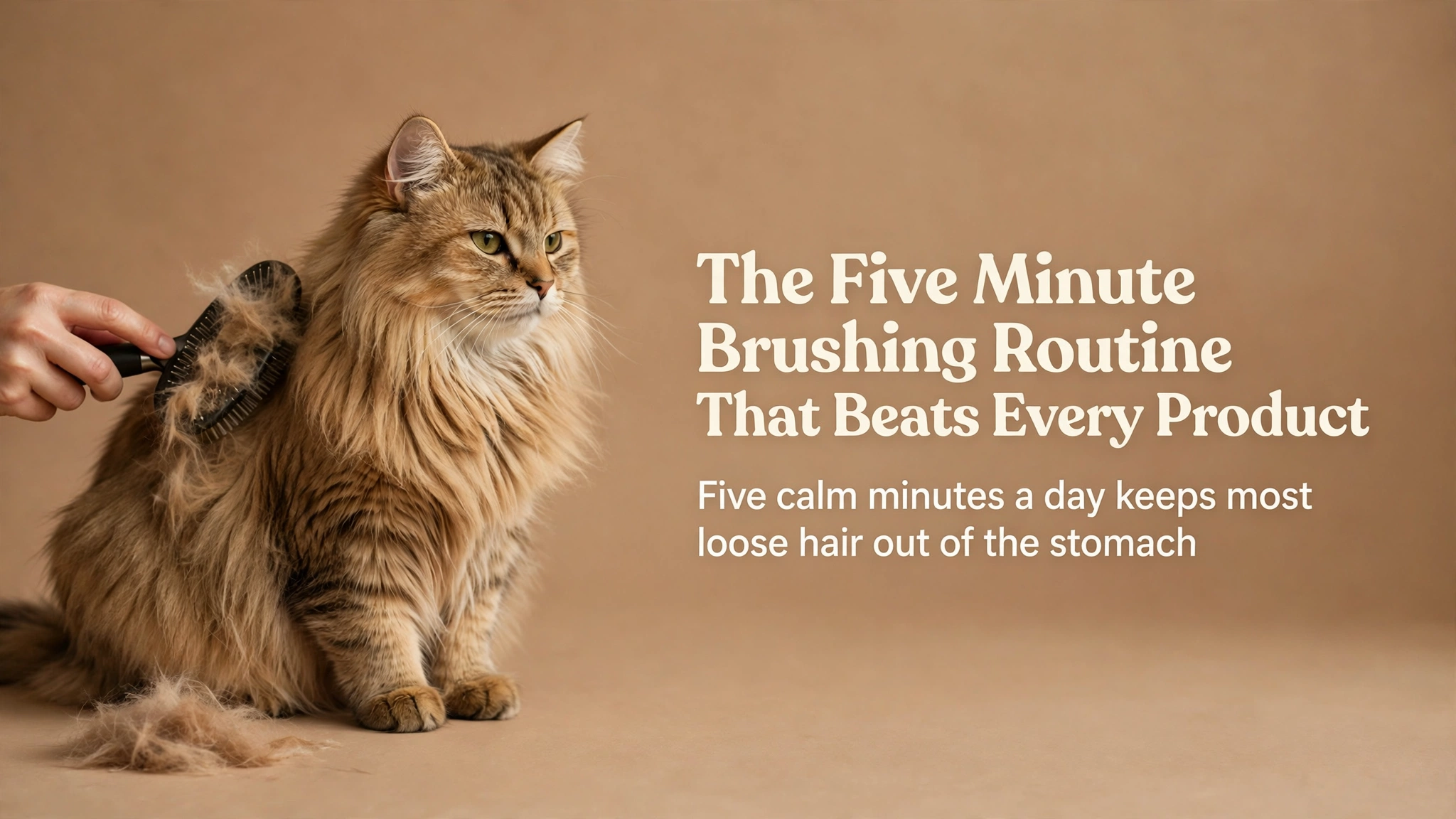
Brushing is the single most useful remedy, because it removes loose hair before your cat can swallow it. No paste, treat, or special food beats it. The trick is making it a short routine your cat accepts, not a long battle.
Start with the right tool. A slicker brush works for most long haired cats, and a rubber grooming glove works well for short haired cats and for cats that hate brushes. Keep sessions to five minutes. Brush in the direction the hair grows, in short gentle strokes, and start at the head and shoulders, where most cats enjoy it, before moving to the belly and legs.
Long haired cats need daily brushing. Short haired cats do well with two or three sessions a week. During shedding season, add an extra session for every cat, no matter the coat length. Finish by gathering the pile of loose hair the brush collected. That pile is your proof. Every bit of it is hair your cat did not swallow.
If your cat runs from the brush, go slower, not longer. One minute of calm brushing beats ten minutes of wrestling. Pair the session with a small treat at the end, and keep the brush where your cat relaxes, so the routine feels like part of the evening, not a chore.
Food, Fibre, and Hairball Pastes: Helping Hair Pass Instead of Clumping
Once brushing has cut the amount of hair going in, food and water help the rest pass through instead of clumping in the stomach.
Hairball control foods contain extra fibre, which helps carry swallowed hair through the gut. They can help, but they are not magic. Switch foods slowly, over seven to ten days, mixing the new food into the old one a little more each day, so the change does not upset the stomach.
Water matters as much as fibre. Wet food adds moisture to the diet, and a water fountain or a second water bowl in another room often gets a cat drinking more. Soft stools and a moving gut are the goal, and water is the simplest way to support both.
Plain canned pumpkin is a common home fibre option, about half a teaspoon a day mixed into food, but use plain pumpkin only, never pie filling, and check with your vet first, especially if your cat has diabetes or a sensitive stomach.
Hairball pastes and treats work by coating swallowed hair so it slides through the gut more easily. They can help during shedding season, but they have honest limits. They do not stop hairballs, they do not fix overgrooming, and petroleum based gels can interfere with nutrient absorption if they are used too often or for too long. Use them only on your vet’s advice, and never as a replacement for brushing.
Cat hairballs causes and remedies work best as a pair. Brushing cuts the hair going in, and fibre, water, and the occasional vet approved paste help the rest pass through.
What Not to Do: Butter, Oil, and Other Well Meaning Mistakes
Good intentions cause most of the mistakes owners make with hairballs.
Do not give butter. It is high in fat, it can upset the stomach, and in some cats it can trigger pancreatitis, which is far worse than a hairball.
Do not give mineral oil or cooking oil by mouth. Oil given this way can be breathed into the lungs by accident, and that can cause a serious pneumonia. Olive oil has the same risk, even though it sounds natural and safe.
Do not use human laxatives. Products made for people can be toxic to cats, and the dose is impossible to guess safely at home.
Do not shave your cat to stop hairballs unless a vet or groomer says it is needed. Fur protects the skin from sun and helps control temperature. A shaved cat can sunburn and overheat, and the stress of shaving often makes overgrooming worse, not better.
Do not ignore a rising count. The most common mistake is not a wrong remedy, it is waiting. A cat that goes from one hairball a month to one a week is telling you something has changed, and the change deserves a vet visit, not a new product.
Kittens, Seniors, and Long Haired Cats: Who Needs Extra Help
Age and coat change the rules, so the same advice does not fit every cat.
Kittens rarely need hairball help at all. Their coats are short, they groom less, and their guts move quickly. If a kitten retches often, look for coughing or vomiting first, and ask your vet rather than reaching for a hairball product.
Senior cats need the most attention. Their guts move more slowly, they drink less, and arthritis can make grooming painful, which leads to mats and extra licking of sore spots. A senior cat with more hairballs than usual deserves a vet check, because the cause is often pain, kidney trouble, or a gut problem, not just extra hair. Gentle daily brushing helps, and a groomer can safely trim mats a stiff older cat cannot reach.
Long haired cats need daily brushing as a habit, not a rescue job. A Persian or Maine Coon that is only brushed when mats appear will swallow far more hair than one brushed for five minutes every evening. If brushing is a battle, a professional groomer can keep the coat short during shedding season, which cuts the swallowed hair at the source.
A Note on Health Advice
This article gives general information only. It is not a diagnosis, and it does not replace advice from a vet who has examined your cat. Every cat is different, and a remedy that is safe for one cat can be wrong for another, especially if your cat takes medicine or has a known health problem. If you are unsure about a product, a food change, or a new symptom, ask your vet before you act. When in doubt, a phone call to the clinic costs nothing and can save a lot of worry.
When to Call the Vet: The Red Flags That Cannot Wait
Most hairballs are normal. These signs are not, and they need a vet promptly, some the same day.
Retching or gagging again and again with nothing produced is the top warning sign. It can mean a hairball is stuck, and a stuck hairball can block the gut, which is a serious emergency.
Bringing up hairballs more than once a week, or more often than before, needs a check, even if the cat seems fine otherwise. A rising count is often the first sign of a gut problem.
Vomiting food, especially after eating, is different from bringing up a hairball, and it needs a vet if it keeps happening.
Not eating for more than a day is urgent in cats, even without any other symptom. A cat that skips meals can develop liver problems quickly.
Lethargy, hiding, or a sudden change in behaviour alongside hairballs should never be brushed off as a normal hairball day.
Constipation, or no stool for two days, and very small hard stools full of hair, can mean hair is building up instead of passing.
Weight loss, a swollen or painful belly, and diarrhoea alongside frequent hairballs are all reasons to call the vet the same day.
If your cat shows any of these signs, do not wait for the next hairball to decide. Call the clinic, describe the pattern, and let the vet decide how quickly your cat needs to be seen.
Conclusion: Cat Hairballs Causes and Remedies Start With the Brush
Hairballs are a normal side effect of a cat doing what cats do, which is grooming. A few each year, or one every few weeks, is nothing to fear. The problems start when the count climbs, when retching produces nothing, or when hairballs come with lost appetite, tiredness, or weight loss.
The fix that works best is also the simplest. Brush a little, every day, and keep water and fibre in the diet. Products can help during shedding season, but they are helpers, not answers, and they should only be used with your vet’s advice. Watch the count, learn the difference between a hairball, a cough, and vomiting, and call the vet early when the pattern changes. Your cat will groom no matter what you do. Your job is only to make sure most of that hair ends up in the brush, not in the stomach. Keep the brush daily, and you have covered the most effective part of cat hairballs causes and remedies.
Frequently Asked Questions About Cat Hairballs
How often is it normal for a cat to cough up a hairball?
About once every few weeks is normal for most cats. Long haired cats may do it a little more often, especially in shedding season. More than one a week, or a count that keeps rising, is worth a vet check.
Are hairballs painful for cats?
Bringing up an occasional hairball is uncomfortable for a minute, but it should not cause lasting pain. A cat that cries, crouches in pain, or keeps retching without producing anything may have a stuck hairball and needs a vet.
What is the difference between a hairball and vomiting?
A hairball ends with a tube of wet hair and the cat returns to normal quickly. Vomiting brings up food or liquid, with or without hair, and a cat that vomits food often or stops eating needs a vet. Our guide to why cats vomit explains vomiting in detail.
Can hairballs cause a blockage?
Yes, but it is uncommon. A hairball can grow too large to leave the stomach, or it can lodge in the small intestine. Repeated retching with nothing produced, not eating, constipation, and a painful belly are the warning signs, and they need a vet the same day.
Do hairball treats actually work?
They can help a little, by coating swallowed hair so it passes more easily, but they do not stop hairballs and they do not fix the cause. Brushing is far more effective. Use treats and pastes only on your vet’s advice.
Can I give my cat olive oil or butter for hairballs?
No. Butter is high in fat and can upset the stomach or trigger pancreatitis. Oil given by mouth can be breathed into the lungs and cause pneumonia. Ask your vet for a safe hairball product instead.
Why does my cat retch but nothing comes up?
Repeated retching with nothing produced can mean a hairball is stuck, or it can be coughing from an airway problem such as asthma. Both need a vet, and a stuck hairball can be an emergency, so do not wait to see if it passes.
Do long haired cats always have more hairballs?
They usually do, because they swallow more hair, but daily brushing can bring their count close to a short haired cat’s. A long haired cat with frequent hairballs despite daily brushing should be checked by a vet, because overgrooming or a gut problem may be the real cause.
Bella Barker is a pet food safety writer with 10+ years of experience. She researches what dogs and cats can (and can't) eat and turns it into simple, practical guides for everyday pet parents. 🐶🐱
After PineSol, the next “natural” cleaner most cat owners reach for is the big bottle of white vinegar under the sink. It is cheap, it has no perfume, and it feels safer than bleach or sprays. So is white vinegar safe for cats, or is that feeling wrong? The honest answer sits in the middle….
Finding loose stools in the litter box is worrying, even when your cat seems fine in every other way. Diarrhea is not a disease on its own. It is a sign that something has upset the gut, changed how water is absorbed, or sped up how food moves through the intestines. Most mild cases in…
Your senior cat will probably never limp the way a sore dog does. She will simply stop doing the small things that used to fill her day. The jump to the windowsill becomes a pause, then a walk away. The stairs become a slow climb, one paw at a time. The coat over her hips…
Bully sticks are the chew many dogs would happily eat every single day. They are meaty, long lasting, and far more exciting than kibble, so plenty of owners end up asking the same practical question: how often can dogs have bully sticks without it becoming too much? The honest answer is that most healthy adult…
A cat not eating is one of the most worrying things a cat owner can face. Most cats eat at the same times each day, so a broken pattern naturally raises the question of whether to wait, try a new food, or call the vet. The honest answer is that appetite loss is a symptom,…
If you have noticed your cat at the water bowl far more often than usual, it is natural to worry. Cats are not big drinkers by nature, so a clear change in drinking habits is worth paying attention to. In most cases the reason turns out to be simple, like a change of food or…