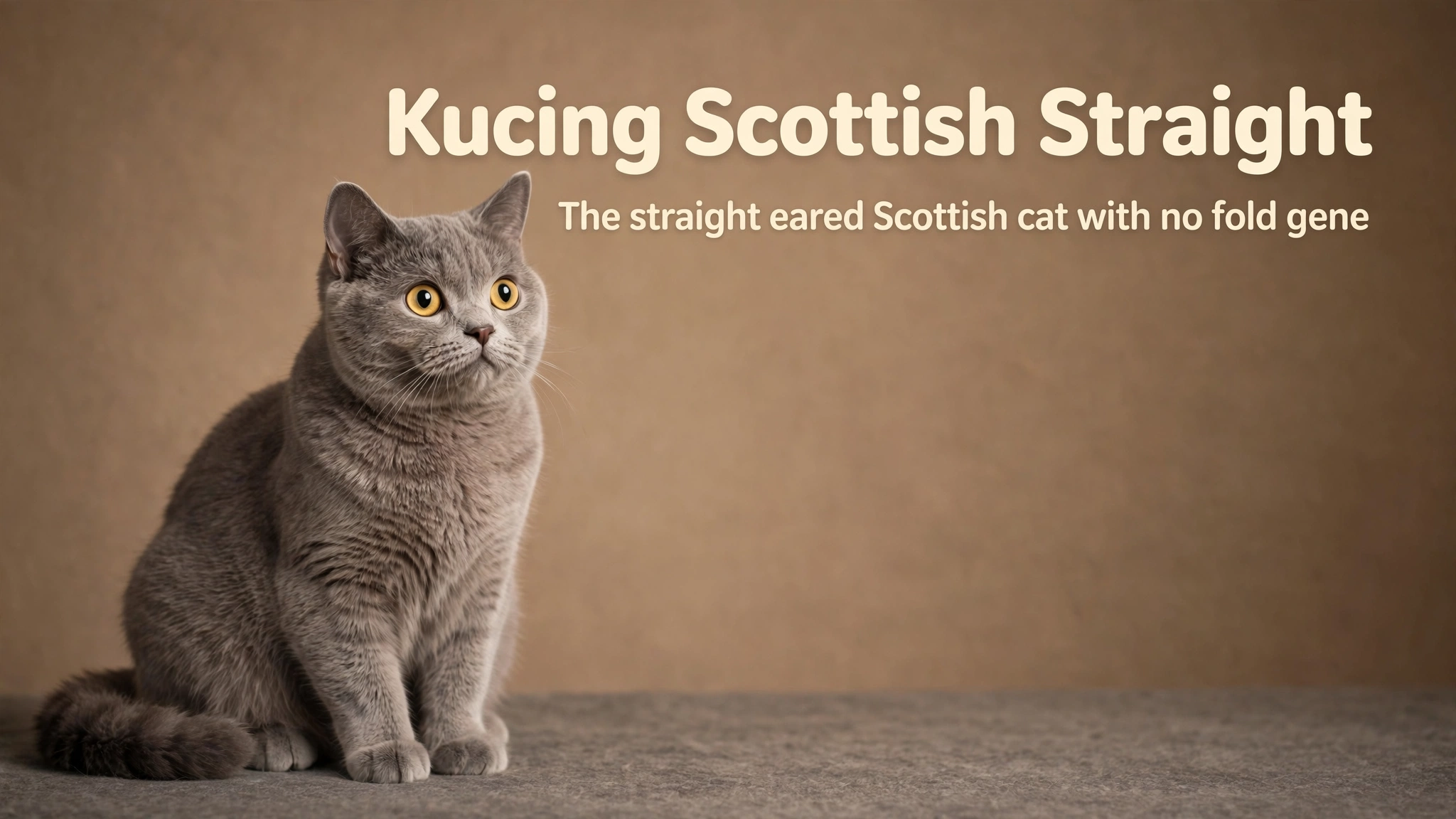
You typed kucing scottish straight into a search box and found a round faced cat with wide eyes and ears that point straight up. Kucing is the word for cat in Indonesian and Malay, so the phrase means a Scottish Straight cat, the straight eared member of the Scottish cat family. It looks much like the famous Scottish Fold, except the ears stand upright instead of bending forward.
That single difference carries real weight. Folded ears come from a gene that also changes cartilage in the joints, so the straight eared cat sidesteps that problem entirely, while keeping the round face, the thick plush coat, and the gentle nature the family is known for.
This guide explains what kucing scottish straight means, how one gene settles the ear shape, how to pick a real Scottish Straight out from similar breeds, what a normal day with one looks like, and what to check before you hand money to a breeder.
What “Kucing Scottish Straight” Means
In Indonesia and Malaysia, kucing covers every cat, from a street cat in Jakarta to a pedigree cat in a Kuala Lumpur flat. Add Scottish Straight and you get the local search phrase for this breed. Sellers and breeders across Southeast Asia list the cat under that name, so buyers in the region usually meet the breed through the kucing label first.
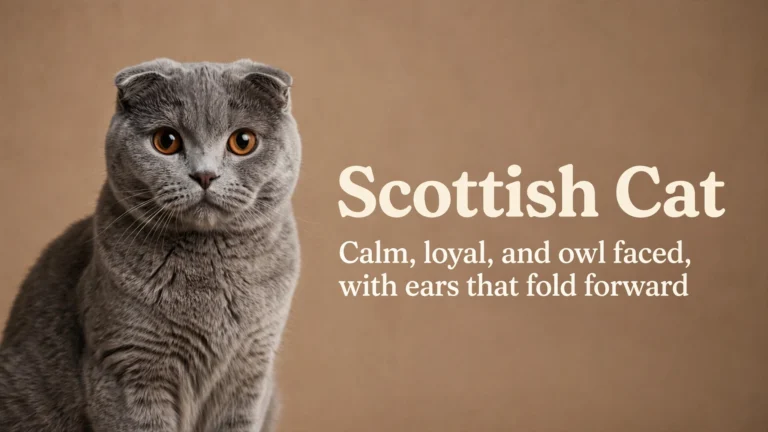
Picture a medium sized cat with a round head, full cheeks, and big round eyes. The ears are small to medium, wide apart, and upright with rounded tips. The body is compact and solid, the legs are medium length, and the tail is medium long with a rounded tip. Males run 9 to 13 pounds, while females run 6 to 9 pounds.
The coat comes short or long. Long coated cats are called Highland Straights, and they need extra brushing to stay mat free. The color range is wide: white, black, blue, cream, red, silver, and more, in solid, tabby, bicolor, tortoiseshell, and colorpoint patterns.
The One Gene That Decides the Ears: Straight vs Fold
The story starts with one white barn cat named Susie, found on a farm near Coupar Angus in Scotland in 1961. A shepherd named William Ross noticed her odd folded ears and took two of her kittens home. The breed grew from those kittens, and in 1966 it took the name Scottish Fold.
Some kittens in those early litters were born with straight ears, and they are the Scottish Straight of today. Registries took time to accept them on their own terms. The International Cat Association gave the Scottish Straight separate breed status in 1994, and the World Cat Federation did the same in 2004.
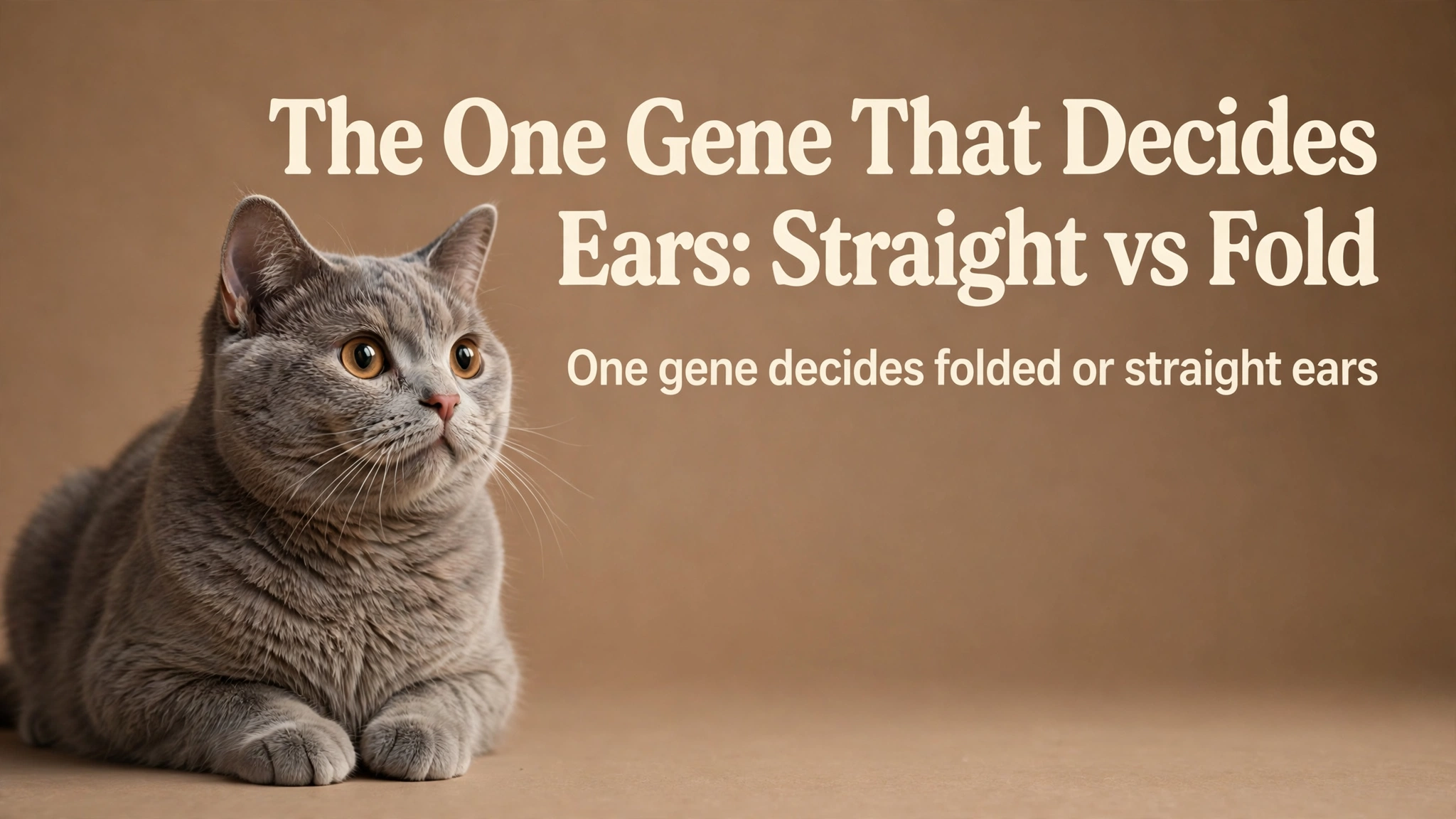
Ear shape comes down to a single gene, TRPV4, and the rule is simple. The fold version is dominant. One copy gives folded ears. Two copies give folded ears plus the worst joint disease. No copies at all gives straight ears, and that cat is a Scottish Straight.
The reason this matters goes past looks. The fold gene changes how cartilage forms, and cartilage sits in the ears, the joints, the tail, and the spine. Cats that carry the fold gene can develop osteochondrodysplasia, a painful bone and cartilage disease with no cure. A Scottish Straight carries no copy of the gene, so it escapes that disease completely.
Breeders depend on Scottish Straights for the same reason. A folded cat should only be paired with a straight eared partner, never with another folded cat, because a fold to fold pairing can produce kittens with two copies of the gene and severe disease. The Straight is not a lesser cat in this family. It is the partner that keeps the breed sound. For the full scientific background, see Wikipedia page on the Scottish Fold.
How to Spot a Real Scottish Straight
Ears are the first clue, but they are not the whole test, because every kitten starts life with straight ears. In kittens that carry the fold gene, the bend starts at around three to four weeks, when the ears tip forward and down. A genuine Scottish Straight keeps upright ears for its whole life.
Check the rest of the cat too. The head should look round, with a firm chin and full cheeks. The eyes are big, wide open, and set well apart. The nose is short, with a gentle dip where it meets the forehead. The neck is short and thick.
Feel the coat. It is thick and plush, standing out from the body and soft under the hand. Short coats need a brush once a week. Long coats need a comb two or three times a week, or tangles gather behind the ears, under the legs, and around the collar.
Ask the seller plainly which member of the family you are seeing. A seller who labels every kitten a Scottish Fold, folded or not, is careless at best and dishonest at worst. You can read the full background on the breed family in guide to the Scottish cat, which covers the Fold, the Straight, and the long coated Highland cats together.
Scottish Straight vs British Shorthair: The Lookalike Test
A Scottish Straight can pass for a British Shorthair at a glance. Both carry round faces, plush coats, and solid builds. The gaps between them are small, but they are enough to check that you are buying the breed you asked for.
The Straight tends to look a touch finer, with a rounder head, fuller cheeks, and eyes that seem larger against the face. The British Shorthair is heavier in bone and wider in the chest, and its coat feels crisp where the Straight coat feels soft.
Ears will not settle the question, since the British Shorthair also carries medium ears set wide apart. The tail gives a better hint. The Straight tail runs medium long and narrows to a rounded tip, while the British Shorthair tail is shorter and thicker at the root.
The way the two cats behave splits them further. A British Shorthair is content to spend part of the day on its own, while a Scottish Straight wants to stay near its people and trails them around the house. Papers are the last check. A pedigree Straight arrives with registration from a body such as TICA or CFA, and the papers name the breed as Scottish Straight, not Scottish Fold.
The Personality in One Day: What Living With One Feels Like
Live with a Scottish Straight and you get a steady, affectionate cat that wants to stay close without clinging. It trails you between rooms, parks itself on the sofa beside you, and watches your day with calm interest. Many owners describe the cat as their shadow, always nearby but never in the way.
Sound is rare and soft. This is not a talkative breed. It may give a small chirp to ask for food or a door, then fall quiet again and go back to watching.
Daily play is gentle and brief. Two short sessions of ten to twenty minutes each are plenty. A wand toy pulled along the floor works best, and rolling balls, toy mice, and soft fetch games keep the cat happy. Many Straights learn to fetch and carry the toy back to you.
Then there is the sitting trick everyone photographs. A Scottish Straight will sit up on its hind legs with its front paws in its lap, like a small person settling down to think. It will also rise on its hind legs like a prairie dog when something catches its eye, and it loves to flop on its back in odd, loose poses.
Kids do well with this cat when they learn to be gentle. The rule is simple: stroke the back and cheeks, never tug the tail or the legs. Other cats and calm dogs are usually accepted too, once introductions move slowly, starting with a few days of sniffing through a closed door. A week or two is often all it takes.
Long empty days are the weak point. A house that stands empty from morning to night can leave this cat bored and distant, so a home with someone around for much of the day fits best, or a second cat for company.
How Long Do They Live? Lifespan and the Health Picture
Give a Scottish Straight good care and it usually lives 12 to 16 years, with some reaching 17. That runs a little longer than the folded cats in the same family, because the Straight skips the fold gene and the joint disease that comes with it.
The health picture is kind to this breed. With the fold gene out of the picture, the biggest worry in the family disappears. What is left are the conditions that show up in related lines and in cats generally.
Two names are worth learning: hypertrophic cardiomyopathy, where the heart muscle thickens, and progressive retinal atrophy, where sight fades over time. Both turn up in related lines, and careful breeders screen for them. Ask whether the parent cats had heart screening, and ask to see the results before you commit.
Day to day care is simple. Keep the cat inside, feed a balanced diet, hold the weight steady, and book a vet check with vaccines once a year. Check the body shape every month. The ribs should be easy to feel under a thin layer of fat, and the waist should narrow when you look down from above.
Cats are good at hiding pain, so watch for small changes. A cat that stops leaping onto the sofa, walks with a short stiff step, or quits a game halfway and will not move is probably hurting, not lazy. That kind of change earns a vet visit, not a new toy.
Grooming a Straight: The Weekly Routine That Keeps the Coat Plush
Coat length sets the grooming load, and long coats are the only ones that ask for real work. A short coat stays in shape with one weekly brush, using a soft brush or a grooming glove. That lifts loose hair, keeps the shine, and cuts down on fur around the house.
A long coated Highland Straight wants a wide tooth comb two or three times a week. Miss a week and the coat knots behind the ears, under the legs, and around the collar, and knots tug the skin and hurt. Begin grooming while the cat is young, so the brush feels like a calm habit rather than a chore.
Upright ears are easy to care for. A folded ear traps wax, moisture, and dirt, and the canal gets little air. A straight ear breathes normally, so a quick weekly peek is usually enough. Dark wax or a strong smell calls for a vet approved ear cleaner on a cotton ball. Never push a cotton swab deep into the canal. Redness, head shaking, or pawing at the ear means a vet visit.
Trim the nails every two to three weeks, or sooner if they catch on fabric. Brush the teeth with cat safe toothpaste a few times a week, and book a vet dental check each year. Wipe the eye corners with a soft damp cloth when discharge gathers there. Bathe only when the coat is truly dirty or greasy, with a gentle cat safe shampoo, since most Straights never need a routine bath.
Feeding a Scottish Straight: Portions That Keep the Round Shape Healthy
A round cat looks charming, but extra weight quietly strains the joints and the heart. Holding the cat lean is the most useful thing you can do at home.
Pick a complete and balanced food that meets AAFCO standards, suited to the cat’s age, size, and activity. Serve measured meals from a cup rather than leaving a full bowl out all day, because a calm cat will eat more than it burns if the food never runs out. Mixing wet and dry food works well: wet food adds water to the diet, and dry food is simple to measure.
Keep treats small, under a tenth of the day’s calories. A couple of tiny treats during training are fine. Food from your plate is not, since it piles on weight fast and can upset a sensitive stomach.
Kittens stay on kitten food until about twelve months, then move to adult food. Cats past ten years often do better on a lower calorie food, and your vet can guide that switch. If the ribs grow hard to find, ask your vet for a feeding plan before the extra weight shows up as stiff movement or low energy.
Play, Training, and the Famous Buddha Sit
This breed learns fast, because it is bright, food driven, and keen to please in a quiet way. Keep lessons to two or three minutes. Teach the cat to come when called, to use the scratching post, and to settle on a mat, paying with tiny treats. Punishment teaches nothing here. It only breaks trust.
Arrange the home for a cat that likes to survey the world from a soft spot. Low, wide furniture with ramps or steps suits this breed better than a tall cat tree. Give it a scratching post tall enough for a full stretch, so the claws stay healthy and the sofa stays safe.
Puzzle feeders are worth a try. A Straight is clever enough to grow bored with a plain bowl, and a puzzle turns dinner into a game that slows eating and keeps the mind busy. Start with an easy puzzle and move to harder ones as the cat learns.
The Buddha sit and the prairie dog stand are not tricks you teach. They are habits the breed shows on its own, and they double as a health clue. A cat that stops sitting upright or rising on its hind legs may be sore. Learn your cat’s usual poses, and you will catch problems early.
Kucing Scottish Straight in Indonesia and Malaysia: Price, Breeders, and What to Check
Searches for kucing scottish straight come mostly from Indonesia and Malaysia, where the breed has spread through social media and online pet shops. The round face photographs well, and the calm nature fits flat life in big cities such as Jakarta, Surabaya, Kuala Lumpur, and Penang.
A pedigree kitten from a registered breeder usually runs $800 to $2,000, and straight eared kittens usually cost less than their folded littermates. Prices across Indonesia and Malaysia swing widely by city, pedigree, and coat color, so compare several breeders before you settle. A price far below the usual range is a warning, not a deal, and a seller who rushes you to decide is a bigger one.
Before you pay, put these questions to the breeder. Do you ever pair two folded cats? The answer has to be no. May I see the vet records for the parents, including heart screening? May I watch the kitten move, jump, and play? A kitten that already walks stiffly or will not jump is a warning sign. Will you take the cat back if things do not work out? A good breeder will agree without hesitation.
Meet the mother cat and see the home where the kittens grow up. A good breeder agrees to both without a fuss. Stay away from a seller who hides the parents, sells kittens younger than eight weeks, or only meets you in a car park or a shopping mall. Those are the marks of a kitten farm or a scam, and the kitten pays the price.
Adoption is a strong choice, and often the kinder one. Breed rescues and shelters sometimes hold Scottish cats, including adults whose ears and nature are already clear. With an adult you can see how it moves today, and you skip the guesswork about how the ears will turn out. If you adopt, ask the shelter for the cat’s vet history, and ask whether a vet has checked its heart.
Check the local rules before you buy as well. Some cities and housing blocks limit pets, and a pedigree cat shipped from another country may need vaccines, a health certificate, and a waiting period before travel. A breeder who knows the rules will walk you through them.
Buying or Adopting: Red Flags Before You Pay
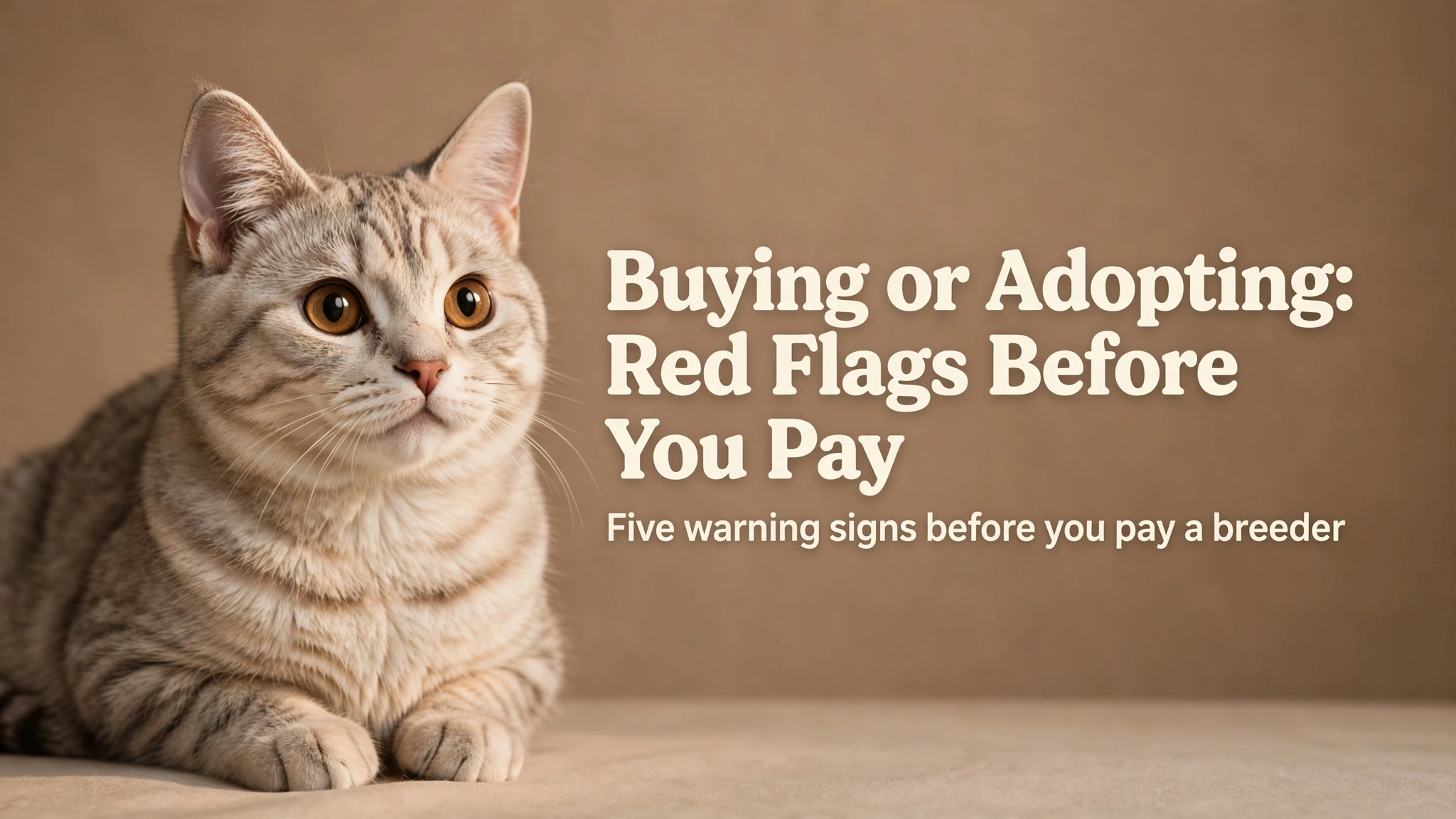
The first warning sign is silence about health. A seller who will not discuss the fold gene, the joint disease, or heart screening is hiding something. The honest facts are not a sales problem. They are the reason the Straight exists as a breed.
The second warning sign is missing papers. A pedigree cat arrives with registration that names the breed as Scottish Straight. A seller who promises papers later, or charges extra for them after the sale, is not selling a pedigree cat. Walk away.
The third warning sign is age. Kittens belong with their mother until at least eight weeks, and twelve weeks is better. A kitten sold at five or six weeks misses the weeks when it learns gentle play and life with people, and that gap shows later as fear or rough play.
The fourth warning sign is the living setup. Kittens raised in a clean home, with their mother nearby and toys and people around, grow into confident cats. Kittens raised in a cage in a back room do not, and no discount makes up for that start.
The fifth warning sign is pressure. A good breeder wants you to think, ask questions, and return a second time. A seller who claims another buyer is waiting, or drops the price if you pay today, is selling fast, not selling well.
If you spot any of these signs, the kind move is to walk away and find another breeder or a rescue. The right cat is worth waiting for, and a bad start costs far more than the purchase price in vet bills and heartache.
Conclusion: Is the Kucing Scottish Straight Right for You?
A kucing scottish straight is a calm, loyal, and quietly funny companion that fits flats, families, and first time owners who want a gentle cat. The round face and the upright ears are real, and so is the charm. The best part is what is missing: no fold gene, and no joint disease tied to it.
Pick this breed if you can offer a calm home, a lean body, gentle play, weekly brushing, and regular vet care. Pick it if you love the Scottish look but want to skip the health worry that comes with folded ears. Or adopt an adult, where the cat in front of you is the cat you get.
Choose with open eyes. Ask the breeder the hard questions, check the papers, meet the mother cat, and take your time. Done right, a Scottish Straight can be a wonderful companion for a decade or more.
Frequently Asked Questions About the Kucing Scottish Straight
What does kucing scottish straight mean?
Kucing is the Indonesian and Malay word for cat, so kucing scottish straight means a Scottish Straight cat. It is the straight eared member of the Scottish cat family, with upright ears, a round face, and a plush coat.
What is the difference between a Scottish Straight and a Scottish Fold?
Only the ears and the gene behind them differ. A Fold carries the fold gene, so its ears bend forward and down. A Straight carries no copy of the gene, so its ears stand upright. Both share the round face, the calm nature, and the same body shape. The Straight also escapes the joint disease tied to the fold gene.
How much does a kucing scottish straight cost?
A pedigree kitten from a registered breeder usually runs $800 to $2,000, and straight eared kittens usually cost less than their folded littermates. Shelter adoption usually runs $100 to $300 and often covers spay or neuter, first vaccines, and a microchip. Prices in Indonesia and Malaysia swing by city and pedigree, so compare several breeders.
How long do Scottish Straight cats live?
With good care, most Scottish Straight cats live 12 to 16 years, and some reach 17. Indoor living, steady weight, and regular vet care all help a cat reach the upper end of that range. They often outlive folded cats in the same family, because they carry no fold gene and no joint disease from it.
Are Scottish Straight cats good with children?
Yes, when children learn to handle them gently. These cats are patient and calm with children, but their tail and legs should never be pulled. Show children how to stroke the back and cheeks, and how to step back when the cat wants space.
Do Scottish Straight cats shed a lot?
Shedding is moderate, with heavier spells in spring and autumn. A weekly brush keeps a short coat in check, while a long coated Highland Straight wants combing two or three times a week. No cat breed is truly hypoallergenic.
Are Scottish Straight cats hypoallergenic?
No. There is no such thing as a hypoallergenic cat breed. Scottish Straights shed like most coated cats and produce the same allergens as other cats. A short coat and regular brushing can cut loose hair around the house, but they cannot remove the allergen.
Can a Scottish Straight live in an apartment?
Yes, flats suit this breed well. It stays quiet indoors, enjoys a sunny window and a scratching post, and asks for little more than daily play and someone nearby for company. It needs no garden. The main need is company, so a home with someone around for much of the day works best.
Bella Barker is a pet food safety writer with 10+ years of experience. She researches what dogs and cats can (and can't) eat and turns it into simple, practical guides for everyday pet parents. 🐶🐱
A Scottish cat walks into a room and quietly takes it over. The round face, the big eyes, and the small ears folded forward give this cat an owl look that stops people in their tracks. It is one of the most photographed cats on the internet, and one of the most misunderstood. This guide…
Most house cats weigh between 8 and 12 pounds, and they fit neatly on your lap. Then there are the giants. Some domestic cats grow so large that they weigh as much as a small dog, stretch close to four feet long, and need a litter box built for a much bigger animal. If you…
Your cat curls into a ball small enough to fit in a shoebox, then stretches out across the whole sofa an hour later. It is no wonder owners ask how big a house cat should be. The short answer is simple: a healthy adult house cat usually weighs 8 to 10 pounds, measures 18 to…