If your dog watches you eat breakfast, you may wonder: can dogs eat bagels and cream cheese? The short answer is yes, but only as a tiny, plain, rare bite. It is not a meal, it is not a daily treat, and the flavored versions that people love most are the ones that cause the most trouble.
The two halves need separate judgment. A bagel brings dense carbs and salt with almost nothing a dog needs. Cream cheese brings fat and lactose with a lot of calories packed into a small spoonful. Put together, a normal human serving is far too much for a dog, even though a small plain taste is usually tolerated by a healthy adult dog.
This guide separates the bagel from the spread, gives you portion math for the combo instead of for one half alone, ranks flavored bagels and flavored spreads, and shows you how to read a label before you share a bite.
The Short Answer: Plain Only, and Only a Tiny Bite
A healthy adult dog can have a small piece of a plain bagel with a pea sized dab of plain cream cheese once in a while. Plain means no toppings, no seasoning, and no flavored spread. Rare means an occasional treat, not a breakfast routine.
Skip the combo completely if the bagel is flavored or topped, if the spread is flavored or sweetened, or if your dog has a health problem listed later in this guide. When any part is in doubt, skip it. Your dog will not miss a bagel, and a dog biscuit gives the same happy moment with far less risk.
The rest of this guide explains why the plain version can pass as a rare treat while most breakfast orders cannot.
What a Bagel Really Gives Your Dog
A bagel is a ring shaped bread made from refined wheat flour, water, yeast, and salt, with a little sugar in many recipes. A full plain bagel has about 250 to 280 calories, about 50 grams of carbs, only a small amount of protein, and about 450 to 550 milligrams of sodium. For a dog, that is a lot of energy with very little nutrition behind it.
Bagels are dense and chewy, which is part of the problem. A dog can swallow a doughy chunk without chewing it well, and that chunk is slow to digest. Toasting does not fix this. Toasting dries the outside, but the carbs, salt, and calories stay the same, and a burnt edge adds nothing good.
A whole wheat bagel is a slightly better pick than a white bagel because it has a little more fiber, but it is still dense, still high in carbs, and still a treat only. It does not turn a bagel into a health food for dogs.
One point causes confusion online. Raw bread dough is dangerous for dogs because yeast can keep rising in a warm stomach and make alcohol as it ferments. A fully baked bagel is different. The yeast in a baked bagel has already done its work and the bread is set. So the risk in a baked bagel is carbs, salt, and toppings, not rising dough.
What Cream Cheese Really Gives Your Dog
Cream cheese is a soft spread made from milk and cream. One ounce, which is about two tablespoons, has about 100 calories and about 10 grams of fat, with only about 2 grams of protein. That fat to protein balance is the opposite of what a dog needs from food, which is why cream cheese works as a rare taste and not as a snack with real value.
Lactose is the second issue. Cream cheese contains milk sugar, and many adult dogs make only a small amount of lactase, the enzyme that breaks lactose down. A dog that handles dairy poorly may get gas, loose stool, or a sore belly after even a small amount. If your dog has reacted to milk or cheese before, do not test that reaction with cream cheese.
Cream cheese does contain a little calcium, but that is not a reason to feed it. Dog food already covers calcium, and the fat and calories that come with the calcium cost far more than the calcium is worth. For a closer look at how cheese in general fits a dog diet, see our guide to cheese for dogs.
Cream cheese is also useful for hiding a pill because it is soft and sticky, but check with your vet first. Calcium can affect how some medicines are absorbed, so a pill trick that helps one dog can weaken the dose for another.
The Bagel Portion Math: How Much Is Actually Small
Treats should stay under 10 percent of your dog daily calories. That rule is what turns a human serving into a dog portion. A full bagel with a thick layer of spread can easily pass 300 calories, which is most of a small dog daily food budget before it has eaten any dog food at all.
Use this combo guide, not a bagel only guide. The spread adds calories on top of the bread, so the bagel piece must shrink to make room for it.
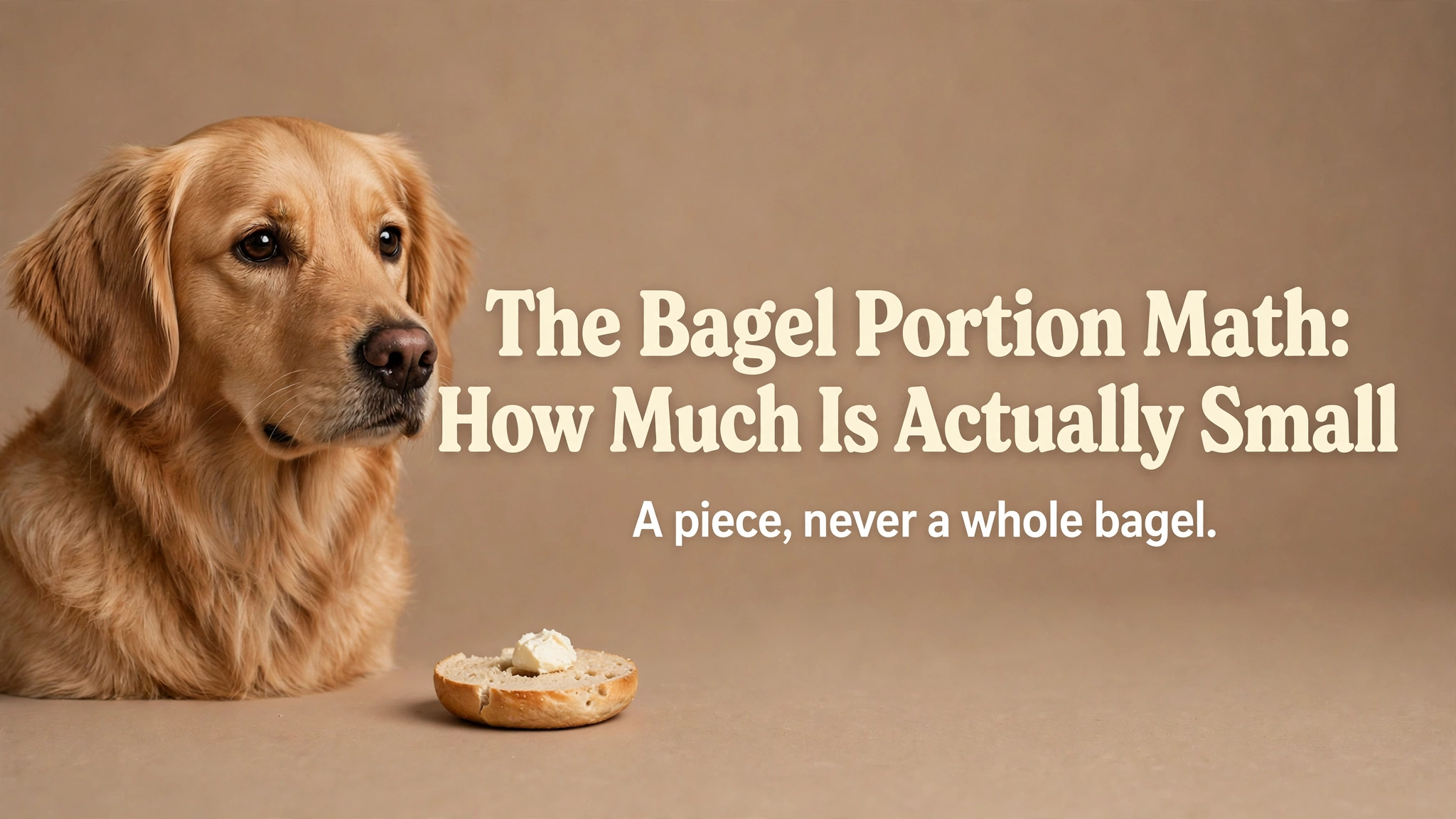
Small dogs, under 25 pounds: one thumbnail sized piece of plain bagel with a pea sized dab of plain cream cheese, no more than once in a while.
Medium dogs, 25 to 50 pounds: one thumb sized piece of plain bagel with about half a teaspoon of plain cream cheese, no more than once a week at most.
Large dogs, over 50 pounds: up to one quarter of a regular plain bagel with about one teaspoon of plain cream cheese, no more than once a week at most.
A mini bagel is not a free pass. A whole mini bagel is still about 100 to 130 calories before the spread, so the same rule applies: share a piece, not the whole thing. Cut the piece small, watch your dog chew it, and skip the doughy center if it is thick and gummy. Offer fresh water after, and skip other treats that day so the total treat calories stay in bounds.
Flavored Bagels: Which Ones to Never Feed
Only a plain bagel, or a plain whole wheat bagel with a short and clean ingredient list, can even be considered. Everything else should stay off your dog plate. Here is how the common types rank.
Never feed: everything bagels, garlic bagels, onion bagels, cinnamon raisin bagels, and chocolate chip bagels. Garlic and onion damage a dog red blood cells and can lead to anemia, and the damage can build up over repeated small exposures rather than showing up after one bite. Raisins and grapes can cause kidney failure in dogs, and even a small amount is not worth the risk. Chocolate is toxic to dogs.
Skip: salt bagels, cheese topped bagels, jalapeno bagels, and sweet bagels such as blueberry or cinnamon sugar. Salt bagels load extra sodium onto an already salty food. Cheese topping adds fat and salt. Jalapeno irritates the stomach. Sweet bagels add sugar and flavorings, and sugar free sweet bagels may hide a sweetener that is toxic to dogs, which is covered in the label section below.
Be careful with: sesame bagels, poppy seed bagels, and multigrain bagels. Poppy seeds on their own are not known to be toxic in the small amount found on a bagel, and sesame seeds are not toxic either. The problem is that seeded and multigrain tops are hard to judge at a glance, seeds and nuts can irritate a sensitive stomach in larger amounts, and a seeded bagel is often an everything bagel in disguise. If the top has anything beyond plain sesame, skip it and choose a plain bagel instead.
When you buy bagels for sharing, buy plain. It is much easier to keep your dog safe when the safe version is the one already in the kitchen.
Flavored Spreads: Chive, Garlic, and Sweetened Spreads to Avoid
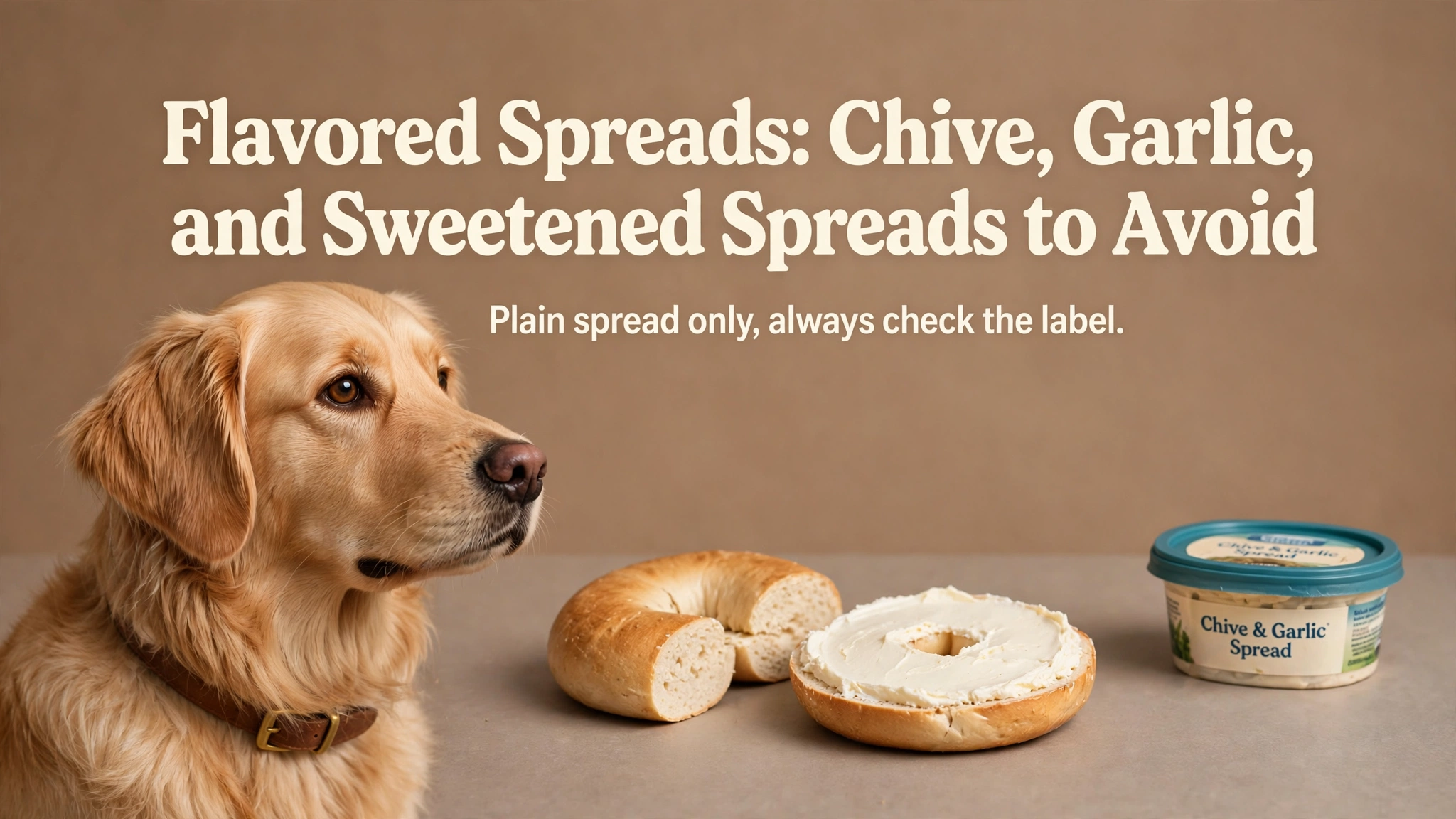
The spread rule is stricter than most owners expect. Only plain cream cheese, with no added flavor, passes. Every popular flavored spread fails for a clear reason.
Never feed: chive cream cheese, garlic and herb cream cheese, onion cream cheese, and any veggie cream cheese that lists onion, garlic, chive, leek, or shallot. These are all members of the allium family, and alliums damage dog red blood cells. Chive is the one owners miss most, because a small green fleck looks harmless in a white spread. It is not harmless for dogs.
Skip: smoked salmon spread, lox spread, and any spread with added meat or fish flavor. These are very high in salt and often contain onion or garlic powder as well. Skip strawberry, blueberry, honey, and other sweetened spreads too. They add sugar, and the light or low fat versions of sweet spreads are the most likely to contain a sweetener that is toxic to dogs.
Whipped plain cream cheese is the one gray area, and it is only acceptable when the ingredient list is plain cream cheese with no flavoring and no sweetener. Whipped spread has air beaten in, so a spoonful has fewer calories than the same spoonful of block cream cheese, but the fat and lactose per bite of actual cheese are unchanged. Read the tub, not the word whipped, before you share it.
The Label Check That Catches Xylitol and Hidden Onion
Most bagel and spread accidents happen because an owner checked the front of the package and not the ingredient list. This check takes about 30 seconds and catches the dangers that matter.
First, read the full ingredient list on both the bagel bag and the spread tub. Look for xylitol, birch sugar, and E967, which are names for the same toxic sweetener. Look for garlic, onion, chive, leek, shallot, onion powder, and garlic powder. Look for raisin, grape, currant, chocolate, cocoa, and macadamia nut. If any of these appear, do not share that product, even if the amount looks small.
Second, treat sugar free, light, and low fat labels as a warning flag, not a safer choice. Sugar free products are the most likely place to find xylitol, and low fat spreads often add extra gums, flavors, and sweeteners to make up for the missing fat. A plain full fat cream cheese with a short ingredient list is a better candidate than a flavored light spread with a long one.
Third, check sodium and fat per serving on the spread tub. If one serving already holds a large share of your dog treat budget, the portion needs to be smaller than a serving. Small amounts of gums such as guar gum, carrageenan, or xanthan gum are not toxic on their own, but they can upset a sensitive stomach, so a shorter list is still the better pick.
If you cannot read the label because the bagel came from a bakery case with no packaging, treat it as flavored and skip it. A plain looking bagel from a case may still carry a topping or a brush of garlic butter that you cannot see.
Dogs Who Should Skip Bagels and Cream Cheese Completely
Some dogs should not get even a plain bite. Puppies under one year old should skip it, because their digestion is still developing and their food needs to be a complete puppy formula, not human bread and spread.
Dogs with a history of pancreatitis, dogs on a low fat diet from their vet, and dogs carrying extra weight should skip it too. The fat in cream cheese and the carbs in a bagel push in exactly the wrong direction for all three groups. Dogs with diabetes should skip it as well, because a dense carb food can make blood sugar harder to control.
Dogs with wheat or gluten sensitivity, dogs that react to dairy, and dogs with ongoing stomach trouble should also skip it. A food that causes itching, ear trouble, or loose stool in your dog is not a treat, even in a tiny amount. Dogs taking medicine that calcium can affect should only have cream cheese if their vet says it is fine for that medicine.
If your dog fits any of these groups, the safer treats in the section below give the same bonding moment without the risk.
If Your Dog Already Ate Some: What to Watch and When to Call the Vet
What you do next depends on what your dog ate. Stay calm, work out which version it was, and act on that version rather than on a general worry.
If it was a small piece of a plain bagel with plain cream cheese, watch your dog for 24 hours. Offer water, feed the next meal as normal, and skip other treats. Mild gas or one soft stool can settle on its own, but call your vet if vomiting, diarrhea, or loss of appetite lasts more than a day or gets worse.
If your dog ate a large amount, even of the plain version, watch for vomiting, diarrhea, a swollen belly, pacing, retching without vomiting, tiredness, and loss of appetite. A swollen belly with retching and no vomit is an emergency and needs a vet right away. A large amount of dense bread can also cause a blockage, so do not wait if your dog seems in pain or cannot keep water down.
If the bagel or spread was flavored, call your vet or an animal poison control line right away, even if your dog looks fine. Do not wait for symptoms with garlic, onion, chive, raisin, chocolate, or xylitol, because harm can develop over hours or days. Tell the vet the flavor, about how much was eaten, when it happened, and your dog weight. Bring the package if you have it. Do not make your dog vomit unless the vet tells you to.
If your dog coughs, gags, or struggles to breathe while eating a sticky or doughy piece, that is an emergency too. Stay with your dog, keep it calm, and get vet help at once.
Safer Treats That Still Feel Like Breakfast
You do not need a bagel to make breakfast feel special for your dog. These swaps give crunch, creaminess, or a licking moment without the dense carbs and fat.
Try carrot sticks or cucumber slices for crunch, apple slices with the seeds removed for sweetness, or green beans for a low calorie bite. For a creamy moment, try a small spoon of plain pumpkin puree or plain yogurt with no added sugar, smeared on a lick mat or on top of a dog biscuit. For a protein rich bite, try a small piece of plain cooked chicken with no skin and no seasoning.
These treats still count toward the 10 percent treat rule, so keep portions small and skip other treats that day. The goal is a happy dog and a calm stomach, not a second breakfast.
Conclusion: The Bottom Line on Bagels and Cream Cheese for Dogs
Can dogs eat bagels and cream cheese in the plain, tiny, rare form? For a healthy adult dog, yes. As a regular food, a daily treat, or a flavored breakfast order, no. The bagel adds dense carbs and salt with little value, the spread adds fat and lactose with a lot of calories, and the flavored versions add real toxins on top of both.
Keep the rule simple. Plain bagel, plain spread, small piece, rare treat, label checked first. If any part of that rule fails, choose one of the safer treats instead. When in doubt, ask your vet, because your vet knows your dog weight, health history, and medicines in a way no general guide can.
Frequently Asked Questions About Bagels and Cream Cheese for Dogs
Can dogs eat bagels and cream cheese every day?
No. Even the plain version is high in carbs and fat for a dog, so it should stay a rare treat. A daily habit can lead to weight gain, stomach trouble, and a diet that crowds out proper dog food.
Can a small dog have a whole bagel?
No. A whole bagel is far too much for a small dog, and even a whole mini bagel is more than a treat portion. Share a thumbnail sized piece at most, with only a pea sized dab of spread.
Is plain cream cheese alone safer than the combo?
Slightly, because you remove the bagel carbs and salt, but plain cream cheese is still high in fat and contains lactose. Keep it to a pea sized to teaspoon sized amount, only for a healthy adult dog, and only rarely.
Can dogs eat everything bagels?
No. Everything seasoning usually contains dried garlic and onion, plus salt and seeds. Garlic and onion damage dog red blood cells, so everything bagels should never be shared, even in a small piece.
Can dogs eat bagels with poppy seeds?
Poppy seeds in the small amount on a bagel are not known to be toxic, but most seeded bagels carry other toppings too, and seeds can upset a sensitive stomach. The safe choice is a plain bagel with no topping at all.
What if my dog ate a cinnamon raisin bagel?
Call your vet or an animal poison control line right away, even if your dog seems fine. Raisins can cause kidney failure in dogs, and early vet care matters. Tell the vet how much was eaten and when, and bring the package if you can.
Can puppies eat bagels and cream cheese?
No. Puppies under one year old should eat a complete puppy formula and should not get dense bread and fatty spread. Their digestion is still developing, and human treats can upset both digestion and nutrition.
What is the safest way to share a bite?
Choose a plain bagel and plain cream cheese, read both labels for xylitol, garlic, onion, chive, and raisin, cut a small piece, add only a tiny dab of spread, watch your dog chew it, and watch for stomach upset over the next 24 hours.
Bella Barker is a pet food safety writer with 10+ years of experience. She researches what dogs and cats can (and can't) eat and turns it into simple, practical guides for everyday pet parents. 🐶🐱
Yes, dogs can eat pineapple. Only the soft, yellow flesh is safe, and only in small pieces as an occasional treat. The spiky skin, the hard core, the crown of leaves, and the stem must all come off before a single piece reaches your dog’s bowl. Pineapple is sweet, juicy, and mostly water, which is…
You probably have a bottle of olive oil in your kitchen right now. Maybe you cook with it, or you drizzle it over salads. When your dog watches you with those hopeful eyes, it is natural to wonder if a little olive oil in their bowl could do them good too. The short answer is…
Your dog is watching you snap green beans at the counter, and those long green pods look like the kind of thing a dog would love to crunch. When people ask about green beans for dogs, they usually mean plain fresh beans, not the casserole on the holiday table and not a can from the…
If you cook eggs at home, you have probably stared at the shells and wondered, can dogs eat egg shells? Here is the short answer. Yes, but only as a fine powder, never as crunchy pieces. Egg shells are almost pure calcium carbonate, which makes them a useful calcium boost for dogs on home cooked…
If your dog has sniffed a mint plant in the garden or watched you make a cup of tea, you may have wondered: is mint okay for dogs? The short answer is that a small amount of fresh spearmint or peppermint is usually fine for a healthy adult dog, but the type of mint and…
If you have ever caught your dog sniffing the sesame topping on your bagel, you have probably asked yourself: can dog eat sesame seeds? The short answer is yes, plain sesame seeds are safe for dogs in tiny amounts. They are not toxic, and a small pinch as an occasional treat will not harm a…