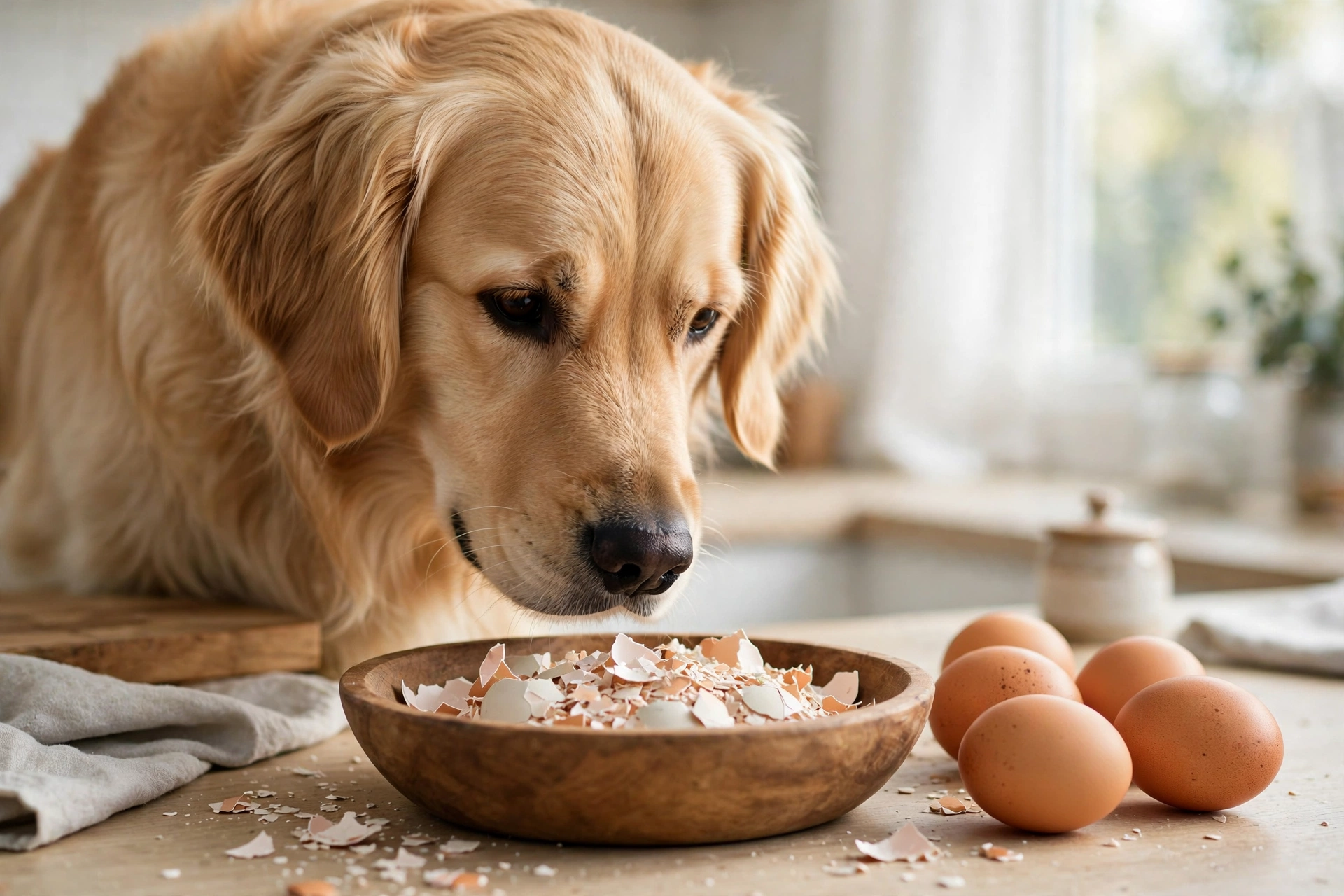
If you cook eggs at home, you have probably stared at the shells and wondered, can dogs eat egg shells? Here is the short answer. Yes, but only as a fine powder, never as crunchy pieces. Egg shells are almost pure calcium carbonate, which makes them a useful calcium boost for dogs on home cooked diets. But whole or sharp pieces can choke a dog or cut the digestive tract, and raw shells can carry bacteria.
This guide shows you the safe way to turn shells into powder, how much to use, and which dogs should skip them entirely. How we checked this page: shell composition follows the eggshell entry on Wikipedia; calcium guidance follows general veterinary nutrition advice on mineral balance in home cooked diets.
The Short Answer: Can Dogs Eat Egg Shells Safely?
Yes, when they are cleaned, sterilized, and ground into a fine powder. That powder is about 95 percent calcium carbonate, and a small measured amount can fill the calcium gap that many home cooked dog diets have. Veterinary nutritionists list calcium shortage as one of the most common problems in homemade dog food.
No, when the shells are whole, crushed into sharp bits, or fed raw. Raw shells can carry Salmonella. Sharp pieces can lodge in the throat or scratch the mouth, esophagus, and intestines. So the rule is simple. Powder yes, pieces no. And if your dog already eats a complete commercial food, the answer is usually skip, because that food already has balanced calcium.
What Egg Shells Actually Give Your Dog
An egg shell is not just trash. It is a natural mineral package. About 90 to 95 percent of it is calcium carbonate. The rest is small amounts of magnesium, phosphorus, and protein rich membrane material.
Calcium does real work in your dog’s body. It builds and keeps bones and teeth strong. It helps muscles contract. It helps blood clot normally. It supports nerve signals. A single shell holds roughly 2,000 mg of calcium, which is a lot in a tiny package.
But here is the catch. Egg shells give calcium and not much else. They do not give protein, fat, vitamins, or the phosphorus balance that bones need. Think of egg shell powder as a single tool, not a full meal. It fixes one specific gap, which is calcium, and only when the rest of the diet is already sound.
Why Homemade Diets Need the Calcium Most
This is the part most articles rush past. Dogs on complete commercial food almost never need egg shells. Those foods are built to meet mineral targets already, and adding calcium on top can push levels too high.
Home cooked diets are a different story. A bowl of chicken, rice, and vegetables sounds healthy, but it is usually low in calcium. Meat is high in phosphorus and low in calcium, which flips the calcium to phosphorus ratio the wrong way. Over months, that imbalance can weaken bones, especially in growing dogs and seniors.
That is why egg shell powder became popular with home feeders. It is free, it is natural, and half a teaspoon holds close to 1,000 mg of calcium. But free does not mean carefree. The dose still has to match your dog’s size and the rest of the diet. If you home cook for your dog, ask your vet or a canine nutritionist to check the full recipe before you start supplementing.
The 5 Step Safe Prep Method
Preparation is what makes egg shells safe. Skip a step and you keep the risks. Follow all five and you get a clean, fine powder.
Step 1: Collect clean shells. Use shells from fresh eggs. Rinse them under running water to remove egg white and yolk. Throw away any with cracks that look dirty inside.
Step 2: Sterilize. You have two good options. Boil the shells for 5 to 10 minutes, or bake them at 200 to 250 degrees Fahrenheit for 10 to 15 minutes. Both kill Salmonella and other bacteria. Do not microwave raw shells, since heating is uneven.
Step 3: Dry completely. Spread the shells on a clean tray and let them cool and dry fully. They should snap crisply when you press them. Any dampness left behind can grow mold in storage.
Step 4: Grind to a fine powder. Use a clean coffee grinder or blender. Grind until the texture looks like flour, not sand. Rub a pinch between your fingers. If you feel any grit or sharp bits, keep grinding. This step removes the choking and scratching risk.
Step 5: Store properly. Keep the powder in an airtight jar in a cool, dry spot. Use it within a few weeks. If it clumps or smells off, throw it out and make a fresh batch.
How Much Egg Shell Powder Can Dogs Have?
There is no single perfect dose, because it depends on your dog’s weight and what the rest of the diet already provides. These are starting ranges for dogs on home cooked diets that lack calcium. If your dog eats commercial food, the starting dose is usually zero.
Small dogs under 20 lb: no more than one quarter teaspoon per day.
Medium dogs 20 to 50 lb: about one half teaspoon per day.
Large dogs over 50 lb: up to one teaspoon per day, split across meals.
One half teaspoon of powder holds roughly 900 to 1,000 mg of calcium. That is a large fraction of a small dog’s daily need, which shows why measuring matters. Use real measuring spoons, not a guess. Too much calcium over time can cause constipation, kidney strain, and bone problems in growing puppies. If your dog gets vomiting, loose stool, or goes off food after you start, the amount is too high or the shells do not suit your dog. Stop and call your vet.
Dogs That Must Skip Egg Shells
Egg shells are not for every dog. These groups should skip them or use them only under direct vet guidance.
Puppies and growing dogs. Growth needs exact calcium balance. Extra calcium during growth can deform developing bones and joints. Most puppy foods already hit the right levels, so adding shell powder usually does more harm than good.
Dogs with kidney disease. Kidneys handle mineral balance, and extra calcium can worsen kidney problems and raise the risk of stones.
Dogs on complete commercial diets. The food is already balanced. Extra calcium throws off the calcium to phosphorus ratio for zero benefit.
Dogs with chronic constipation. Calcium firms the stool. If your dog already struggles, egg shells can make it worse.
Dogs with egg allergies. Shell residue holds tiny amounts of egg protein. If your dog reacts to eggs with itching or stomach upset, skip the shells too.
4 Mistakes That Turn a Safe Supplement Risky
Even careful owners get these wrong.
Mistake 1: Feeding raw shells whole. This is the most dangerous mistake. Sharp raw pieces can cut the mouth and throat and carry bacteria straight into the gut. Always sterilize and grind.
Mistake 2: Thinking natural means unlimited. Egg shells are natural, but calcium overdose is real. More powder does not mean stronger bones. It means mineral imbalance.
Mistake 3: Eyeballing the dose. A heaped spoon can hold double a level spoon. Small dogs feel that difference fast. Measure every time.
Mistake 4: Using shells as a bone replacement. Egg shells are calcium only. They do not give the phosphorus, collagen, or chewing benefits of real bones. They fill one gap, not every gap.
Egg Shell Powder vs Other Calcium Sources
How does shell powder compare with the other options? Here is an honest side by side.
Egg shell powder: natural and free, good dose control once ground, but needs careful prep and measuring.
Bone meal: commercially processed, consistent calcium plus phosphorus, but quality varies by brand.
Raw meaty bones: give calcium plus chewing and dental benefits, but carry fracture and bacteria risks of their own.
Dairy like yogurt or cottage cheese: easy and tasty, but many dogs digest dairy poorly and calcium per spoon is low.
Commercial calcium supplements: precise dosing on the label, the most convenient option, but they cost money.
Egg shell powder sits in the middle. It beats most kitchen alternatives on calcium per penny, but it demands more care than a store bought supplement. If measuring and grinding feels like too much, a vet approved calcium supplement is the safer pick, especially for puppies and seniors.
We use the same careful measuring approach in our carrot guide for dogs, where portions are matched to body weight instead of guessed.
Conclusion: Can Dogs Eat Egg Shells?
Yes, as a fine powder, in measured amounts, for the right dog. Clean the shells, sterilize them, grind them like flour, store them dry, and dose by your dog’s size. That powder can fix the calcium gap in home cooked diets for free. But whole shells, raw shells, guessed doses, and extra calcium on top of complete commercial food are all bad ideas. When in doubt, ask your vet to review the whole diet first. Done right, the shells you used to throw away become one of the simplest supplements in your kitchen. For the science behind the shell itself, see Wikipedia’s eggshell page.
FAQs
Can dogs eat raw egg shells?
No. Raw shells can carry Salmonella, and sharp raw pieces can cut the mouth, throat, and intestines. Always sterilize the shells and grind them into a fine powder before feeding.
Can puppies eat egg shells?
Only with your vet’s approval. Puppies need exact calcium balance for healthy bone growth, and extra calcium can cause abnormal bone development and joint problems.
Can dogs eat raw egg shells?
About one quarter teaspoon for small dogs, one half teaspoon for medium dogs, and up to one teaspoon for large dogs, but only when the diet needs extra calcium. Always confirm the dose with your vet.
Can dogs eat egg shells every day?
Only when their diet truly needs the calcium and the dose is measured and controlled. Most dogs on complete commercial food do not need any daily supplementation.
Do egg shells cause constipation in dogs?
Too much calcium can firm the stool and make constipation worse. Keep doses small, and stop using the powder if your dog’s stools become hard, dry, or infrequent.
Bella Barker is a pet food safety writer with 10+ years of experience. She researches what dogs and cats can (and can't) eat and turns it into simple, practical guides for everyday pet parents. 🐶🐱
You know the scene. You sit down with Vegemite on toast, and your dog is already there, staring at you with total focus. The smell is strong, savoury, and hard to ignore, and your dog clearly wants a taste. So can dogs have Vegemite, or should the jar stay strictly for humans? Here is the…
It is a slow Sunday morning. You pour maple syrup over a tall stack of pancakes, and your dog is already there, nose up, eyes locked on the plate, tail doing its hopeful thump on the floor. You have seen that look a hundred times. It asks a simple question without a single word: can…
Searching “can dog eat banana” while your dog watches you peel one? Here is the fast answer.Yes, dogs can eat bananas. A few peeled slices are a safe treat for most healthy dogs. Bananas have fiber and potassium, but they also have sugar, so keep portions small. Never feed the peel. Ask your vet first…
Yes, dogs can eat pineapple. Only the soft, yellow flesh is safe, and only in small pieces as an occasional treat. The spiky skin, the hard core, the crown of leaves, and the stem must all come off before a single piece reaches your dog’s bowl. Pineapple is sweet, juicy, and mostly water, which is…
If your dog stares at you while you chop peppers for dinner, you have probably asked yourself this question. Can dogs have capsicum? Yes, they can. Sweet capsicum, the kind sold as bell peppers in red, yellow, orange and green, is safe for most healthy dogs when you serve it plain and in small amounts….
You open a jar of apple sauce for lunch, and your puppy is already there, nose up, tail going. It smells sweet and looks harmless. It is just cooked apples, after all. So can puppies eat apple sauce? Yes, they can, as long as it is plain and unsweetened, the amount is tiny, and your…












3 Comments